
Human leadership, better jobs: CEC responds to the EU Quality Jobs Act consultation
CEC European Managers has submitted its response to the European Commission’s second-phase consultation on the future Quality Jobs Act, calling for an approach that combines strong worker protection, competitiveness, responsible use of artificial intelligence and meaningful social dialogue.
The consultation forms part of the formal European social dialogue procedure under Article 154 of the Treaty on the Functioning of the European Union (TFEU).
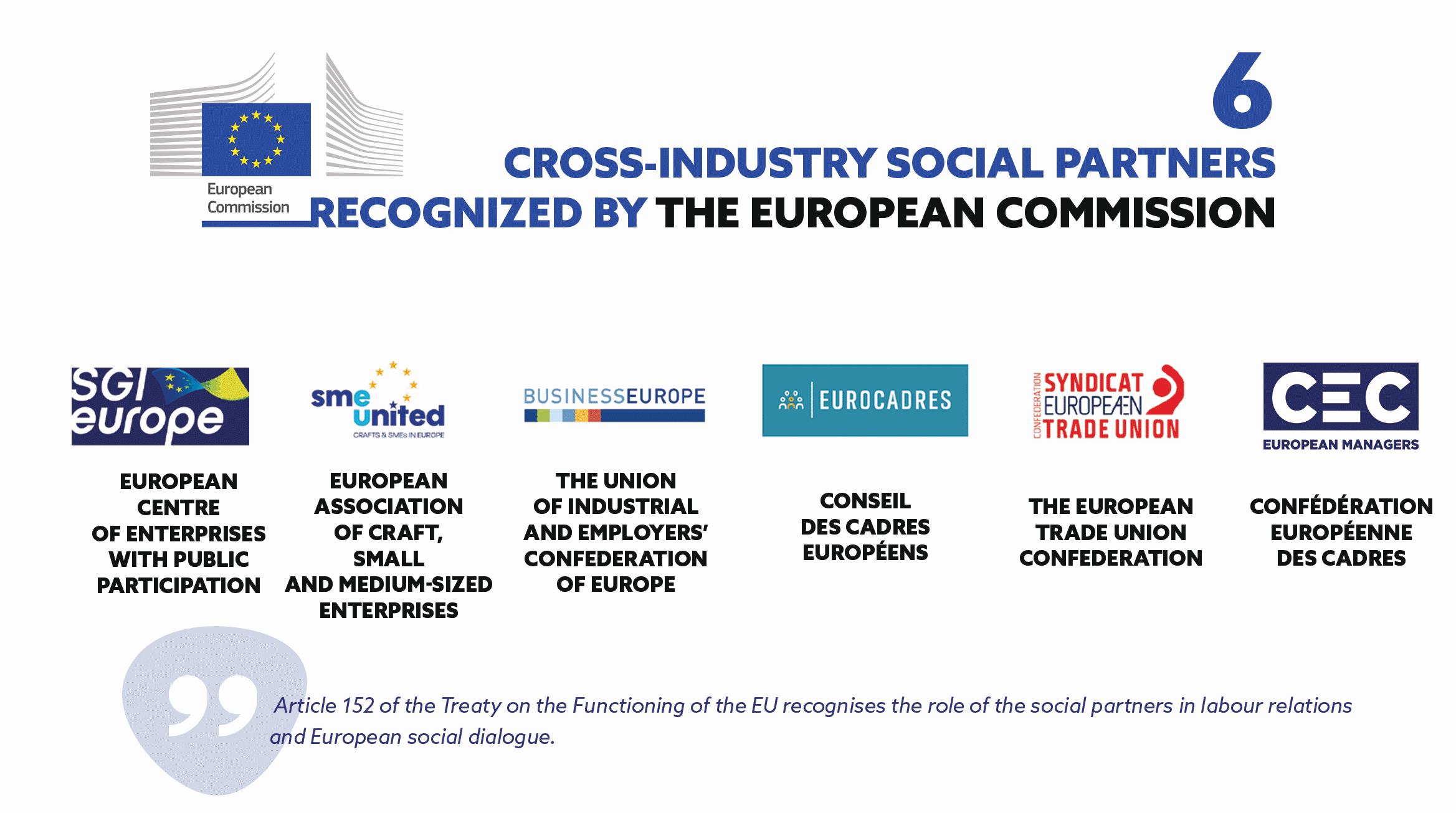
CEC European Managers is one of the six cross-industry social partner organisations recognised by the European Commission, representing the specific voice of managers at European level.
This status gives CEC a formal role in developing EU social policy.
Before submitting proposals in the social policy field, the European Commission must consult management and labour. Where the Commission subsequently considers EU action advisable, a second-stage consultation takes place on the possible content of that action.
The response submitted by CEC therefore brings the perspective of European managers directly into the debate on one of the EU’s major forthcoming employment policy initiatives.

Quality jobs and competitiveness must go together
At the centre of CEC’s position is the conviction that quality jobs and European competitiveness should not be treated as opposing objectives.
Good working conditions, healthy workplaces, skills development, effective worker participation and sustainable forms of work organisation can strengthen companies’ capacity to attract and retain workers while remaining productive, innovative and resilient.
Managers are responsible for organising work, leading teams, implementing technological and organisational change, developing skills and translating European and collectively agreed requirements into workplace practice. But they are also workers themselves, exposed to increasing workloads, technological change and psychosocial risks.
CEC European Managers stresses that European policy must recognise this dual role of managers: as both workers requiring protection and key actors responsible for implementing change.
The figures illustrate the challenge. In 2024, 21.1% of managers in the EU usually worked 49 hours or more per week, compared with 6.6% of employed people overall.
Keeping humans in control of workplace AI
Artificial intelligence and algorithmic management are among the areas where CEC sees particular scope for European action.
AI is increasingly being used for workforce planning, scheduling, work allocation, skills management, performance assessment and organisational decision-making. These technologies can support managers and improve decision-making, but they can also have significant consequences for professional autonomy, workload, careers and fundamental rights.
Technology should support rather than replace human leadership and professional judgement.
This approach is also reflected in CEC’s ongoing AI MANAGE project, which is developing practical guidelines, tools and skills to support responsible AI and algorithmic management in European workplaces.
Tackling psychosocial risks through better work organisation
Workload, work intensity, staffing, permanent digital availability, professional autonomy, organisational change and poorly designed performance systems must all be considered when preventing occupational risks.
Managers are expected to identify and prevent stress and burnout among their teams while frequently facing significant organisational pressures themselves.
In our response to the European Commission, CEC European Managers argues that responsibility must be accompanied by capacity: leaders and managers can only fulfil their prevention responsibilities when they have sufficient authority, information, competence and resources to influence how work is organised.
Skills and social dialogue at the heart of the twin transition
As Europe undergoes simultaneous digital and green transformations, CEC European Managers also places strong emphasis on anticipation, skills development and worker participation.
Managers play a central role in identifying future skills needs, preparing organisations for change and supporting employees through restructuring. Successful transitions therefore depend on managers themselves having the skills and organisational capacity required to lead change responsibly.
We are open to negotiations between European social partners
CEC European Managers also confirms its readiness to play its full institutional role in the next stages of the process.
Under Article 155 TFEU, European social partners can enter into negotiations and conclude agreements on social policy issues.
CEC states that it is open to negotiations on selected elements of the Quality Jobs Act, provided that the objectives are sufficiently clear and that social partners have genuine space to negotiate meaningful outcomes.
Potential areas for further dialogue include responsible algorithmic management and human oversight, psychosocial and organisational risks, the management of technological and environmental transitions, and the role of social partners in implementation and enforcement.
For CEC European Managers, the ultimate measure of the Quality Jobs Act will not be the number of new obligations it creates, but whether it contributes to safer workplaces, sustainable work organisation, responsible technology, stronger skills, meaningful worker participation and effective social dialogue.
Managers will be among those responsible for turning these European principles into workplace reality.

