
“To have a strong economy, you need a strong industry”
Lisez l’entretien en français ici [+]
CEC European Managers is pleased to have spoken with Christelle Thieffinne, the new president of the French Confederation of Management – General Confederation of Executives (CFE-CGC), our member organisation in France. We are particularly pleased to share this conversation, in which she reflects on her career, her vision of trade unionism and her ambitions for the future. From artificial intelligence to the reindustrialisation of Europe, as well as leadership and social dialogue, she shares her perspective on the major challenges facing managers and executives across Europe.
To begin with, who is Christelle Thieffinne, beyond her professional roles?
I am Christelle Thieffinne, president of the CFE-CGC since the June congress.
If I had to define myself, I would say that I am passionate about industry.
That is a strong term, but I like professions that combine technical expertise, industrial processes and teamwork. For me, industry can be understood in a broad sense: wherever there are flows of production or information, there are people who work together to produce something and meet customers’ needs.
Every time, they are human adventures.
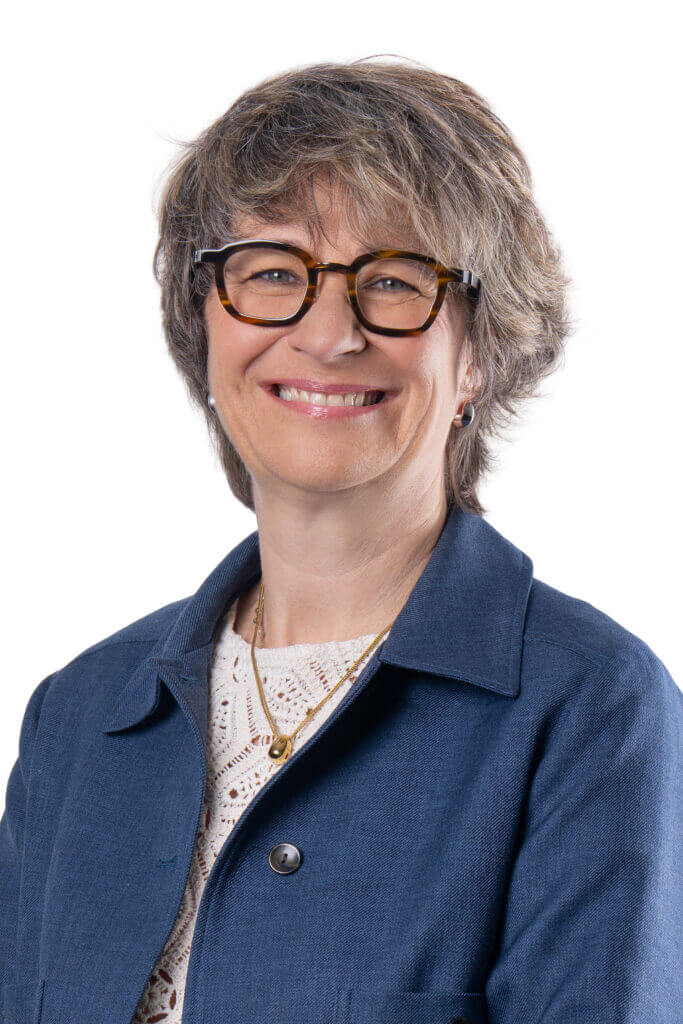
I have been an employee of the Thales Group for twenty-eight years. I live in Blois, in Loir-et-Cher, where the industrial site to which I am still attached is located, in the aerospace sector.
What is the most difficult decision you have had to make during your trade union career?
The most difficult decisions are often those concerning whether or not to sign an agreement at the end of a negotiation.
Entering into negotiations means taking a risk. We represent employees and must defend their interests as effectively as possible, while accepting the logic of negotiation. At some point, you have to assess whether you have gone as far as possible and make a decision: do I sign or not? Do I say yes or no?
This can happen during mandatory annual negotiations, including in a context of industrial action.
Sometimes you have to explain, in a factory yard, that the CFE-CGC has decided to end a movement because it believes that negotiations have reached their conclusion, even though many employees have taken part in the action.
It is not an easy decision. But my experience has taught me that, when you explain your position and remain attentive to what is happening on the ground, you can assess whether the decision is the right one.
Which negotiations are the most difficult: those conducted within companies or those with other trade union organisations?
The most difficult are those that take place within companies, on the ground. I started out as a trade union representative, leading my section, before taking on other positions.
Within a company, there is competition between trade union organisations, particularly during workplace elections, which determine their representativeness. You have to know how to move beyond this competition for the remainder of the term and work in the interests of employees.
When working at the level of a professional sector or, as is the case for me today, at national cross-sectoral level, we work more closely with other organisations.
We do not always agree, and we say so, but this direct confrontation on the ground is less prominent.
How did you move from your commitment to industry to your commitment to trade unionism?
For me, trade union involvement was also a commitment to my company. I am very attached to the company where I have worked for twenty-eight years, to its activities and to the employees who make it what it is. I care about this company.
As an employee, I also consider the company to belong to me, in the sense that I am a stakeholder in it, just as much as management is.
I therefore believe that I have a say in its organisation and in the decisions that concern it. It was this interest in the company that led me to take on my first trade union positions.
Is this sense of responsibility towards the company particularly characteristic of managers and executives?
The CFE-CGC represents managerial and supervisory staff: technicians, supervisors, engineers and executives. What brings us together is precisely the fact that we exercise responsibilities within companies.
This shapes the history of our organisation and its particular perspective on work.
As a manager or executive, I can express myself and have a say, just like any other employee.
This recognition is essential.
What is your conception of leadership? What does it mean, for you, to be a good leader?
Leadership is the ability to bring employees together or, within a trade union organisation, to bring members together around ideas they identify with.
I am the spokesperson for the CFE-CGC. The challenge is for the people listening to us to be able to say: “I recognise myself in this voice and in these proposals.”
To achieve this, you have to stay connected to the ground, understand what is happening in companies and in the public sector, and never become disconnected from the reality of work.
I devote a great deal of time to travelling and meeting members and activists.
I constantly have to ask myself whether what I say corresponds to what they are experiencing.
A trade union organisation is nothing without its members and its activists on the ground: they are the ones who keep the organisation alive and achieve results in workplace elections.
Our role at national level is to provide tools, ideas and broad guidelines, while remaining connected to their concerns and their needs when it comes to negotiations.
Regarding artificial intelligence, what feedback are you receiving from the ground?
First, I receive alerts from certain professional sectors concerning job cuts. The situation is worrying in several so-called “white-collar” professions, which are not purely manual jobs: insurance, banking, information systems and training, for example. Redundancy plans are already under way.
The difficulty is determining what is genuinely related to artificial intelligence.
The arrival of AI can also be used as an argument to justify job cuts. At this stage, however, we do not know whether AI-driven gains within companies are sufficient to replace employees on a massive scale.
Concerns exist, but they do not necessarily reflect proven reality. Employment safeguard plans, by contrast, do exist.
What role can managers and executives play in anticipating the consequences of AI for employment?
The priority is anticipation. Companies have a duty to consider which jobs are likely to be affected by AI and to distinguish actual developments from projections.
The risk is eliminating positions only to realize later that human skills remain indispensable, because AI cannot do everything. This is also about preserving the company itself.
We must also anticipate the transformation of professions.
We do not yet know precisely how many jobs will be lost, but we do know that the content of many professions will change.
We must not wait until an employee is considered no longer suited to their position. We need to provide training, support professional transitions and enable everyone to continue working in an environment where AI plays an increasingly important role.
This also applies to supporting employees with the most experience, who may have different training needs from younger workers.
Finally, we need to observe the effects of AI on the content and conditions of work.
If we automate the simplest tasks, is there not a risk that employees will be left with the most complex tasks, increasing their mental workload or psychosocial risks?
If AI makes it possible to save time, respond better to customers and think more deeply, that is positive. But if it simply results in employees being asked to do more and more, that is a major risk.
Today, these are still only hypotheses and risks that need to be studied: we must observe what is actually happening.
What about responsibility when decisions are made with AI’s help?
This is a major issue for managers and executives. A manager, an executive or a member of senior management has responsibilities: they make decisions, sign documents and may bind the company or be responsible for employees.
If a decision is proposed by AI in the future, it will still be a person who validates it and assumes responsibility for it.
How can that person exercise judgment if they no longer have the expertise to step back, identify a danger, or verify whether the proposal is appropriate? We need to clarify these questions and remain extremely vigilant.
This raises a question comparable to that of autonomous vehicles: the role of the person who remains in control and assumes responsibility remains central. More broadly, digital systems also raise cybersecurity challenges and issues related to remotely controlling equipment.
How do you explain the CFE-CGC’s growth within the French trade union landscape?
Today, we are in fourth place, and I believe we can become the third-largest organisation.
What is particularly significant is that, in France, the CFE-CGC is the only representative trade union organisation that is growing.
I see two explanations. First, the population we represent is expanding: more and more employees fall within the managerial category. Second, there is the credibility of our ideas, our demands and our proposals.
This credibility comes from our connection with employees on the ground. Wherever we negotiate, we take responsibility and put forward proposals.
We have expertise and we know what we are talking about. This is the strength I want to continue developing.
Three women now lead three of France’s five major trade union organisations. Is this a sign of progress towards equality?
Yes. The fact that three women are now at the head of five trade union organisations shows that we are moving in the right direction.
We are not here because we are women: we are here, and the question is no longer framed in the same way. I find this very positive.
If we compare this with employers’ organisations, whose leadership is currently predominantly male, we can see that trade union organisations have made significant progress.
Gender diversity and parity do not happen spontaneously: they have to be prepared for, and the right conditions must be created so that women and men can take on positions of responsibility.
In France, representation rules within companies have also helped more women take on trade union positions at company, sectoral and cross-sectoral levels.
There is therefore a diverse pool of leaders. It is this long-term work that has enabled me to become president of the CFE-CGC.
This could serve as an example to companies, particularly regarding women’s access to management committees and executive committees, as well as to employers’ organisations and the political world. This is not about claiming that men and women have different personalities, but about recognising that the social conditions for accessing positions of responsibility matter. This is an important turning point.
How can Europe be reindustrialised while defending its social model?
To defend a social model, whether French or European, you need a strong economy. And to have a strong economy, you need a strong industry.
An industrial job generates, according to the estimates I refer to, three to four indirect jobs. Conversely, when a factory closes or leaves a region, the local economic consequences can be dramatic.
Europe must defend its industrial sectors. I believe we need a form of economic protection, particularly in the face of global competition in the automotive sector.
European countries need to join forces to preserve their industry and their production capacity.
This protection can take the form of trade instruments, but also environmental requirements.
Decarbonisation requires very substantial industrial investment. Take the steel industry: some facilities are moving towards processes that emit less CO₂, particularly electric furnaces, which require considerable electricity capacity.
French and European support schemes are helping to fund these transformations.
But we must also take competitive conditions into account. When we import a product, its financial price should not be the only criterion: we must consider its social cost and its environmental cost.
The objective is to be able to invest in Europe, combine competitiveness with social requirements and environmental protection, and protect our activities during this transition. This is in the interest of our regions, our economy and the planet.
What role would you like to see CEC European Managers play in the European debate?
I would like the CEC to represent the voice of managerial staff and European managers, particularly on issues related to work.
As in France with the CFE-CGC, managers have things to say about the content and organisation of work, management methods, corporate governance and business strategies.
They have proposals to make. Whether we are talking about artificial intelligence, reindustrialisation or the environment, all these issues are interconnected.
We must seek to build an economic model that works while ensuring respect for employees, taking financial, social and environmental dimensions into account.
What contribution can the CFE-CGC make to this European action?
I would like us to be a driving force in reindustrialisation and to bring other organizations along with us.
In the automotive sector, for example, France has been experiencing a gradual decline for a long time, while Germany seems to be discovering the scale of the difficulties more suddenly. But this development is not inevitable.
We must remain optimistic and stand together. We have major European industrial interests to defend collectively.
This is true for the automotive sector, but also for aerospace, where we have players such as Airbus and where international competition is increasing. We must not rest on our achievements or compete with one another as Europeans.

The same applies to the space sector, an area in which Europe must strengthen its capabilities in the face of major global players.
I would like European trade union organisations from different countries to be able to work together to advance a European industrial and economic ambition, even when political action struggles to move forward. Beyond the industrial companies themselves, an entire economic ecosystem depends on it.
What do you expect from the European AI-MANAGE project, in which the CFE-CGC is involved?
I expect this project to pave the way for discussions and negotiations on artificial intelligence. It is a cross-cutting issue with consequences in many different areas.
We have discussed its social effects, but we must also examine its environmental impact, particularly that of data centres and their location in Europe. It would be important to develop shared assessments across the different countries, in order to identify what brings us together and the issues on which it is in our common interest to act together.
AI MANAGE: A project led by CEC European Managers [+]
There is also an issue of European sovereignty: how can we preserve our capacity for research, development and deployment in AI? How can we bring about a European champion in artificial intelligence in the future?
In the current social and political context in France, what role should the CFE-CGC play?
Our role is to inform public debate and political decision-makers by highlighting the concrete consequences of their decisions for employees and for our social model.
Take the example of the length of working life.
When a political leader proposes working for longer, we need to look at the reality: many employees around the age of sixty are already no longer in employment because they are unemployed, on sick leave or receiving disability benefits.
Telling those who are still able to work to do so for longer does not answer the fundamental question: how can we enable more people to work?
I believe that if the employment rate of people of this age in France were comparable to that of Germany, the balance of our social protection systems would be very different.
We therefore need to start from sound assessments rather than proposing apparently simple solutions that do not resolve economic and social difficulties.
Trade union organisations know these realities. We are present within companies and within the bodies responsible for managing our social model.
We can explain why some people stop working before the age of 60 and propose other solutions. Our role is to make the facts, analyses from the ground, and our proposals heard.
But the government and political decision-makers still need to listen to you…
Exactly. The challenge is to make our analyses heard and demonstrate their credibility. Many of these findings already appear in official documents and studies, sometimes commissioned by the public authorities themselves.
Our positions are not based solely on a trade union viewpoint: we also listen to experts.
We want to draw the attention of political decision-makers to this work and show them that other paths exist.
At the end of your term, what would you like people to say about you?
That it was a great adventure! I would like us to have traveled part of the way together and for the CFE-CGC to have progressed.
In terms of membership numbers and representativeness, of course, but also in the visibility of the ideas we put forward. What matters to me is that more and more people identify with these ideas.
Thank you very much!
