MAIRE and Its Commitment to Innovation: “Less Bureaucracy, More Shared Strategy: Europe Can Lead the Chemistry of the Third Millennium”
Leggi l’intervista in italiano [+]
We interviewed Fabrizio Di Amato, Founder and Chairman of MAIRE, an Italian industrial group whose holding company is listed on Euronext Milan. In 2025, the Group recorded revenues of €7.1 billion and currently employs approximately 11,300 people across 50 countries.
Starting out in plant engineering and construction, Di Amato built an industrial group through a series of targeted acquisitions and, in recent years, has led its transformation towards technologies supporting the energy transition.Today, innovation is the driving force behind MAIRE’s growth, primarily through Nextchem, the business unit dedicated to sustainable technologies and decarbonisation.
Alongside his entrepreneurial activities, Di Amato has consistently been involved in industrial representation. He is a member of the General Councils of Assolombarda and Unindustria, as well as the Executive Committee of Assonime.
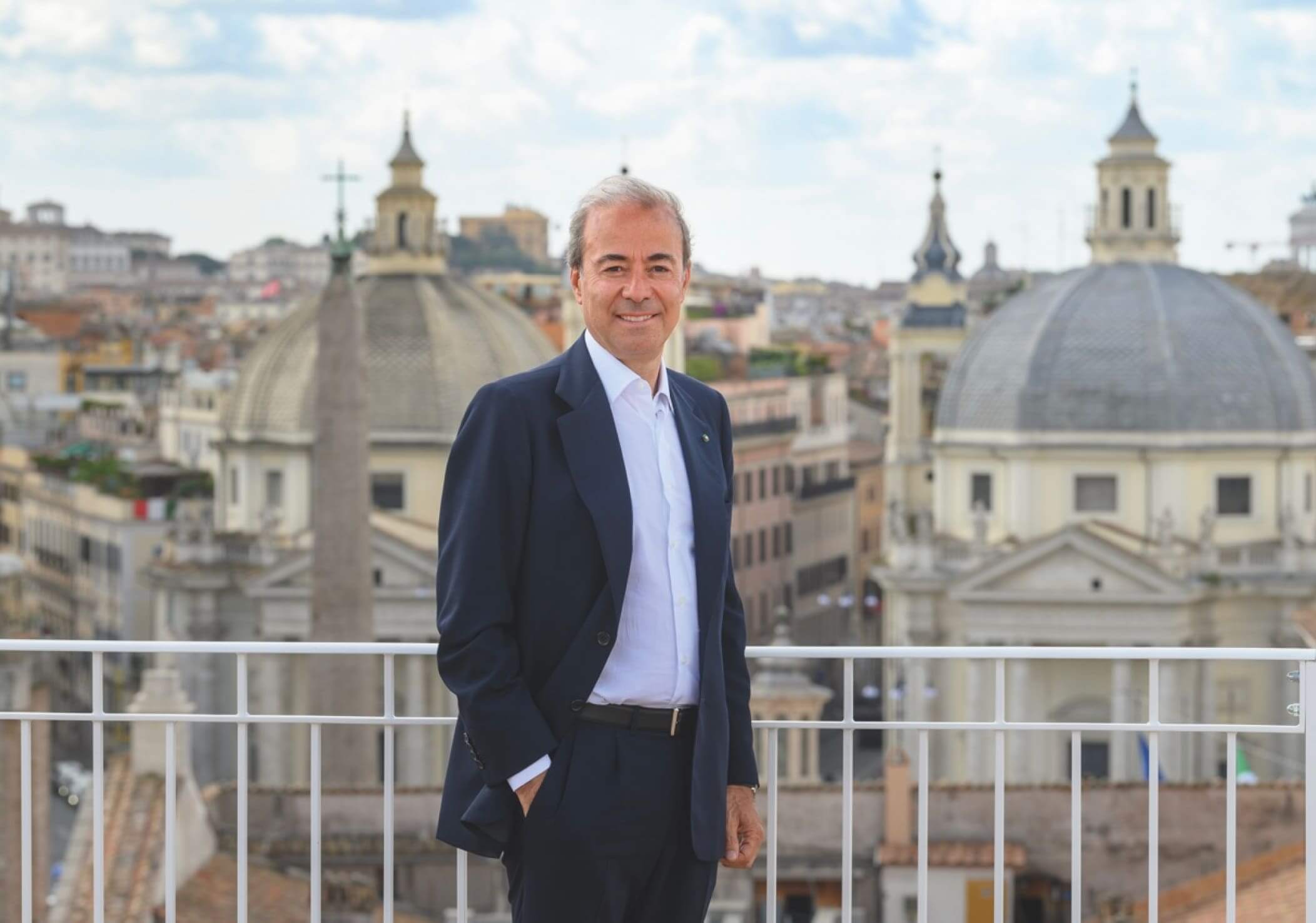
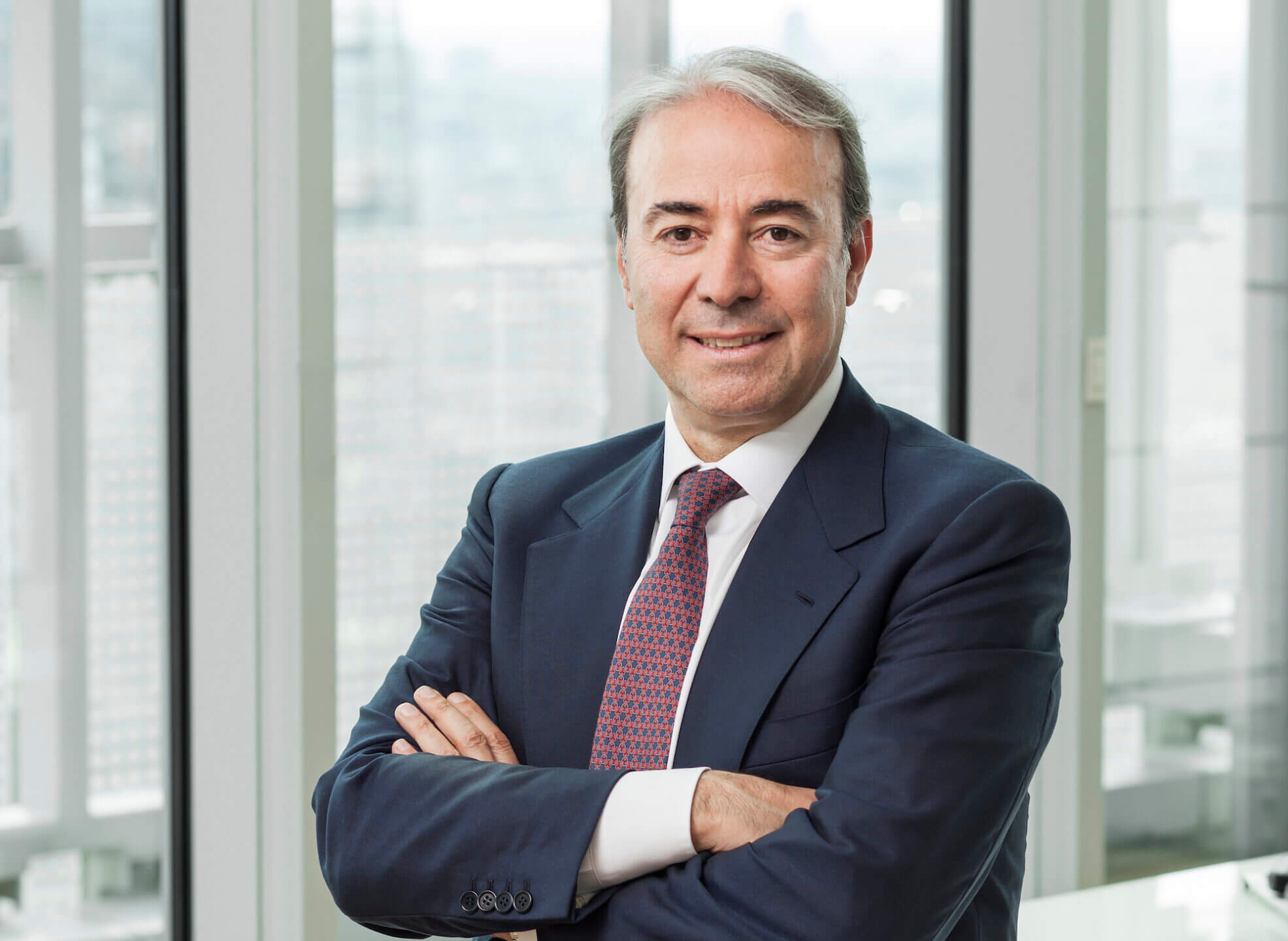
Fabrizio Di Amato, Founder and Chairman of MAIRE
The Business Model
MAIRE began as a contractor specialising in plant construction before moving into the development and industrialisation of deep-tech technologies. How important is innovation to your company?
Innovation is becoming increasingly important. It is now essential for operating successfully in a competitive market like ours. The market is becoming more complex, and what sets companies apart is their ability to innovate: in their products, their organisation and the very way they approach problems.
For us, innovation also means returning to our roots. We come from the great tradition of Italian chemistry, that of Montecatini and Montedison, and of Giulio Natta, who was awarded the Nobel Prize in Chemistry in 1963. Innovation and technological development have always been part of our DNA.
MAIRE will continue investing in new technologies and solutions to do what we have always done. Innovation does not necessarily mean inventing something entirely new; it means doing certain things differently. It also means automating routine activities and redeploying people to higher-value tasks.
In short, we want to continue working in chemistry, but in the chemistry of the third millennium.
We are developing technologies for CO₂ capture and hydrogen production. We have been designing hydrogen production plants for over fifty years, but today we are doing so using technologies that support decarbonisation.
And we are investing more and more. In Rome, we are establishing a research and development centre dedicated to process innovation: the ability to obtain the same final products through new methods that ensure a lower environmental impact.
The underlying idea is simple: to innovate, you need to invest, and you need to believe in it. It is neither easy nor immediate, but that investment eventually pays off. We have demonstrated this.
Could you give us some particularly significant examples of process innovation and industrial innovation?
We believe that today every large industrial plant, anywhere in the world, should be “built like LEGO”, following the principle of modularisation. In some parts of the world, it is becoming increasingly difficult to find the skilled workers needed for certain operations, and this is becoming a serious challenge.
That is why we manufacture modules in prefabrication yards — equipped industrial facilities where large structures are assembled and tested — in countries such as China, Türkiye and India, where skilled labour is more readily available.
We then load them into containers and ship them around the world, by sea or cargo aircraft. The innovation lies precisely in being able to fit even large plant components into containers. This means we do not need to alter the transport supply chain or arrange complex special transportation.
My dream, as I mentioned, is to see an industrial plant built like LEGO: with building blocks, you can construct anything.
We would like to do the same with highly complex industrial plants. It is not simple, but we are working hard on it and achieving tangible results. The modular system makes us considerably more efficient.
A second example concerns managing the sites where we build our plants, where we now use drones and digital mapping. One of the most complex challenges used to be managing material inventories. Imagine one of our construction sites 200 kilometres into the desert, where there is nothing: everything must be available on site, and if something is missing, a solution must be found immediately.
Managing supplies is therefore an extremely complex operation. Today, all materials shipped to our construction sites are coded, and when they arrive, a drone scans them. It sounds simple, but it is not. By scanning everything that comes in, we know in real time what has arrived, what is missing and why. The entire management process is automated, and this has allowed us to significantly reduce overhead costs. Twenty years ago, our general and administrative expenses were very high; today, they have fallen substantially, resulting in major efficiency gains.
This makes us competitive because we can offer customers the same plant, with the same quality, at a lower cost. We are also working extensively on shortening project schedules and improving document control. There is an enormous volume of documentation, and thanks to artificial intelligence, we can manage it more efficiently, at lower cost and more quickly.
Another example concerns procurement. In the past, we conducted separate procurement negotiations for every project and every customer. In reality, whether a project is in Abu Dhabi, Saudi Arabia, or Brazil, and even when customers differ, we purchase more or less the same materials from the same suppliers and generally conduct the same negotiations.
Once the equipment has been selected, a draft contract is sent out, even though we already know which clauses the supplier will not accept. Then months of discussions begin. Today, using artificial intelligence agents, we have mapped our suppliers. Before even engaging with them, we know their references and prices, as well as which conditions are non-negotiable for them.
When we send out a contract, it already reflects provisions that have been negotiated countless times before. In this way, we have shortened procurement times by several months.
Training is another area for innovation. It needs to be rethought because many of tomorrow’s professions do not yet exist today.
If we look at technological innovation in the strict sense, one important area is waste, and therefore waste-to-chemicals technologies. Italy is among Europe’s leading countries in recycling, particularly plastic materials, and is considered a strong performer.
The situation is different for mixed waste, which ends up in landfill or is transported at very high cost to other European countries equipped with incinerators, a technology that is now outdated. We have also studied technological solutions adopted in Japan, where electricity has been generated from waste for years, and developed them further through our technological expertise and process engineering capabilities.
The result is our NX Circular technology, which converts waste into synthesis gas, enabling the production of circular, low-carbon hydrogen and methanol.
How We Manage Innovation
Your company is growing and recruiting extensively. Thinking particularly about managers, what are the key skills you look for? How difficult is it to find these skills, and how do you develop them?
The greatest satisfaction comes from seeing young people we hired years ago now holding positions of responsibility. They have developed within our culture and our way of thinking. An engineer is an engineer, and a lawyer is a lawyer, but when people come from very different corporate cultures, bringing them together is not straightforward.
It is like an orchestra: you have the pianist, the drummer, and everyone knows how to play. But if they do not play in a coordinated way, the result is noise rather than melody.
Let me give you an example. When we acquired Tecnimont in 2005, the company had not recruited new employees for some time.
We resumed recruitment, but it takes seven to ten years before an engineer can be entrusted with full responsibility, including signing off on a project. We therefore faced a gap that needed to be bridged: the new recruits were too young, while the existing workforce was approaching retirement. We consequently brought in professionals from outside, with good results. However, I have found that the strongest profiles are those who have grown within the company, perhaps gaining and consolidating experience abroad, but always within the Group.
So the answer is yes to bringing in some external talent, because exposure to different cultures is necessary, especially when you want to do something new. But in recent years, we have also grown considerably because we have succeeded in transmitting our culture throughout every level of the organisation, building a team of people who know how to work together, respect one another, do not consider themselves superior to others and are focused on achieving a common goal.
I also strongly believe in the concept of the humanist engineer, which draws on the history of ancient Rome: the Romans were humanist engineers. Over time, we have lost some of that humanism and become overly technical, forgetting the context and environment in which we operate. Today, I can see this concept making a comeback.
The manager of the third millennium must therefore have a comprehensive outlook: technical expertise, managerial skills, social awareness of the impact of the locations where plants are built, and the ability to foster empathy within the organisation. And then there is discipline, without superficiality. These are the qualities that make the difference.
Who drives innovation within the company? Are you the one providing that leadership?
It is undoubtedly a matter of leadership. Leadership provides direction; then you need managers to make things happen.
I have seen organisations where many meetings were held, but people did not really communicate. Everyone said they agreed, yet when the time came to act, there was always a good reason not to move forward. With clear leadership, however, people carry projects forward.
Nobody knows everything. We need leaders, but we also need experts with specific technical skills, and we must involve more people throughout the organisation.
With this approach, we have changed considerably. The company has improved, there is greater awareness, and people feel part of the project.
If I may offer one piece of advice: managers must also know how to inspire others. At times, they need to be the leaders who motivate people, encourage them to believe in what they are doing, remain determined and keep moving forward.
But both roles are necessary, the leader and the manager, because leaders alone will not get you anywhere, and without managers, nothing gets done.
One final observation: small committees that make all the decisions do not work.
Meetings need to be inclusive. We bring together people from different levels of seniority, both younger and older. It is said that even Steve Jobs disliked committees, apart from those required by law.
Navigli Canal, Milan, Lombardy, Italy at twilight.
In your approach to innovation, how do you balance external acquisitions, internal research and development, and collaboration with startups?
This is an important issue for us, and we have chosen to address it on several fronts.
On the one hand, the market moves at a certain pace, and we need to capture market share quickly. If we arrive too late, we are out of the game. Internal research and development often takes too long.
That is why we have made numerous acquisitions. Each acquisition allows us to enter a specific market segment or helps us consolidate our leadership in a sector where we are already present. From there, we develop all the related business streams, leveraging our engineering platform and our reputation in the market. When we propose a solution, customers trust us because they know we can make the plant work.
At the same time, we have decided that research is essential, and we are investing in it. Initially, these activities were naturally supported by the Group. Today, they are financially self-sustaining because they have developed mature technologies that work. We have research centres in Rome, Milan, Basel, Sittard, Frankfurt and Mumbai.
Ten years ago, if you had asked me the same question, there would have been nothing to speak of. Research was more a passion pursued by a few individuals than a corporate strategy, as it is today.
Then there are startups. In the nuclear sector, we chose the path of industrial partnership. Together with newcleo, the company founded by Stefano Buono that has made its way onto Nasdaq, we established NEXT-N, in which newcleo holds a minority stake. The company develops intellectual property and technical services for the conventional island and balance of plant, meaning all the structures surrounding the reactor.
Our model is not about committing enormous amounts of capital, but about creating industrial synergies. We have not made the partnership exclusive, because we are also working with French and American operators. When the initiative first emerged, I was not convinced we should proceed, because Newcleo was asking us for engineers and engineering services, in other words, know-how that I could not transfer outside the company. The joint venture was the answer to that need.
I believe in startups, but I also think they need to grow quickly, scale up, achieve their objectives, and raise capital. If a company remains in the startup phase for too long, it loses credibility in the market. This is harder in Europe: the United States has a much more developed ecosystem.
Proposals for European Regulation
What can Europe do for your company?
One thing in particular. Europe is behind schedule in completing the certification framework for low-emission fuels, which recognises and tracks recycled carbon fuels and RFNBOs under the Renewable Energy Directive.
Until that system is fully operational, we face a concrete problem. Once a plant is completed, we will be able to demonstrate technically that the methanol is sustainable, but whoever purchases the product will ask us for official European certification. This is a highly sensitive issue because it affects the bankability of investments. Work has been ongoing for years; now it needs to be finalised.
I am a convinced European, so I do not need to be persuaded on that front. Precisely for that reason, I believe Europe must not become entrenched in the position of one country against another, because every country has its own distinctive characteristics.
Let me return to the earlier example: in Italy, we are very good at recycling, while other countries are less advanced. France is further ahead in nuclear energy, whereas we abandoned that path, although we have retained significant expertise. Germany is pushing ahead with e-fuels.
I believe we must focus on technological neutrality.
We cannot all be the same. We will become a great “European country” if we know how to make the most of each nation’s distinctive industrial strengths and use the best technologies as examples for others, without imposing the same solution on everyone.
Starting with Italy, we should develop a recycling value chain and export it. We should build on French nuclear expertise and bring it to the rest of Europe.
Recognising strengths does not mean allowing one nation to prevail over another. It means acknowledging that strengths differ, not that one country’s approach is wrong compared with another’s. What matters is demonstrating the results that each industrial solution delivers.
In the past, we worked extensively with national governments. Today, I have asked our institutional relations team to engage primarily at the European level. We also need to make the European institutions understand that, when legislating, it is right to set the objective — for example, a certain level of emissions reduction — while leaving industry in each country free to choose the technology with which to achieve it.
If a solution is imposed on me and Europe does not have the corresponding supply chain, we end up in the situation we have already experienced with renewables: we have invested heavily, weakened domestic industrial supply chains and ended up buying solar panels from China. This does not mean that we should not decarbonise. It means we should do so using instruments that also generate returns for the national economy, while supporting industrial transitions.
A brief comment on the latest reform of the EU Emissions Trading System (ETS)?
The ETS alone is not enough. A price signal is useless if Europe does not back it with investment in its own technologies. Without European technological development, we risk paying the price of the transition without building the industry that is supposed to deliver it. That said, I remain optimistic, and I am beginning to see change in Europe today.
The point is that we should not simply wait for answers from Brussels. We need to start developing those answers ourselves, together.
The countries with the strongest industrial bases — Italy, France and Germany — must pool their expertise and technologies to create genuine European value chains, as has already been done successfully in other strategic sectors.
That is what a functioning Europe should look like: not simply being subject to rules, but building them together by pooling each country’s industrial strengths.
Is the consortium model the perfect example of how we should work?
Absolutely. That is how we should approach major challenges. At the moment, I strongly believe in nuclear energy. If we proposed a consortium involving Italy, France, and Germany, we could become major global players. I am not saying we should capture the entire market, because competition is healthy and always helps. Boeing and Airbus have strengthened one another.
I am not skeptical about these issues; I am proactive. We need to unlock opportunities and turn them into successful examples. We are trying to do exactly that in several areas, starting with waste, through a substantial investment programme involving leading Italian and international industrial partners. The objective is to demonstrate that these solutions work and can be replicated by others.
Much of Italy’s public and private research is financed by European funds. Which mechanism do you consider more efficient: the Horizon model, which directly finances individual projects, or allocating funds to individual countries, which then decide how to spend them?
I would favour direct allocation by Europe.
Would it be better to continue with the European project-based approach or adopt a system of automatic tax incentives, such as the American Inflation Reduction Act?
I would prefer direct support based on the American model, because we need to reduce bureaucracy. Bureaucracy is one of the main challenges at the European level.
We have secured significant funding to convert production from ethanol to methanol, but we have been discussing it for a year and a half. We speak to the ministry, the ministry writes to Europe, then further correspondence follows. Everyone agrees, but nobody makes a decision, and we remain stuck.
We need automatic mechanisms for allocating European innovation funding, and we need to place trust in industry. Rules cannot be written solely with the few exceptions in mind.
If someone behaves improperly, checks must be rigorous and penalties must be certain. But we should support those who operate responsibly. Automatic mechanisms would also help public administration officials, who today tend to block everything for fear of being held financially accountable.
Is there more bureaucracy in Europe or in Italy?
European institutions have a longer-term perspective than national electoral cycles, and this can be an advantage when legislating on long-term industrial issues.
In individual Member States, where the pressure of electoral campaigns is significant, some decisions do not follow an industrial rationale. I believe this is a mistake. I am convinced that things done properly, with common sense, ultimately deliver results. However, there is this trade-off between the short and long term.
We should move towards simpler and more automatic systems. Look at what happened during Covid: Europe came together, made resources available for vaccine development and placed its trust in industry, effectively saying: “We need this vaccine, here are the resources, get to work.”
It did not demand detailed explanations of how that vaccine would be developed. By contrast, we often have to explain highly technical matters to officials who, I am convinced, are not in a position to assess their substance. As a result, those matters end up being judged purely on formal criteria.
A quick-fire question: if you could ask Europe for just one initiative to accelerate innovation, what would it be?
An automatic incentive system for the development of new technologies: rather than having to queue up at an administrative office, you should be able to present an idea and receive funding automatically.
Do you think Europe should play a stronger role in driving innovation and defining European industrial strategy?
Yes, absolutely. Industrial strategy must necessarily be European. Even the decision on whether or not to invest in nuclear energy must be part of a European strategy. Each country can then implement it at different levels, but the overall strategy must be a single, common one.
The interview was conducted by Silvia Pugi in collaboration with Gaetano Iaquaniello.
The CEC working group “Innovation for a More Competitive EU” is conducting a series of interviews with leading European managers to understand their approaches to innovation and identify how Europe can support them more effectively. By examining what works and what needs to improve, the initiative takes a constructive approach aimed at strengthening the competitiveness of the European Union.

