Bridging Gaps in Technology and Gender Equality: CESI Conference Highlights
The Independent Trade Unions Confederation – CESI hosted a pivotal conference titled “New Technologies, AI & Gender Equality at Work: Bridging Gaps, Now and Tomorrow” at Le Bouche à Oreille in Brussels. On the 27th and 28th of June 2014, the event drew key stakeholders and social partners, including CEC European Managers, to address pressing issues at the intersection of technology, Artificial Intelligence (AI), and gender equality.
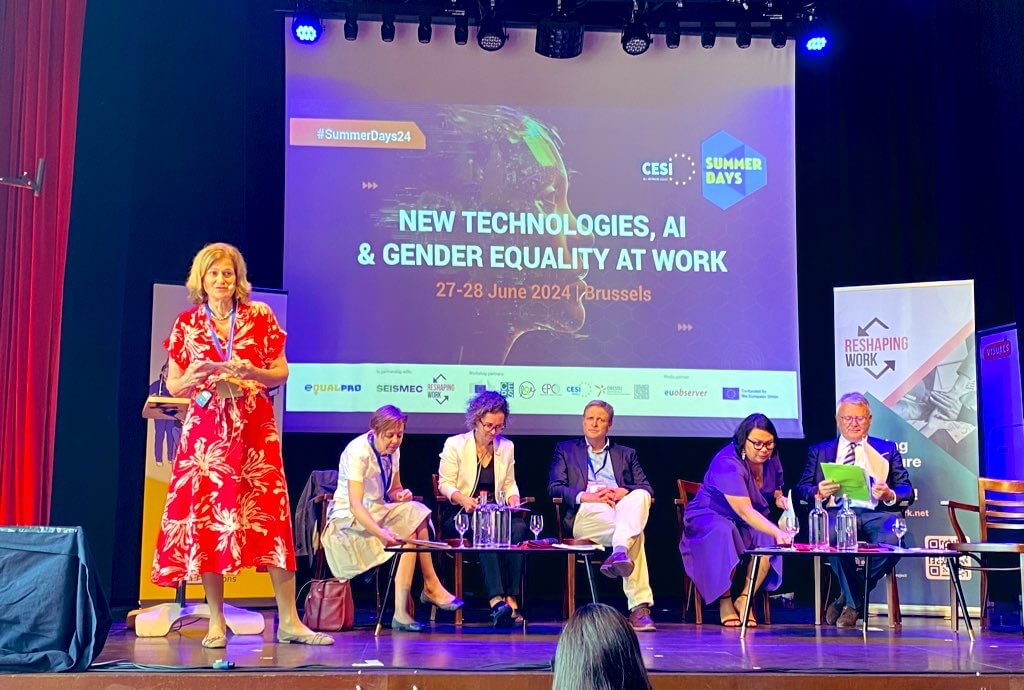
Day 1: Building the foundation for change
Opening Remarks by EU Commissioner Nicolas Schmit
Nicolas Schmit, EU Commissioner for Jobs and Social Rights, opened the conference by highlighting the significant gender gap in the technological sector. Schmit underscored that gender equality is the second right in the EU Pillar of Social Rights, but noted that progress is hampered by cultural factors and the disproportionate burden of unpaid care work on women.
“Telework is, in general, beneficial but it is not necessarily a tool for gender equality,” Schmit remarked, emphasizing that “70% of carers are women, who are often not well protected and underrepresented in collective bargaining”.
The Role of AI in Gender Equality
In that sense, Klaus Heeger, Secretary General at European Confederation of Independent Trade Unions (CESI), framed the discussion by acknowledging the complexities involved in EU social dialogue. He stressed that Artificial Intelligence‘s potential to perpetuate existing inequalities must be addressed through careful management and human-centered approaches.
70% of carers are women who are often not well protected and underrepresented in collective bargaining
Nicolas Schmit
EU Commissioner for Jobs and Social Rights
Karen Vandekerckhove, Head of the Unit for Gender Equality at the EU Commission, pointed out the favorable momentum for gender equality in the workplace in Europe and asked for more trade union involvement. “Work is a key environment for gender equality, and we need to integrate a gender perspective into all our policymaking,” she said.
Work is a key environment for gender equality, and we need to integrate a gender perspective into all our policymaking
Karen Vanderkerckhove
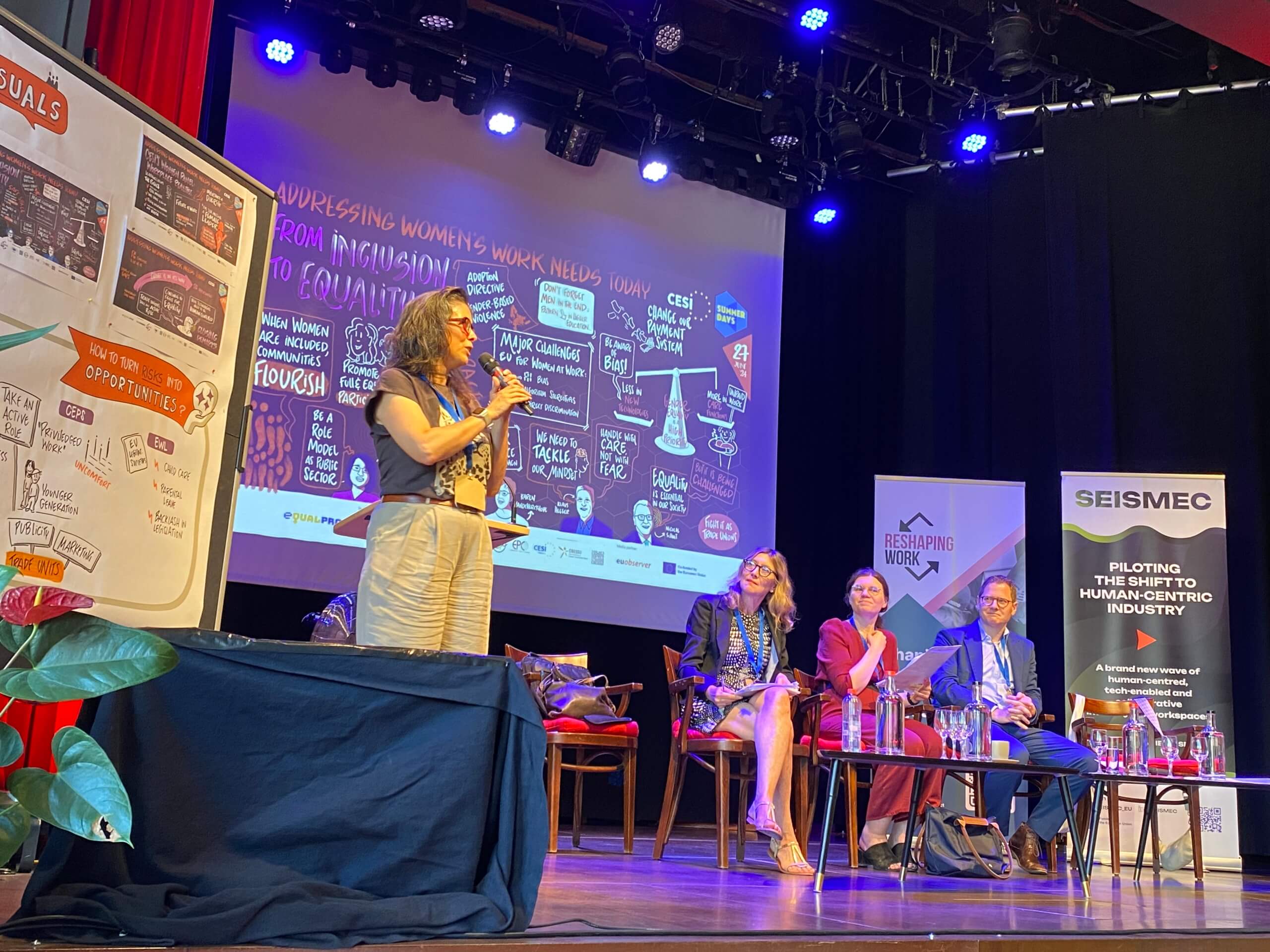
Discovering Artificial Intelligence’s biases
All technology has biases and it is not neutral. This is an idea that was repeated several times by speakers. Technological developers and experts can be responsible for creating less gender-biased and more inclusive tools.
Katarzyna Szkuta, EU and International Affairs Advisor, discussed how Artificial Intelligence can be a dangerous tool in facilitating violence, with 7% of young children exposed to violent content generated by AI.
Milanie Kreutz, Chairwoman of dbb Women, highlighted the need for more women in leadership positions to improve family health and community quality of life.
On a more actionable side of the event, participants got the chance to engage in workshops in which they could imagine themselves in discriminatory situations. For instance, the “Privilege Exercise” reflected on the dynamics of power and how fear of diversity can hinder progress and competitiveness.
Romain Wolff, President of the Confederation of Independent Trade Unions, stressed the importance of trade unions in fighting for equality and the need for “AI to be handled with care, not fear”.
Day 2: Focus on the future of AI and Women
The second day of the conference was dedicated to discussing AI’s impact on women and their role in its future development.
Jacob Dencik and Nathalie Vandystadlt from Directorate‑General for Communications Networks, Content and Technology (DG CNCT) emphasized the need for new AI regulations focusing on societal good, safety, and proper recruitment processes and Sandrine Cazes from the Organisation for Economic Co-operation and Development (OECD) explained the necessity of building trust between social partners and ensuring sufficient representation in discussions about AI. Vandystadlt noted that “without data, there is no AI”, stressing the importance of the Data Act being developed by the Commission.
The way databases are being prioritized and organised, so that they can provide AI systems with relevant information, often exacerbate workplace inequalities, especially affecting women. While seemingly beneficial, flexible work arrangements, often result in women working everywhere all the time, leading to poor work-life balance. In that sense, a United Kingdom study found that 1 in 3 women were willing to leave their jobs due to this issue.
This British survey, conducted by the British Standards Institution reinforced the idea that technology, developed by people within societal contexts, is inherently non-neutral and can reflect systemic societal problems.
Following this idea, the “Biases in the Workplace” workshop highlighted the pervasive nature of AI biases, which can fall into these two categories:
- Technical (errors): Our bias is justified by an external mistake or error
- Narrative (prejudices): We already have an idea of someone based on their background or appearance, and we try to fit that idea into our reality and justify it.
Final Remarks
Jowita Michalska, Digital European Union Ambassador, concluded the event by stressing the need for more regulators and initiatives like the University of Success, which funds 100 female scholarships in AI.
“We don’t want women’s roles in AI to be limited to the AI Girlfriend,” Michalska stated, advocating for a broader and more impactful presence of women in AI development.
The CESI conference was a clarion call for integrating gender perspectives in AI and technology sectors. It highlighted the crucial role of trade unions, educational initiatives, and regulatory frameworks in bridging the gender gap and ensuring a more equitable workplace for all.
Beyond unconscious bias – EU project
The European Project Beyunbi – Beyond Unconscious Bias, coordinated by CEC European Managers, was also present at the event “New Technologies, AI & Gender Equality at Work: Bridging gaps, now and tomorrow” thanks to Fondazione Giacomo Brodolini‘s trainer Barbara De Micheli Ph. D, who intervened during the final workshop.
De Micheli explained that when talking about the impostor syndrome, women tend to blame themselves when, in truth, the system is to blame for constantly reinforcing inequalities and gender biases. In that sense, “it is not so much about changing ourselves, but about changing the system,” said Beyunbi‘s trainer.