CEC European Managers General Assembly in Oslo: “Commitment, Direction and Freedom”
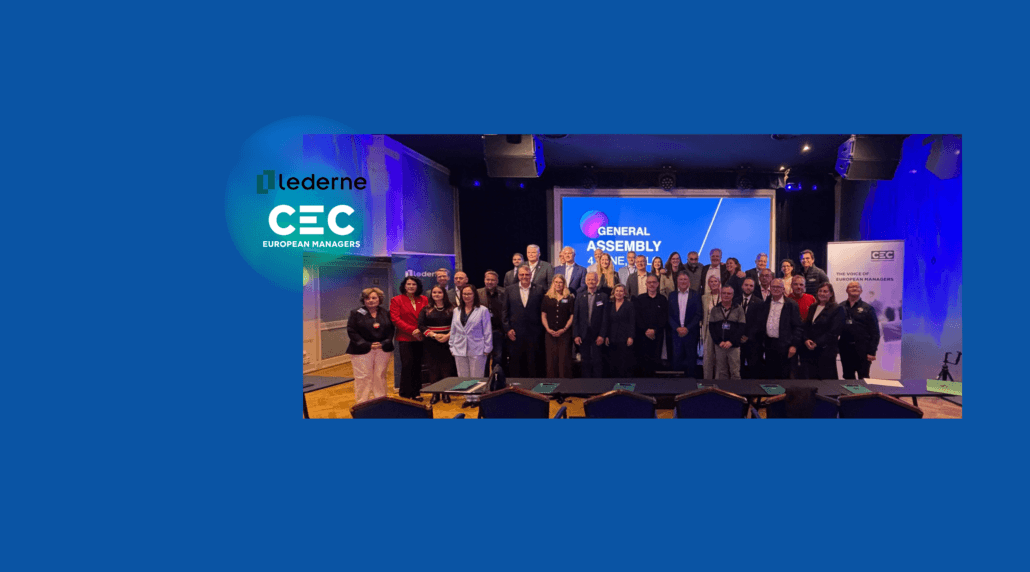
On 4 June 2026, CEC European Managers gathered in Oslo for its 2026 General Assembly.
“Every organisation depends on three forms of capital: people, ideas and resources. People create commitment, ideas create direction, and resources create freedom — freedom to act, to innovate, to represent and to remain independent.”
— Maxime Legrand, President of CEC European Managers
CEC European Managers’ General Assembly brought together representatives of managerial organisations from across Europe to discuss the future of social dialogue, artificial intelligence, organisational growth, and the evolving European political landscape.
The General Assembly was hosted by Lederne Norway and provided an opportunity to review CEC’s activities and achievements while setting priorities for the years ahead.
A Warm Welcome from Norway
Opening the Assembly, Trude-Lene Horna, Vice-President of Lederne Norway, welcomed delegates to Oslo and conveyed greetings from Lederne President Audun Ingvartsen, who was unable to attend due to ongoing mediation work in the Norwegian offshore energy sector.
Highlighting the importance of dialogue and cooperation in working life, Horna underlined the value of bringing European managers together at a time when organisations and societies face profound transitions.
CEC President Maxime Legrand followed with a keynote address reflecting on the major challenges facing Europe today.
He pointed to geopolitical instability, demographic change, technological disruption, and growing pressure on democratic institutions and representative organisations.
“Europe remains one of the most successful political projects in history because it has consistently chosen cooperation over confrontation and dialogue over conflict.”
Legrand stressed the unique position of managers at the intersection of economic performance, sustainability, technological innovation, and social cohesion.
Managers are often required to reconcile competing demands while maintaining trust and engagement within their teams.
He also reflected on the transformation of CEC European Managers over recent years. Following a period focused on financial and organisational consolidation, the organisation is now increasingly able to direct its energy toward development, influence and growth.
AI Manage: Giving Managers a Voice in Europe’s AI Transformation
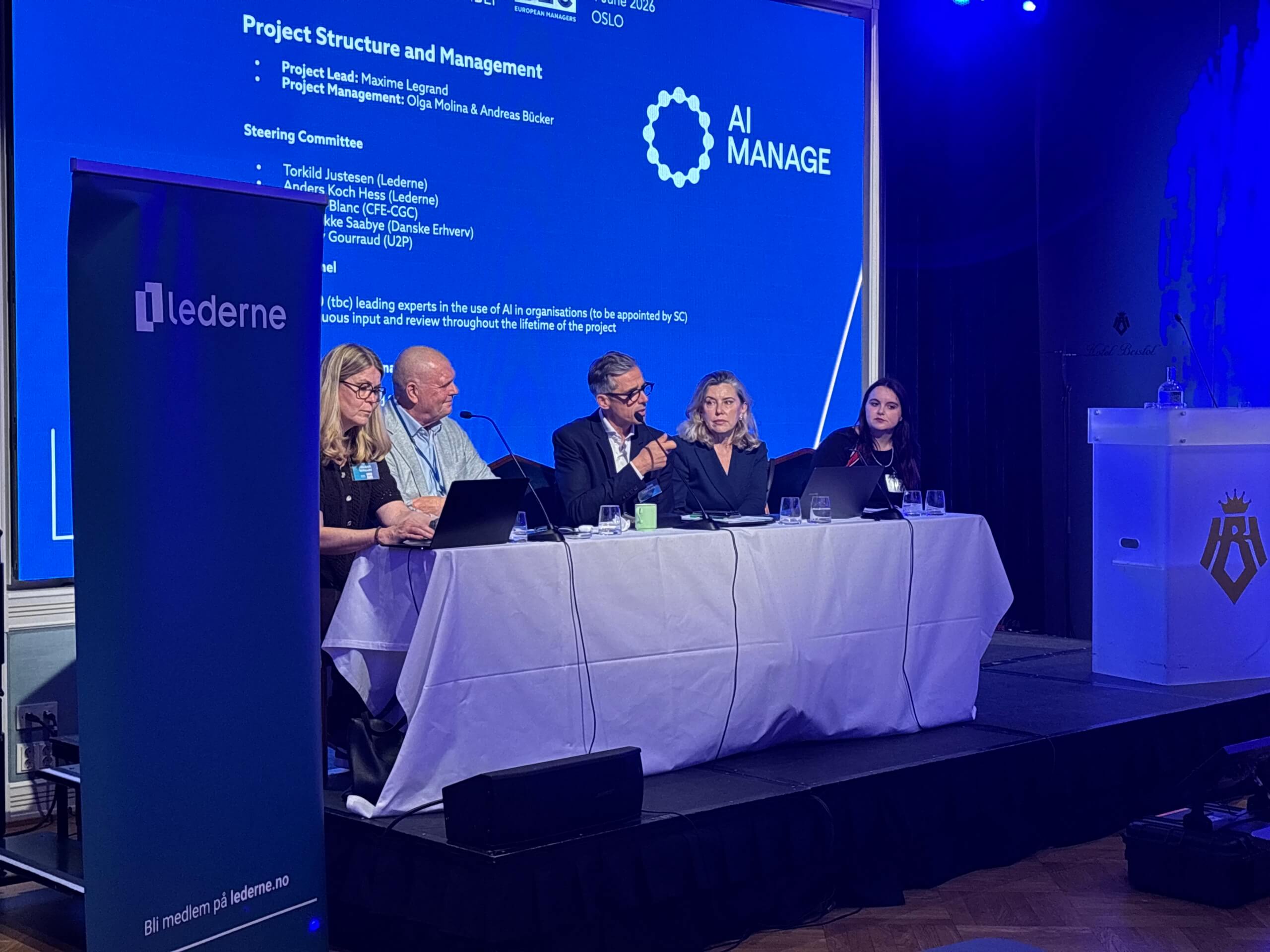
One of the highlights of the General Assembly was the presentation of the newly launched AI Manage project, a major European social partner initiative coordinated by CEC European Managers.
The project officially began on 1 May 2026 and will run until April 2028 with nearly €600,000 in European Commission funding.
Presenting the initiative, CEC European Managers’ Secretary General Torkild Justesen stressed that the value of European projects goes far beyond financial support.
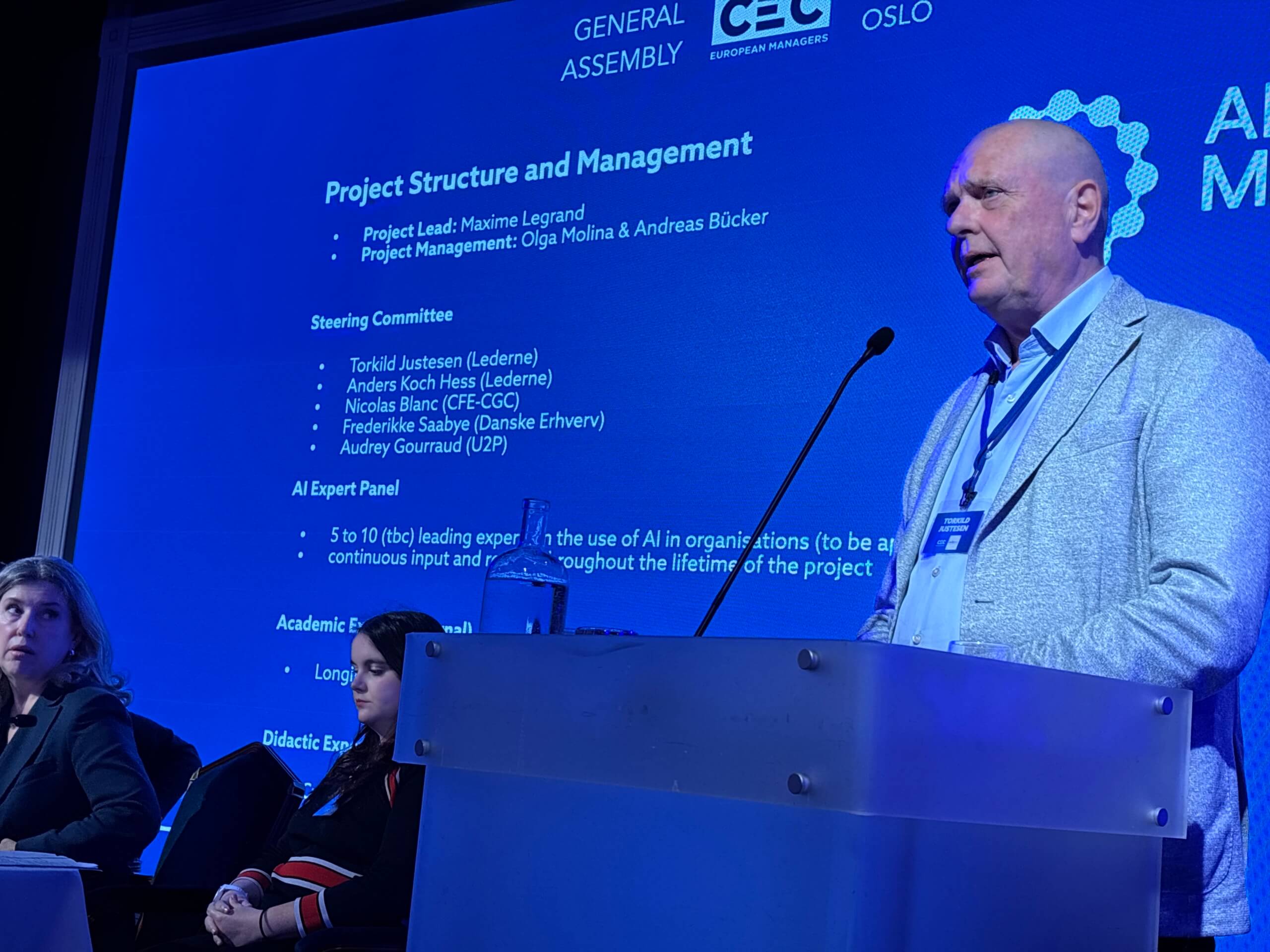
“The most important reason for running European projects is to give managers a strong voice in Europe”
Torkild Justesen
CEC Secretary General
Managers are increasingly expected not only to lead teams using AI-powered tools but also to understand how AI itself influences decision-making, performance management and workplace organisation.
Dr Andreas Bücker, who supports EU project management, outlined the ambitious objectives of AI Manage.
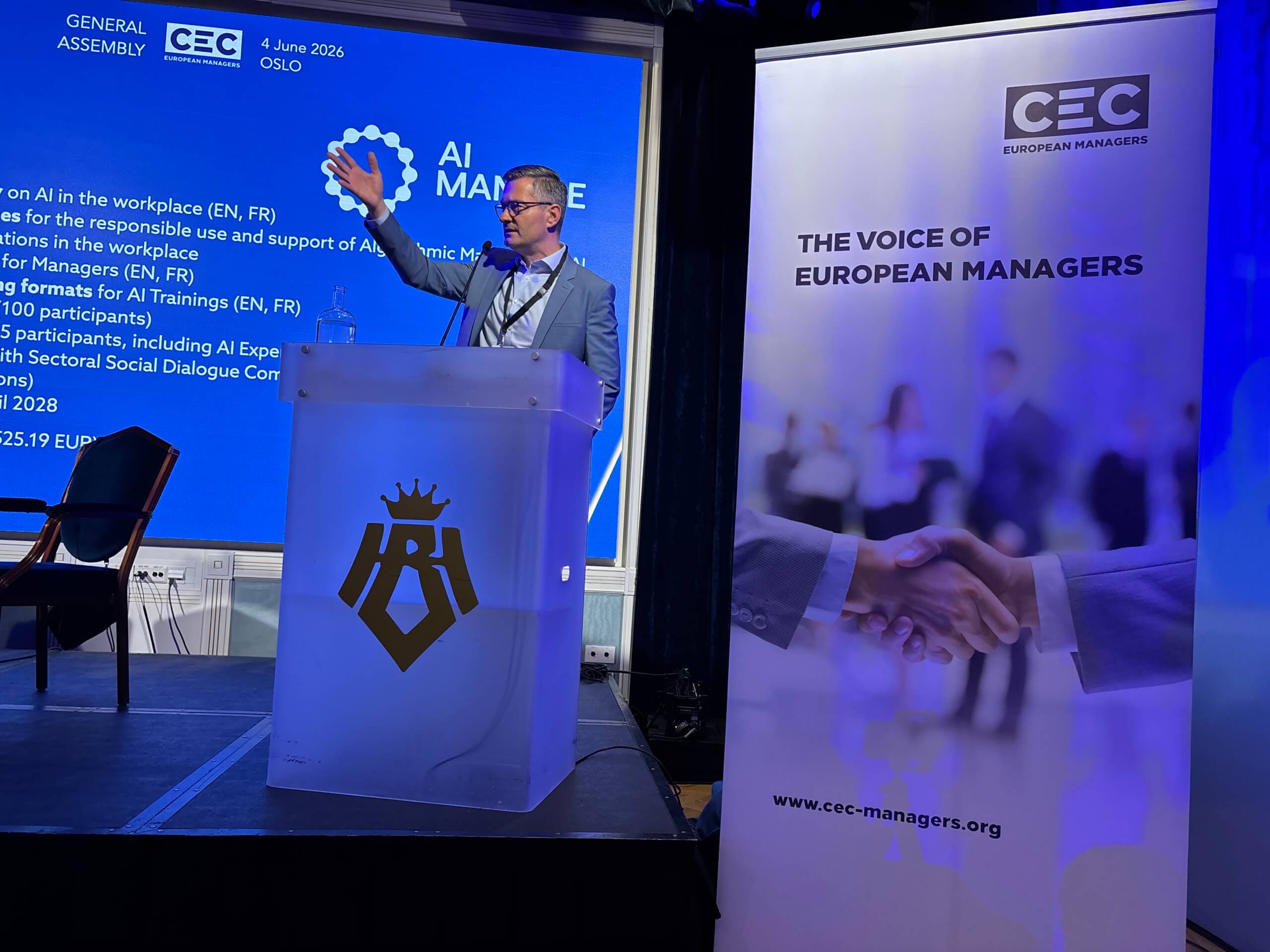
Dr. Andreas Bücker, AI Manage Project manager
The project will develop practical guidelines for managers, create training tools and educational materials, establish a cross-sector framework for responsible AI implementation, and conduct a large-scale longitudinal field study involving companies and managers across Europe.
Importantly, the initiative brings together both employee and employer organisations, demonstrating that social dialogue remains an effective way of addressing emerging workplace challenges.
The AI Manage project will culminate in a series of practical outputs, including management toolkits, training programmes and policy recommendations, alongside major conferences and dissemination events at European level.
Delegates welcomed the initiative as an opportunity for managers to actively shape Europe’s approach to artificial intelligence rather than simply adapt to decisions taken by others.
Social Dialogue: At the Centre of European Policy
CEC Director Olga Molina provided an extensive overview of developments in European social dialogue, highlighting a significant shift in political attention at EU level.
The multiple transitions currently affecting Europe, going from digitalisation and AI to demographic change, labour shortages and geopolitical uncertainty, have reinforced the recognition that effective policy implementation requires strong social partner involvement.
Molina reported on the work of the recently established CEC Social Dialogue Reference Group, which has become an important platform for exchanging expertise and strengthening member involvement in European discussions.
She also outlined progress in negotiations on the new European Social Partners Work Programme.
The future programme is expected to focus on five key areas:
- Capacity building
- Preparedness and resilience
- Joint foresight
- Skills, upskilling and reskilling
- Labour market participation
While negotiations on a formal European social partner agreement on AI have not yet materialised, discussions have shown growing recognition among both employers and trade unions that workers and managers need stronger support in understanding and managing AI systems.
Managers are being recognised as implementers of change as well as key actors in shaping Europe’s future of work.
CEC Working Groups: Delivering through Expertise
Among the updates presented by the Working Groups, particular attention was given to the intervention of CEC Deputy Secretary General Sylvia Pugi, who also chairs the Working Group on Innovation for a More Competitive EU.
Pugi presented the MANAGERS+ Innovation Exchange Network, an ambitious initiative designed to create a European-wide network and exchange programme for managers and leaders.

The project aims to facilitate the sharing of knowledge, leadership practices and professional experiences across borders, strengthening cooperation among managerial communities throughout Europe.
Describing the vision behind the initiative, Pugi referred to it as “a kind of Erasmus programme for managers”, highlighting its potential to foster innovation, leadership development and cross-cultural learning among Europe’s current and future leaders.
Helena Wallin, CEC Treasurer and Chair of the Working Group on Diversity, Equity and Inclusion (DEI), provided an update on the group’s activities and paid tribute to the valuable contribution of Matilda Wriske from the German member organisation ULA.
Wallin expressed her gratitude for Wriske’s commitment, expertise and dedication to advancing the group’s work, underlining the importance of member engagement in driving CEC European Manager‘s policy development and initiatives in the field of inclusion and equal opportunities.
The General Assembly also heard updates from the Working Group on Sustainability and Climate Leadership. Its Chair, Torkild Justesen, announced that CEC European Managers will participate in the United Nations Climate Change Conference (COP) for the third consecutive year, reaffirming the organisation’s commitment to ensuring that managers’ perspectives are represented in global discussions on climate action, sustainability and the green transition.
Finally, Maxime Legrand, Chair of the Working Group on Digitalisation and Artificial Intelligence, outlined the group’s ongoing work on a number of strategic issues linked to Europe’s digital future.
Among the priorities currently being explored is the question of European digital sovereignty, a topic that is becoming increasingly relevant as Europe seeks to strengthen its technological autonomy, competitiveness and resilience in an increasingly complex geopolitical environment.
The Voice of Our Members
Representatives of CEC’s member organisations also took the floor during the General Assembly, providing updates on developments within their respective organisations and national contexts.
A particularly heartfelt intervention came from Alberto Castelli of the Italian member organisation CIDA, which is celebrating its 80th anniversary this year.
Castelli reflected on the organisation’s long-standing contribution to representing managers and professionals in Italy and reaffirmed its commitment to strengthening the managerial voice at both national and European level.
The Assembly also congratulated the German member organisation ULA, which recently marked its 75th anniversary, a significant milestone that highlights its enduring role in promoting and defending the interests of managers in Germany.
From Sweden, representatives of Ledarna introduced their newly elected Board and presented Mikael Svälas as the organisation’s new Vice-President, sharing their priorities for the coming years and their continued engagement within the CEC network.
Meanwhile, representatives from the Belgian member organisation provided an overview of the current national situation, explaining that Belgium is undergoing a particularly sensitive period of political and socio-economic reforms.
They highlighted the challenges these changes pose for workers, managers and social partners, underlining the importance of constructive social dialogue in navigating the ongoing transformation.
François Hommeril: A Farewell Message for Europe and Its Managers
The General Assembly concluded with a moving farewell address by François Hommeril, President of the French managers’ and professionals’ confederation CFE-CGC, who is approaching the end of his mandate after nearly a decade at the helm of one of Europe’s most influential organisations representing managers, engineers and highly qualified professionals.
A prominent figure in French and European social dialogue, Hommeril has led the CFE-CGC since 2016, becoming one of the strongest advocates for managers’ interests in debates on the future of work, industrial policy, skills, social dialogue and economic transformation.
Throughout his mandate, he has consistently defended collective bargaining, social dialogue and the role of managers as key actors in economic and societal progress.
Addressing delegates in Oslo, Hommeril delivered a speech centred on his enduring confidence in the European project and the essential contribution of managers to its future success.
“Managers’ goal is to address our world’s complexities”
François Hommeril
Reflecting on the challenges facing Europe, from geopolitical uncertainty and technological disruption to economic and social transitions, he stressed the need to preserve dialogue, responsibility and democratic values.
His message was ultimately one of optimism and commitment. Looking ahead, he expressed hope that Europe would continue to build its future on cooperation, innovation and social cohesion, while recognising the indispensable role played by managers and leaders in guiding organisations through change.
“Europe will not be built without its leaders and managers,” Hommeril told delegates, receiving warm applause from the Assembly.
His intervention served as a fitting conclusion to a General Assembly largely dedicated to the future: the future of European managers, the future of social dialogue, and the future of Europe itself.
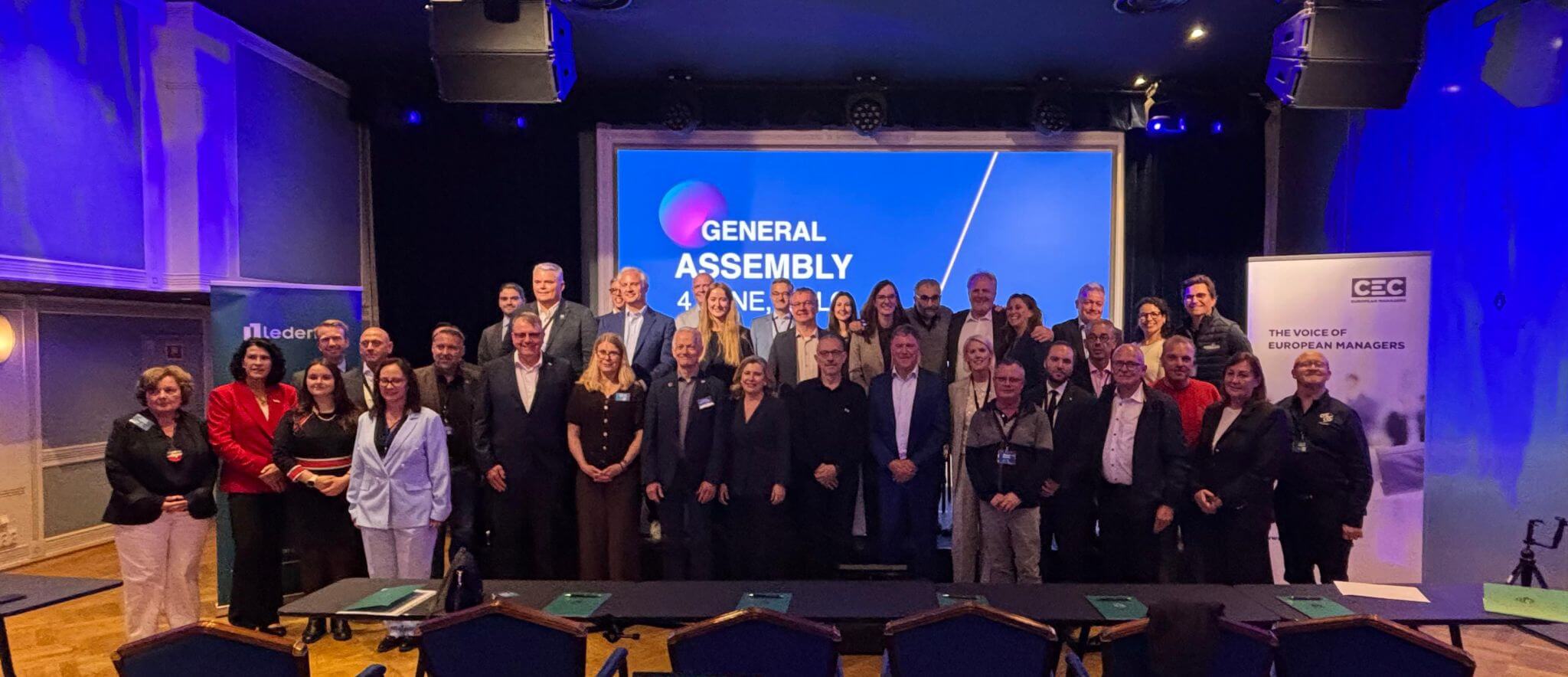
Preparing Managers for Europe’s Future
Europe is entering a period of profound transformation, and managers will play a crucial role in navigating it.
Whether addressing Artificial Intelligence, organisational resilience, social dialogue, demographic change or economic uncertainty, managers increasingly stand at the centre of Europe’s most important transitions.
CEC European Managers is determined not only to represent managers in these debates but also to help shape the solutions.
CEC European Managers represents around 1M leaders in Europe, reinforcing the managerial voice and preparing for the challenges and opportunities of the decade ahead.

