
European Managers Put Human Judgement and Responsible Leadership at the Centre of AI Transformation
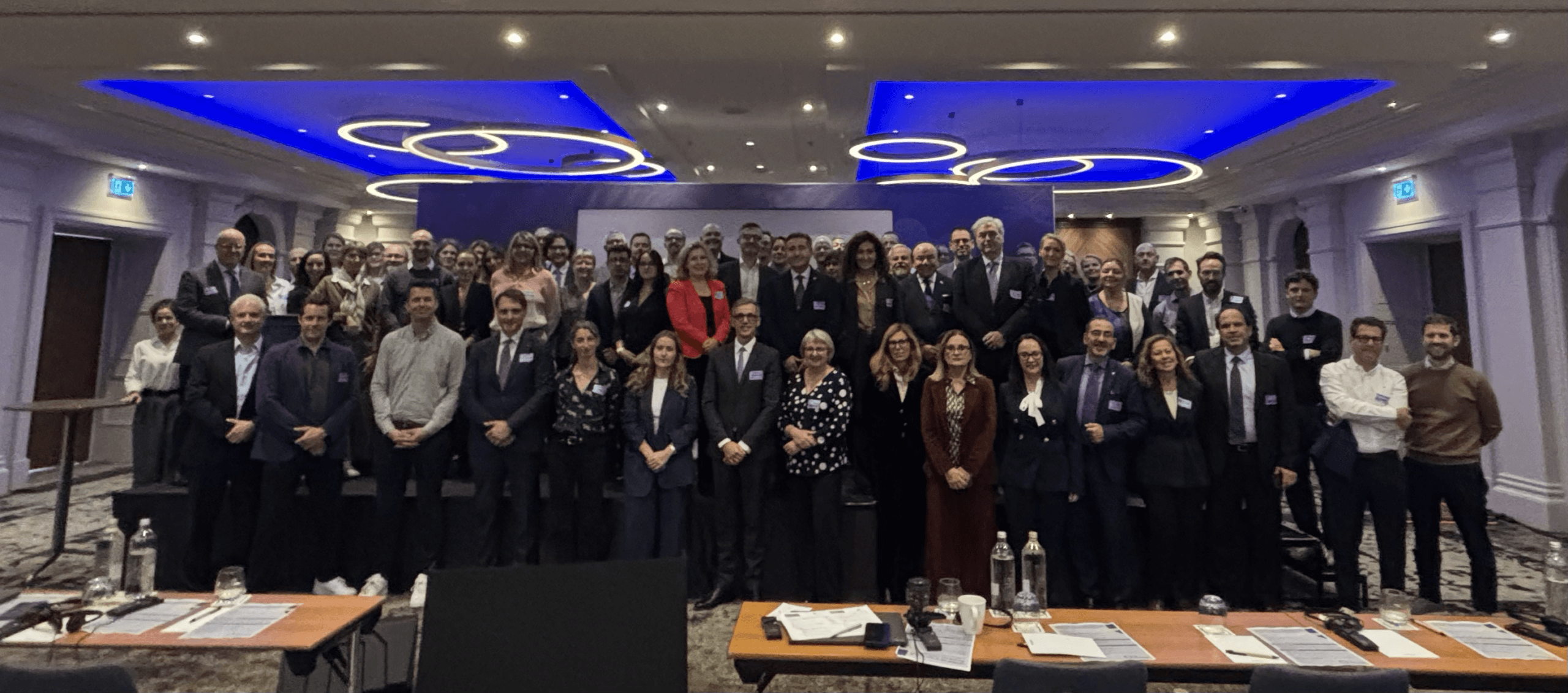
Around 100 representatives of European institutions, businesses, managerial organisations, social partners and academia gathered in Malta for the first AI MANAGE European Conference. Over two days, discussions moved beyond technological possibilities to examine the responsibilities, skills and organisational changes required to make AI work for people and businesses.
Artificial Intelligence is changing the way Europe’s organisations operate. Algorithms increasingly allocate tasks, assess performance, support recruitment and influence decisions. Generative AI is becoming part of everyday professional activities, while more autonomous AI agents promise to transform how entire workflows are organised.
If AI increasingly influences decisions, how can managers remain genuinely responsible for them?
This question was at the centre of the first AI MANAGE European Conference, organised by CEC European Managers and its project partners at the Hilton Malta on 5–6 November 2026.
Under the title “Leadership and the Responsible Use of Algorithmic Management and AI: A Working Conference for EU Leaders”, the event brought together around 100 participants from across Europe for two days of discussions involving policymakers, researchers, employers, managers, employee representatives and companies already implementing AI.
The conference combined European policy perspectives, academic findings, technological developments and business experiences, with a particular focus on translating these insights into practical guidance for managers.
Responsible AI implementation is an organisational and leadership responsibility.
Managers at the intersection of technology, organisations and people
Opening the conference, project manager and event host Dr. Andreas Bücker outlined the milestones, expected results, and events of the AI Manage project.
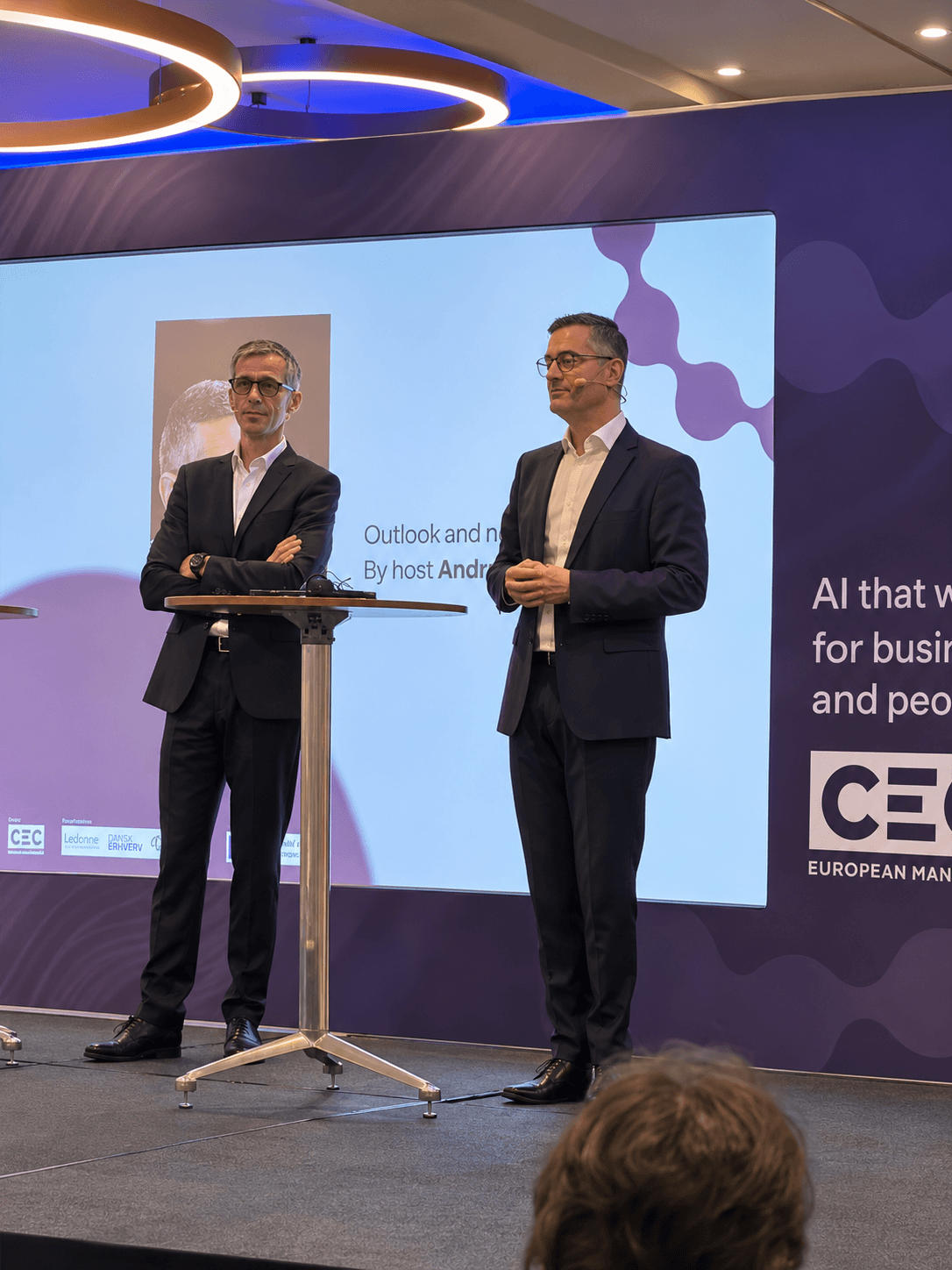
© From left to right: Maxime Legrand (President CEC), Dr. Andreas Bücker (AI Manage Project Manager and Conference Host)
Maxime Legrand, President of CEC European Managers, challenged participants to consider what they should expect from intelligent systems.
Using an experiment involving two AI tools, Legrand asked to identify the colour of a blue bottle, he demonstrated how one system accepted an incorrect assertion while the other challenged it.
This example served as a great illustration for a fundamental risk of generative AI: systems designed to be helpful can reinforce users’ assumptions instead of challenging them.
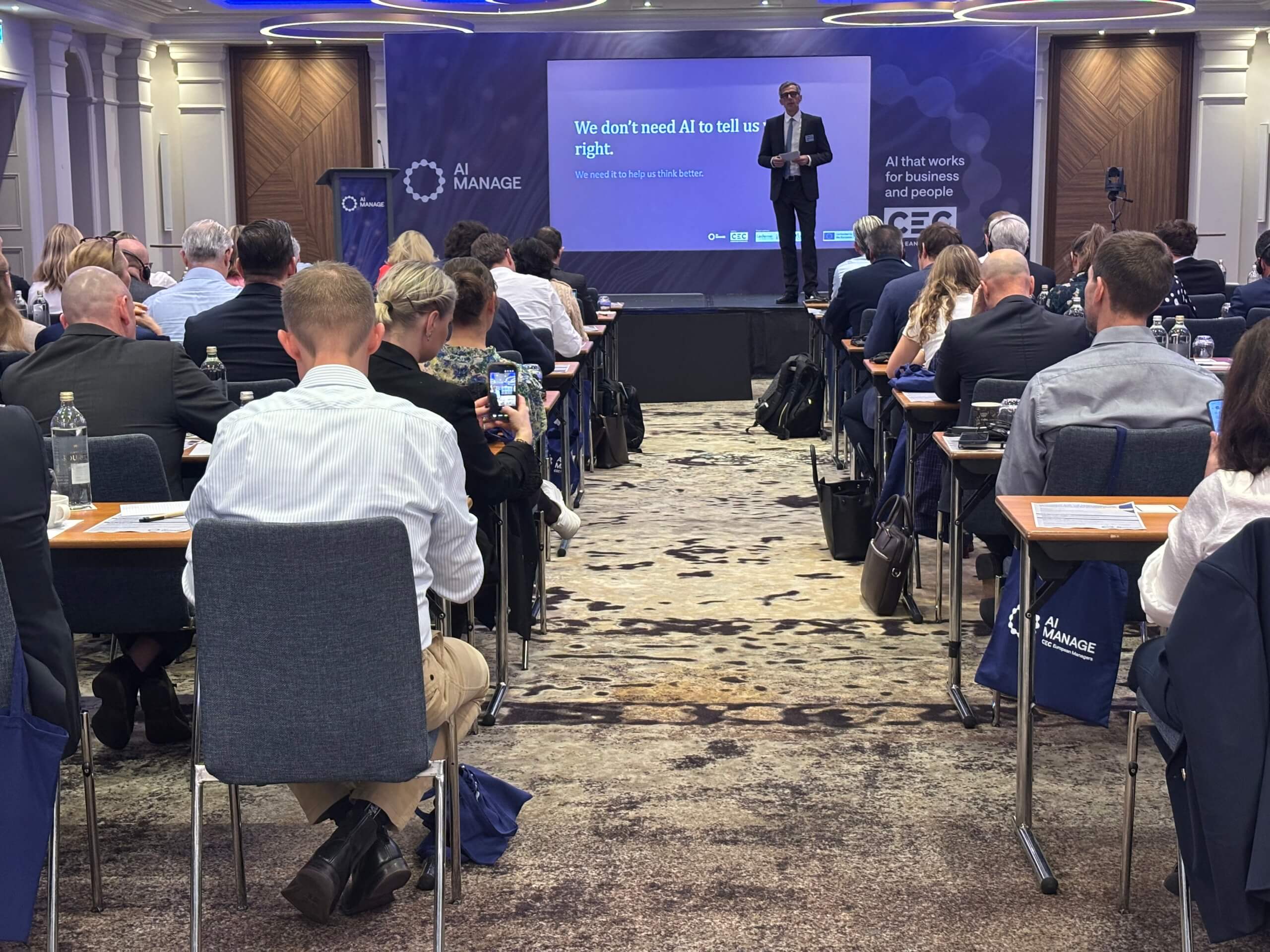
We don’t need AI to tell us we are right. We need it to help us think better.
Maxime Legrand
CEC European Managers. President
Managers and leaders responsibilities involve interpreting information, questioning decisions and reconciling competing organisational needs. This is why this distinction is essential.
Legrand also connected this AI experiment to European social dialogue. Employers, managers and employee representatives do not necessarily share identical interests or perspectives, but their ability to challenge one another constructively is essential to reaching workable solutions.
Managers occupy a particularly distinctive position in this process, as they are employees themselves, while also implementing organisational decisions and being held accountable for their consequences.
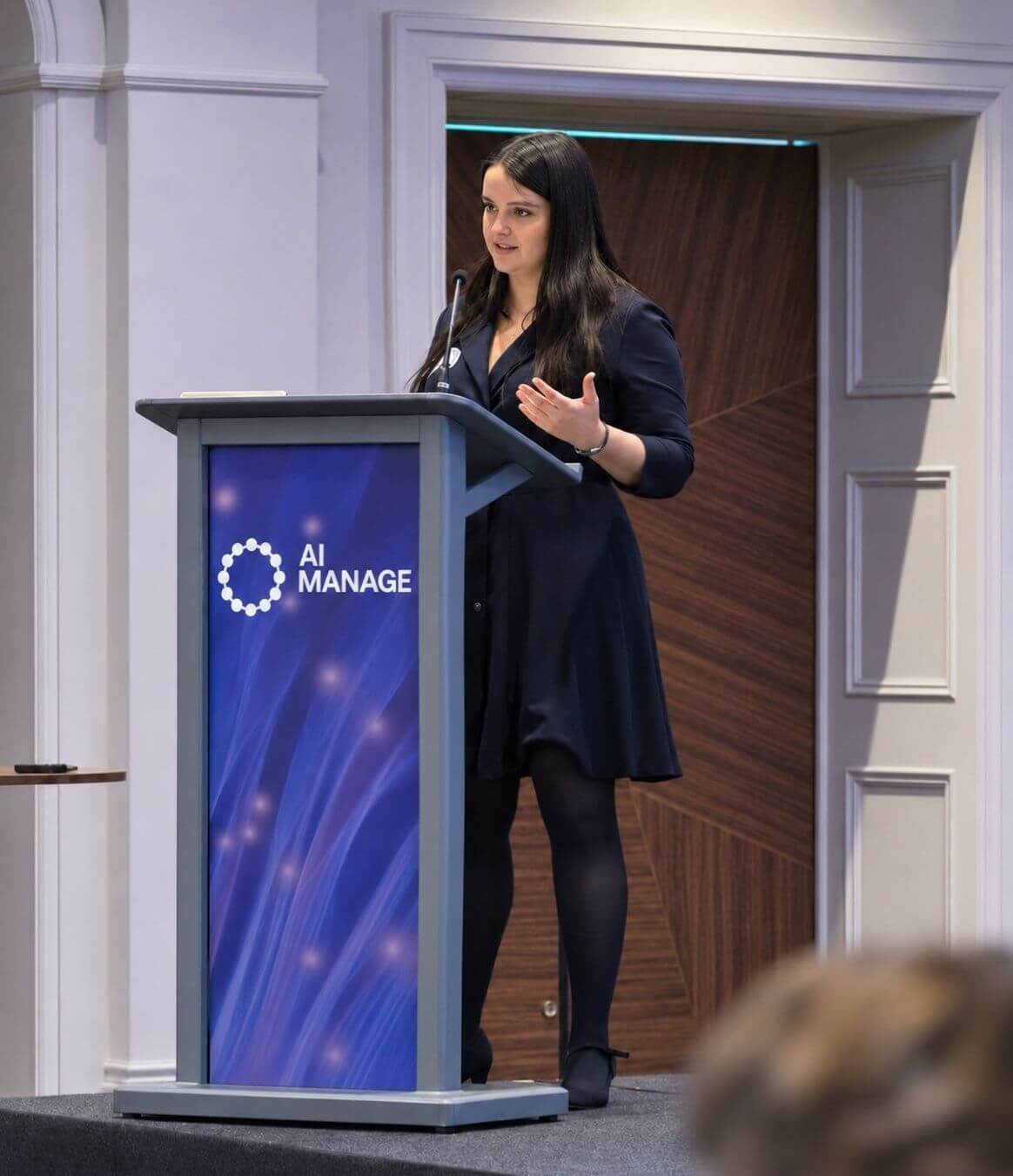
© Opening speech: Olga Molina. Director of CEC European Managers
Olga Molina, Director of CEC European Managers, developed this argument by highlighting the growing gap between managerial responsibilities and the organisational support available to exercise them.
Research involving approximately 6,000 managers, discussed during the opening session, suggests that managers recognise the advantages of algorithmic tools but remain concerned about unclear accountability, transparency and employees’ wellbeing.
As Molina emphasised:
Managers are not simply people who implement the change. We are part of the teams that we lead.
Olga Molina
CEC European Managers. Director
AI is increasingly shaping workplace decisions, and managers must have sufficient knowledge to understand the systems they use, the authority to challenge their recommendations and the opportunity to participate in decisions about their introduction.
CEC European Managers’ position is clear: Decisions affecting work organization, employee evaluation and managerial responsibility cannot be treated exclusively as technological or executive matters.
The European Commission: reconciling technological innovation and quality employment
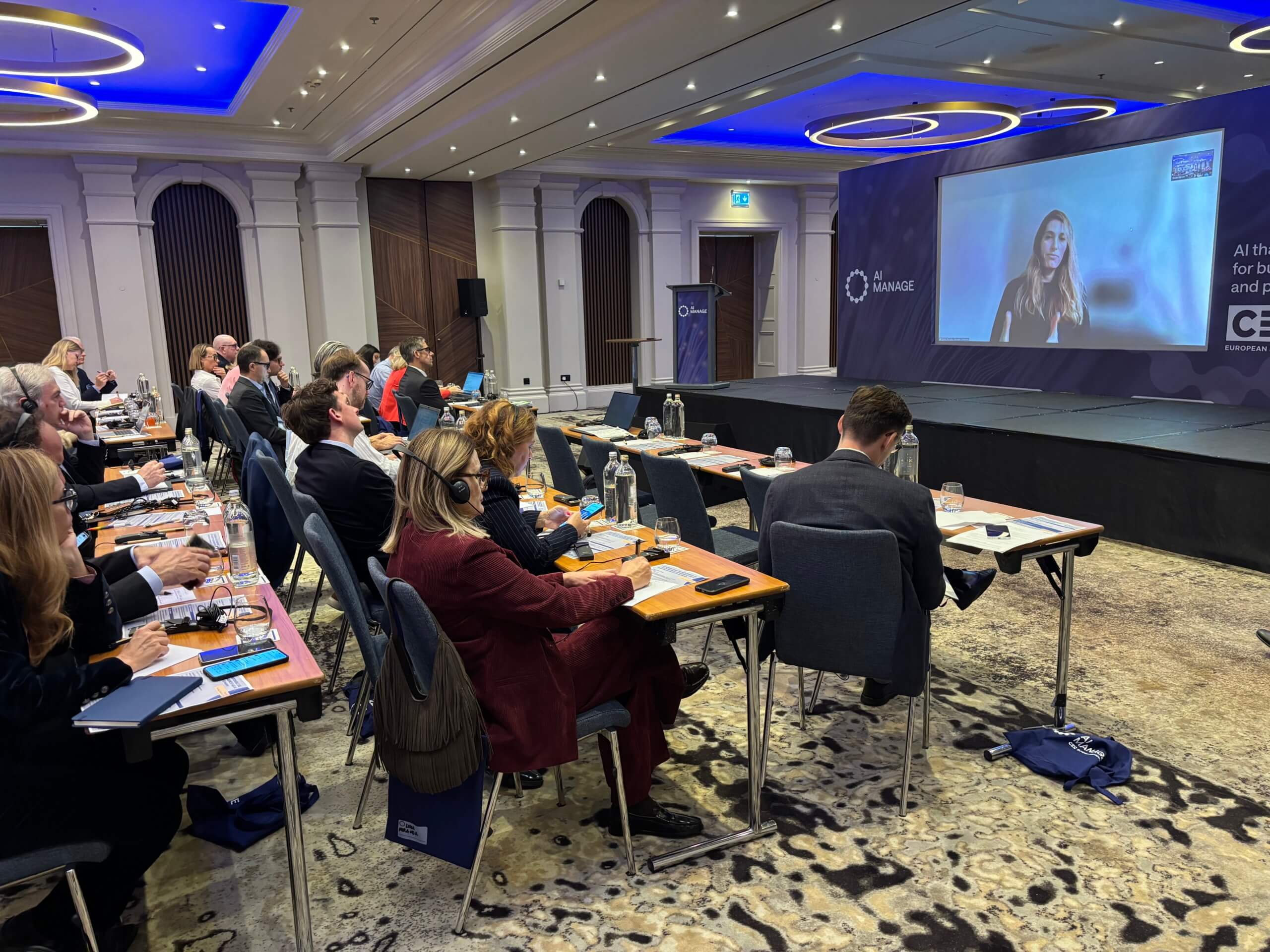
The European policy dimension was addressed by Roxana Gheorghiu, Legal Officer at the European Commission’s Directorate-General for Employment, Social Affairs and Inclusion.
Her intervention examined the implications of algorithmic management for working conditions and the European regulatory framework.
She stressed an important distinction: algorithmic management extends beyond the AI systems covered by the EU AI Act.
It encompasses automated systems used to allocate tasks, determine schedules, monitor performance, evaluate workers and support managerial decisions, including systems based on more traditional technologies.
As Gheorghiu stated:
AI also affects the quality of work. It is changing how work itself is managed, raising challenges that are fundamentally different from the traditional human management challenges.
Roxana Gheorghiu. European Commission DG EMPL
The existing regulatory landscape includes the AI Act, the General Data Protection Regulation and the Platform Work Directive, but their scope and application differ.
The European Commission is therefore examining whether existing rules provide sufficient protection and legal certainty or whether targeted European action may be required.
These questions form part of the policy work surrounding the proposed Quality Jobs Act, including the role of human oversight, algorithmic transparency and social dialogue.
Gheorghiu also underlined the dual role of managers: they experience the effects of technology on their own work while being responsible for implementing technological and organisational change.
Participants reminded the European Commission of the importance of involving managers in European policymaking.
The conference also featured a video intervention by Brando Benifei, Member of the European Parliament and rapporteur of the AI Act, on implementing it in the workplace.
AI agents: from performing tasks to orchestrating work
Peter van Hees, Innovation Manager at KBC Bank, offered a forward-looking perspective on the evolution of AI.
Tracing the development of services from face-to-face interactions to digital self-service and mobile technologies, he described the emergence of a new phase characterised by increasingly autonomous and proactive AI systems.
His presentation explored how AI agents could move beyond answering questions to managing complex sequences of actions.
Rather than interacting with a separate application for every task, users may increasingly rely on interconnected systems that coordinate services, information and activities.
This technological evolution could fundamentally change professional responsibilities.
As AI becomes capable of undertaking more complex tasks, managers and other professionals may move from directly performing work towards supervising, validating and coordinating the activities of intelligent systems.
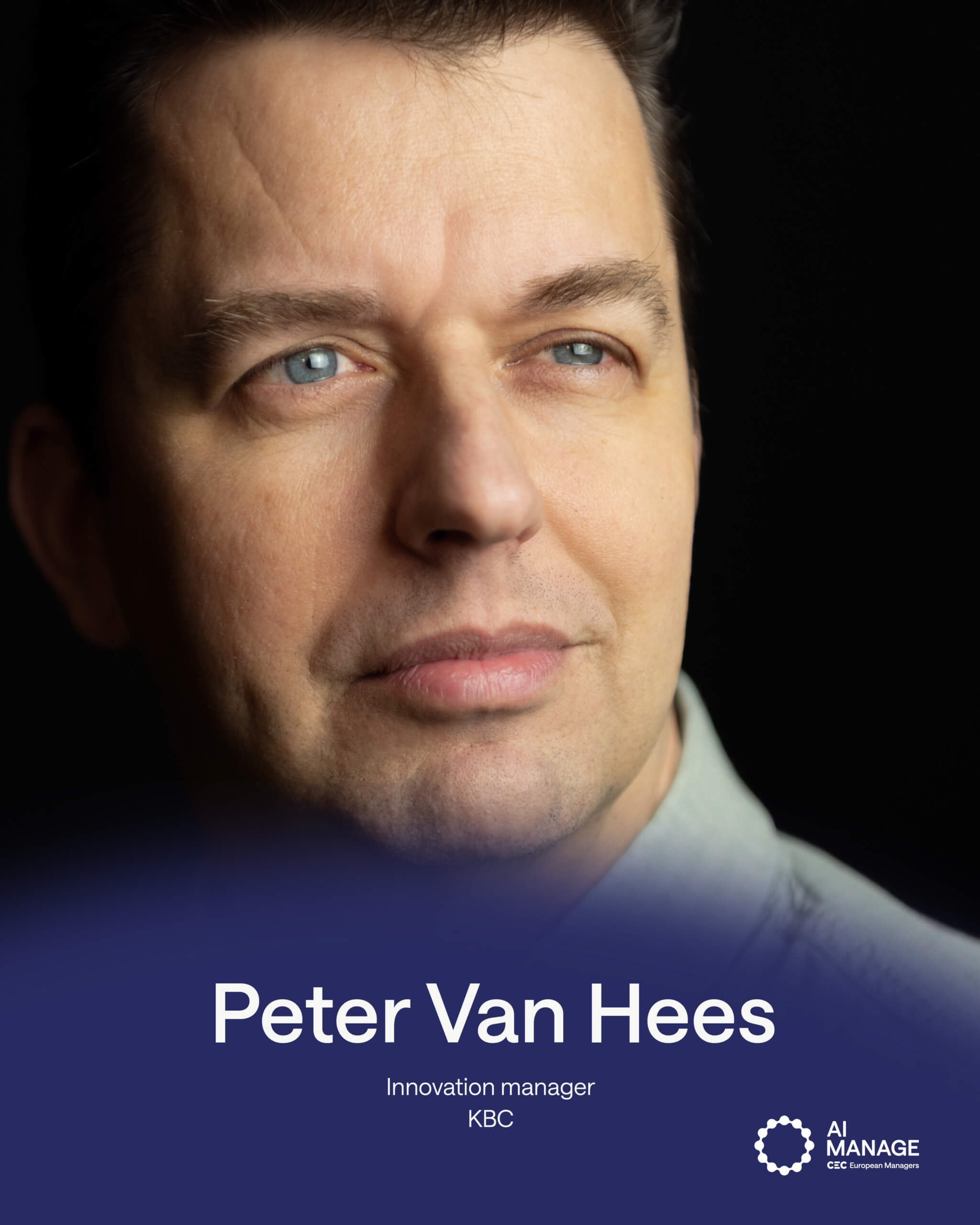
Van Hees warned that the ability to supervise AI cannot be separated from the expertise needed to understand its outputs.
“When AI thinks fast, you think slow. You basically pause, you challenge and you verify.”
Peter van Hees
Innovation Manager at KBC Bank
The presentation suggested that the future value of human expertise may increasingly lie in the ability to exercise judgement, determine objectives and recognise when AI should not be allowed to act.
Individual productivity is not the same as organisational performance
The relationship between AI adoption and productivity featured prominently in the contribution by Kasper Lynge Jacobsen of Dansk Erhverv.
He highlighted the discrepancy between employees reporting increased individual productivity and organisations demonstrating measurable improvements in overall performance.
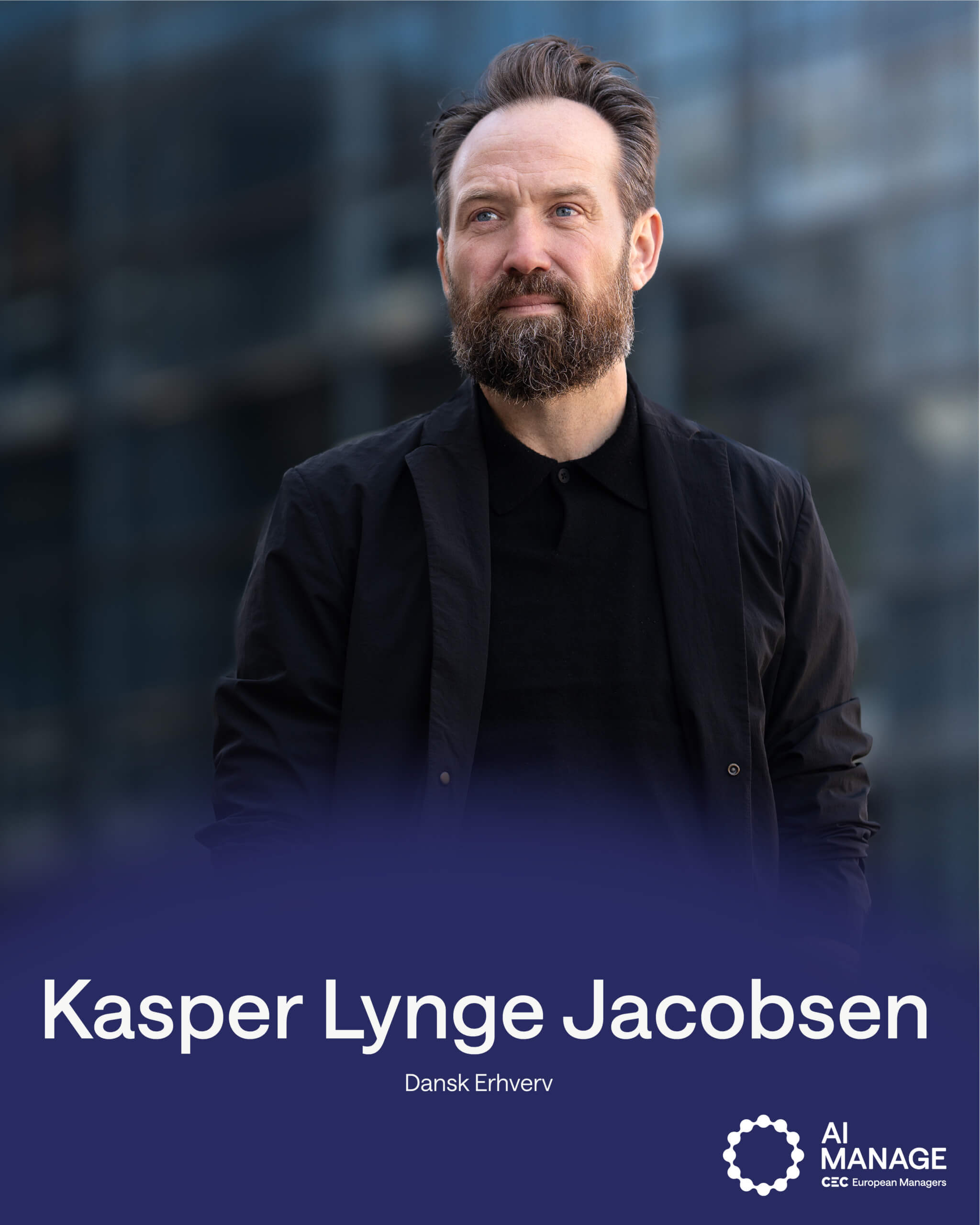
Drawing on experiences among Danish business members, he explained:
“When we ask our members, it’s three out of four who says I’ve become more productive using AI. When we ask them if you can see it on the bottom line somewhere, it’s like one out of five who can actually report that.”
Kasper Lynge Jacobsen. Dansk Erhverv
This gap raises a central question for managers: how can organisations move beyond individual experimentation to create genuine collective value?
Making tasks faster does not automatically improve the performance of an entire organisation.
AI implementation requires companies to reconsider workflows, business processes, coordination and the relationship between technological capabilities and organisational objectives.
The discussion also highlighted differences between AI-native businesses, which can design activities around new technologies from the outset, and established companies that must adapt existing structures and operating models.
AI MANAGE research: what are managers already doing with AI?
One of the conference’s most significant contributions came from Marie Klotz, researcher at the Technical University of Munich, who presented the academic work supporting AI MANAGE.

Her intervention combined a review of existing research on algorithmic management with preliminary results from a survey of conference participants.
The findings offered an early picture of how managers and other professionals are integrating AI into their work.
Among respondents to the pre-study, approximately 67% reported using AI daily, while around 89% used it at least weekly.
AI was being used not only for writing, translation and summarising information, but also for data analysis, decision preparation and other management-related activities.
Among respondents managing employees, AI was already being used to prepare decisions and support personnel-related work.
The survey also revealed a discrepancy between organisational policies and individual practices.
Although 70% of respondents reported that their organisations had AI guidelines, almost half also reported using private AI accounts for work-related purposes.
Klotz drew attention to this phenomenon:
“So a surprising amount of you uses private accounts for AI work.”
This points to the continuing challenge of shadow AI, where employees use technologies outside officially established organisational arrangements.
The research further suggested that respondents paid more attention to the information they entered into AI systems than to certain aspects of ongoing data governance, such as retention policies and technical documentation.
These results require careful interpretation. The pre-study involved a small, non-representative sample, with 33 completed questionnaires, and was designed to provide exploratory insights rather than generalisable statistics on European managers.
Nevertheless, it helps identify practical questions for the next phase of AI MANAGE.
Responsible managerial decisions
Klotz also reviewed academic research showing that algorithmic management can produce contrasting outcomes.
Depending on system design and organisational context, automated management may improve consistency and perceptions of fairness, but may also reduce employee autonomy, increase monitoring or create uncertainty about decisions.
Existing research distinguishes different configurations of algorithmic management, ranging from surveillance and automated control to systems in which algorithms and employees share responsibility for organising work.
These distinctions matter because introducing AI is not simply a question of choosing a tool. It also involves deciding how autonomy, authority, information and responsibility are distributed.
The forthcoming AI MANAGE longitudinal field study, developed with Professor Theresa Treffers and the Technical University of Munich, will investigate these questions through three research clusters:
- Decisions: how managers make responsible decisions with AI.
- Interactions: how managers act responsibly towards employees when using AI.
- Equipping managers: how organisations should provide the knowledge, structures and support needed for responsible AI management.
The study will follow participating managers over time through surveys and realistic workplace scenarios.
One example presented during the conference involved an AI recruitment system used to screen and rank job applicants, examining how managers approach recommendations in situations where fairness, transparency and accountability are particularly important.
The research will provide evidence for the project’s cross-sectoral guidelines, AI Management Toolbox and training materials.
From principles to practice: what European companies are learning
A central feature of the conference was the presentation of real organisational experiences from companies introducing AI.
These examples demonstrated that different sectors and company sizes face different challenges, but also revealed several common requirements.
Electrolux: AI must become an organisational capability
Belinda Zhu, from Electrolux Group, presented the company’s journey from initial experimentation towards broader AI implementation.
The presentation addressed the tension between the speed of technological development, employees’ freedom to experiment and organisations’ responsibility to manage risk.
Electrolux‘s approach distinguishes several stages of implementation: exploring possibilities, building technological foundations, establishing governance, developing workforce capabilities and scaling business applications.
Zhu summarised one of the most important lessons from this experience:
AI is really not about the technology. It’s the organisation transformation.
Belinda Zhu
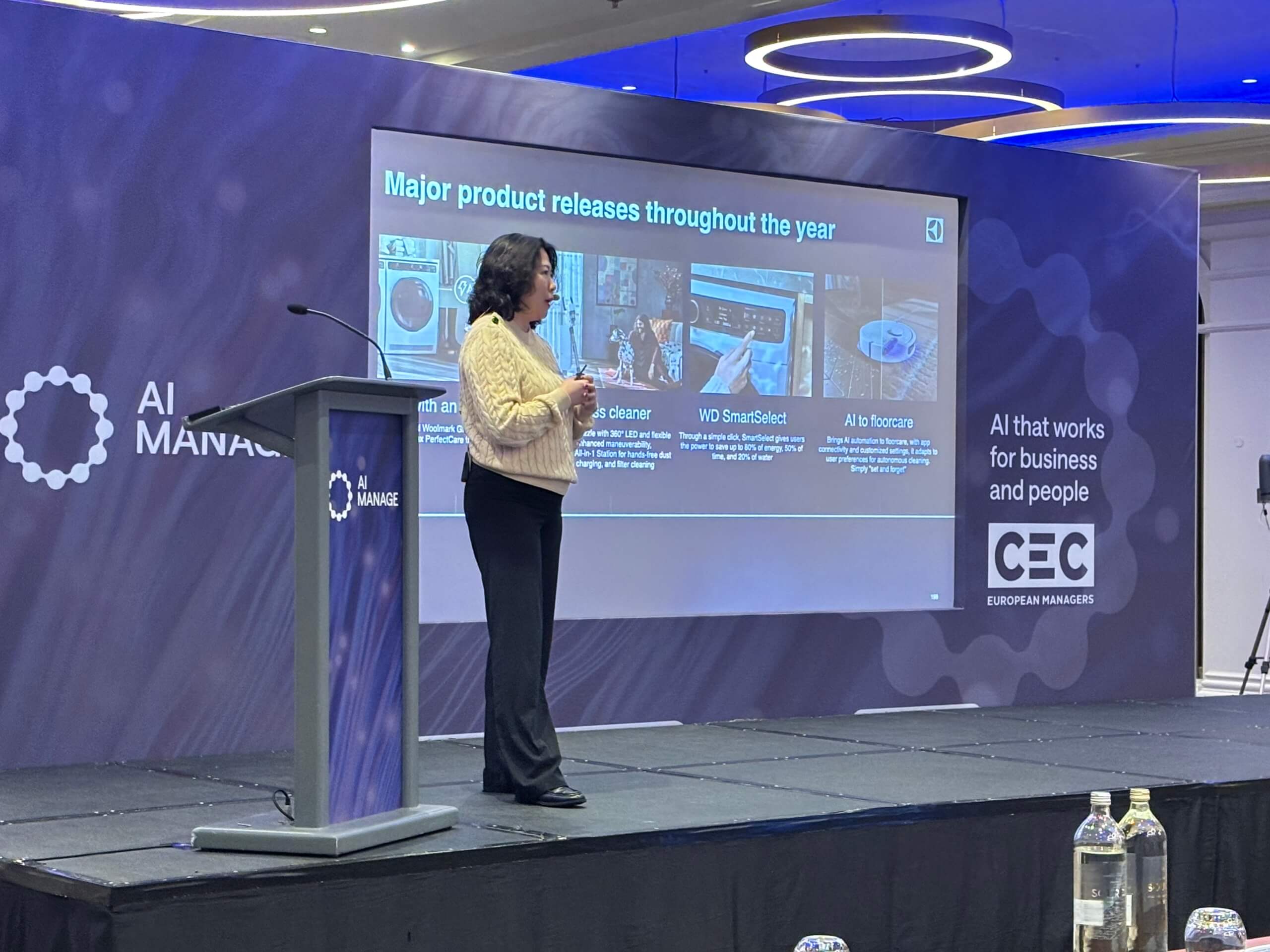
A particularly important element is how responsibilities are distributed.
Business functions are expected to own operational problems, processes and value creation. Digital and IT teams provide technological infrastructure and security, while governance functions support risk management and compliance.
The company also differentiates between the capabilities required by AI specialists, advanced users who help redesign workflows and employees using AI in their everyday activities.
Zhu emphasised that providing employees with access to technology does not automatically produce adoption, and that measuring usage does not necessarily demonstrate business value.
The psychological challenge: remaining the author of our decisions
The second day opened with a keynote by Dr Marie-Victoire Chopin, entitled “AI and the Sovereign Mind of Leaders”.
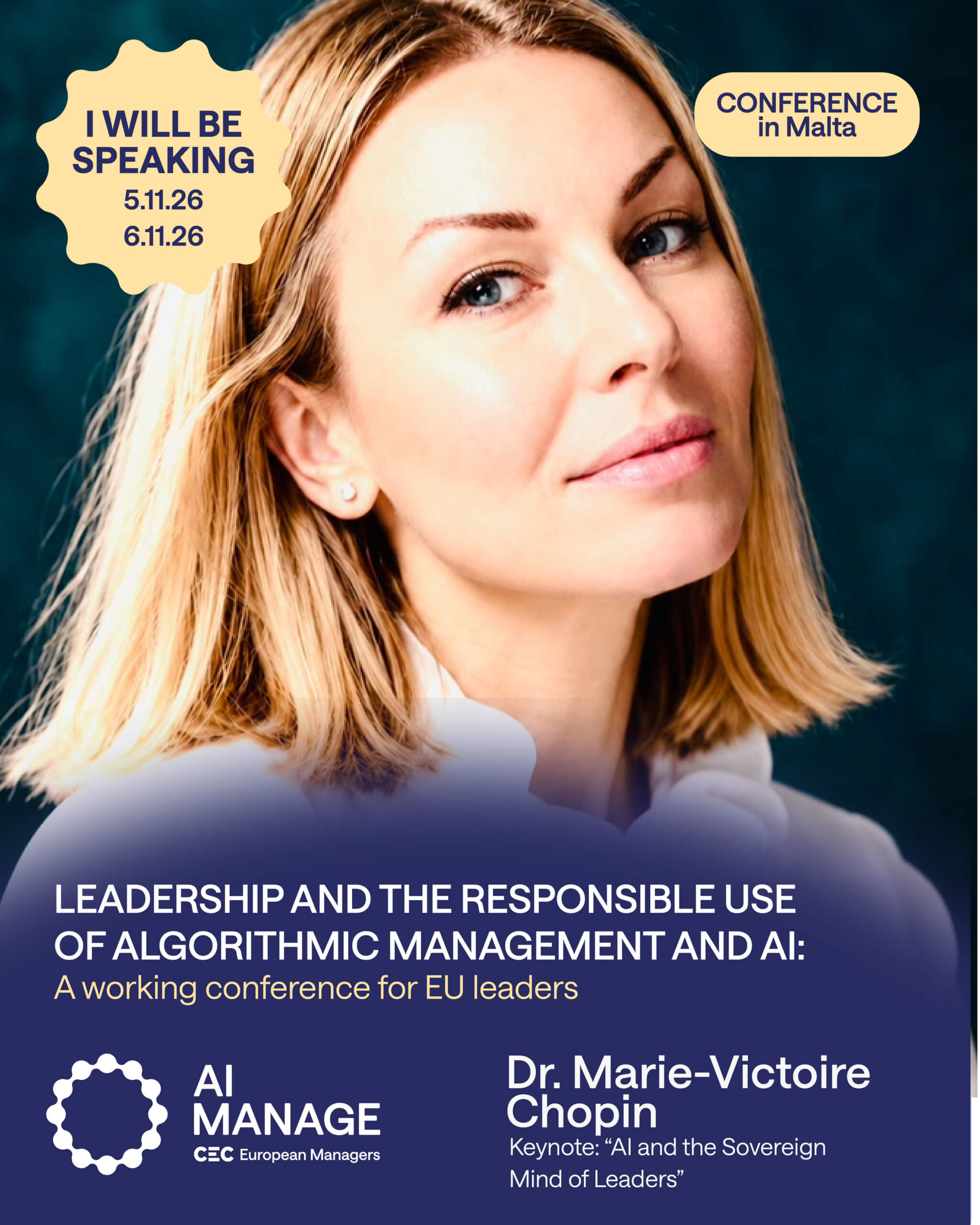
Her intervention examined a dimension of AI implementation that is frequently underestimated: its influence on the psychological processes underlying human judgement.
Generative AI provides immediate, fluent and apparently coherent answers. This can be reassuring, especially when managers face uncertainty, time pressure or complex decisions.
Yet the same characteristics may encourage excessive reliance on technology.
Chopin explored automation bias, the tendency to accept automated recommendations even when independent examination would be warranted.
She also examined how AI may influence attention, creativity and professional confidence.
One of her central concerns was that AI might improve the quality of individual outputs while reducing the diversity of ideas generated collectively.
As automated systems become increasingly effective at producing plausible recommendations, the distinctive value of leadership may lie in recognising exceptions, questioning assumptions and identifying possibilities that existing models cannot easily anticipate.
Chopin expressed the importance of responsibility in particularly clear terms:
“People still want to know who stands behind the decision.”
Her concept of decision sovereignty emphasised the capacity to remain the author of one’s decisions even when reasoning is distributed across people, data, technology and organisational processes.
This requires preserving expertise, independent judgement, meaningful decision-making authority and the willingness to accept responsibility.
The presentation encouraged leaders to approach AI not simply as a way to obtain faster answers, but as a technology that changes the conditions under which human decisions are made.
Plesner: professional judgement must remain central
Magnus Bloch Thomsen, Senior Project Manager at Danish law firm Plesner, presented an example from knowledge-intensive professional services.
Plesner uses AI for activities including research, document analysis, contract review, meeting preparation and general productivity.
However, its approach places particular emphasis on professional judgement and the relationship between technological assistance and responsibility for legal work.
This Danish law firm developed shared AI principles through a process involving lawyers, business services, an internal AI panel and senior leadership.
These principles address transparency, ownership, professional responsibility, quality, curiosity and validation.
Plesner also identified practical challenges, including uncertainty about when AI should be used, unclear expectations and the risk of employees passing on AI-generated material without sufficiently reviewing it.
Its experience showed the value of developing common expectations through participation rather than relying exclusively on top-down technological instructions.
MyTraffic: experimentation within a shared framework
The second day’s presentations included a case study from MyTraffic, represented by Pauline Paris, Chief Marketing Officer, and Luna Dréau, Partnership Manager.
The French location-intelligence company illustrated how AI can transform both internal operations and the services offered to customers.
MyTraffic introduced a common AI framework to avoid fragmented adoption across different teams.
As Pauline Paris explained:
But as a manager it’s our responsibility to give a frame without blocking initiative.
The approach includes approved tools, an AI usage policy, training, assessment of employees’ AI capabilities and opportunities to share successful applications.
The company highlighted four skills considered essential for employees: formulating useful requests, verifying results, understanding technological limitations and retaining responsibility for decisions.
Luna Dréau particularly emphasised this last point:
The most important one is to stay responsible for the decision.
Practical examples demonstrated how AI was being applied beyond technical departments, including human resources, events management and customer support.
The company also presented Gini, its AI-powered location-intelligence product, which allows entrepreneurs and businesses to explore potential commercial locations using data and AI-generated recommendations.
Social dialogue: shaping AI collectively
A dedicated panel moderated by Torkild Justesen, Secretary General of CEC European Managers, brought together President Maxime Legrand, Kasper Lynge Jacobsen, Audrey Gourraud and Mathias Askholm.
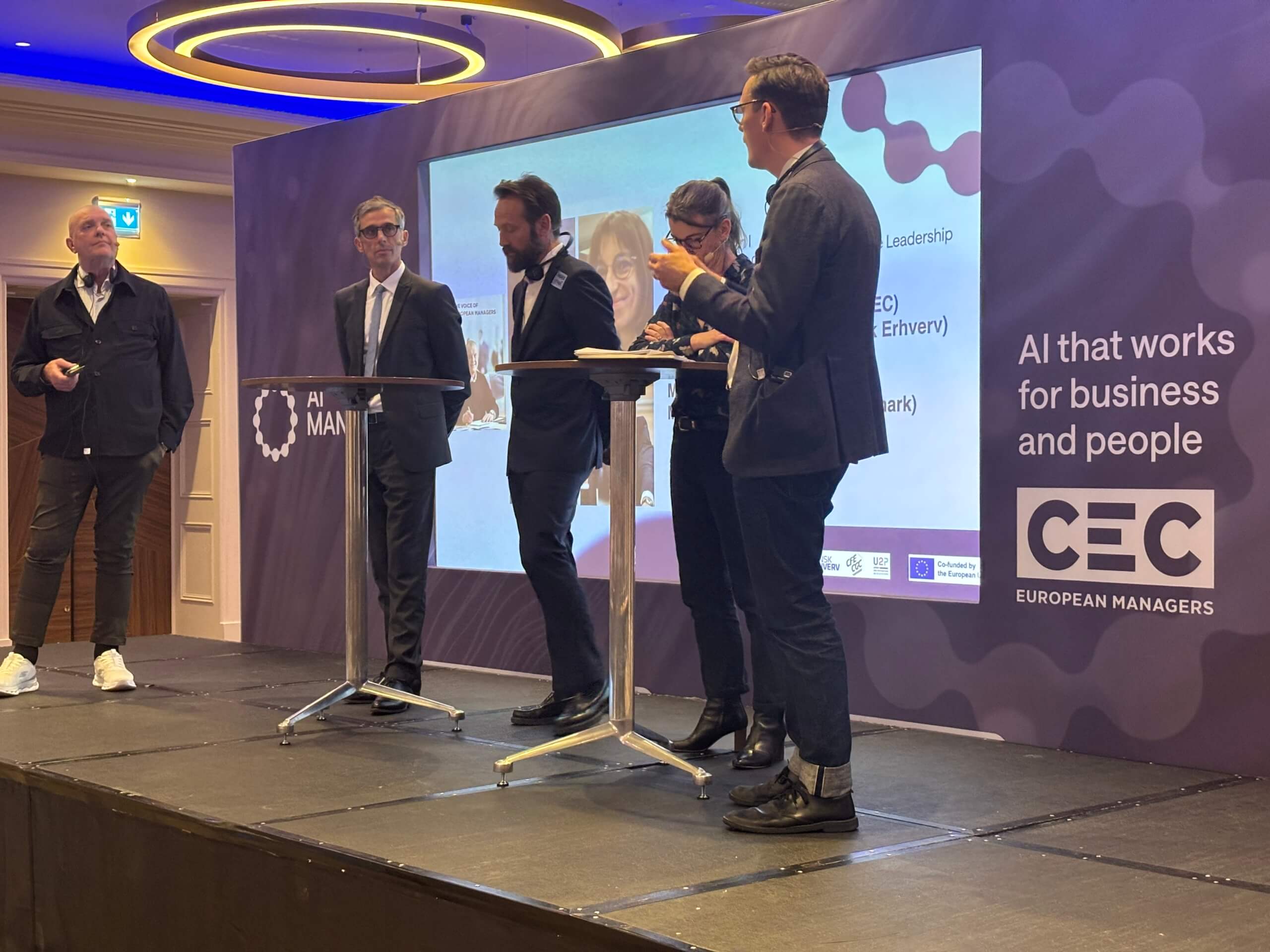
The discussion examined how social partners can contribute to responsible AI adoption while balancing European competitiveness, organisational innovation and working conditions.
Different perspectives were expressed concerning regulation, organisational flexibility and the distribution of responsibilities.
Nevertheless, the exchanges illustrated that sustainable technological transformation requires more than technological decisions taken in isolation.
Information, consultation, training and opportunities for meaningful participation help organisations anticipate consequences and build confidence among the people affected.
Social dialogue is important because managers translate strategic decisions into everyday organisational practices.
They must support employees, interpret policies and manage competing expectations while remaining accountable for results.
Their involvement helps bridge the gap between European principles, organisational strategies and workplace realities.
AI may automate certain managerial tasks, but it also creates new responsibilities involving oversight, coordination, strategic judgement and communication.
AI Manage will turn discussions into practical results
The first AI MANAGE Conference represents an important milestone in a two-year European social partner project coordinated by CEC European Managers.
The project brings together CEC European Managers, Lederne and CFE-CGC as beneficiaries, with Dansk Erhverv and U2P participating as associated partners, and the Technical University of Munich contributing academic expertise.
Co-funded by the European Commission, AI MANAGE runs from May 2026 to April 2028.
The project will also contribute to European policy discussions and culminate in further dissemination activities, including a final event at the European Parliament.

About AI MANAGE
AI MANAGE is a European social partner project coordinated by CEC European Managers and co-funded by the European Commission. Running from 1 May 2026 to 30 April 2028, the project develops research-based guidelines, tools and training to support the responsible use of Artificial Intelligence and Algorithmic Management.
