
CIDA celebrates 80 years of representing Italian managers: Looking towards the future
“In 1946, expertise was one of the driving forces behind Italy’s reconstruction. Today, it must help us navigate uncertainty, rebuild trust and restore young people’s confidence in the value of work and merit. This is the task of leadership and its responsibility towards the country: not to predict the future, but to help shape it.”
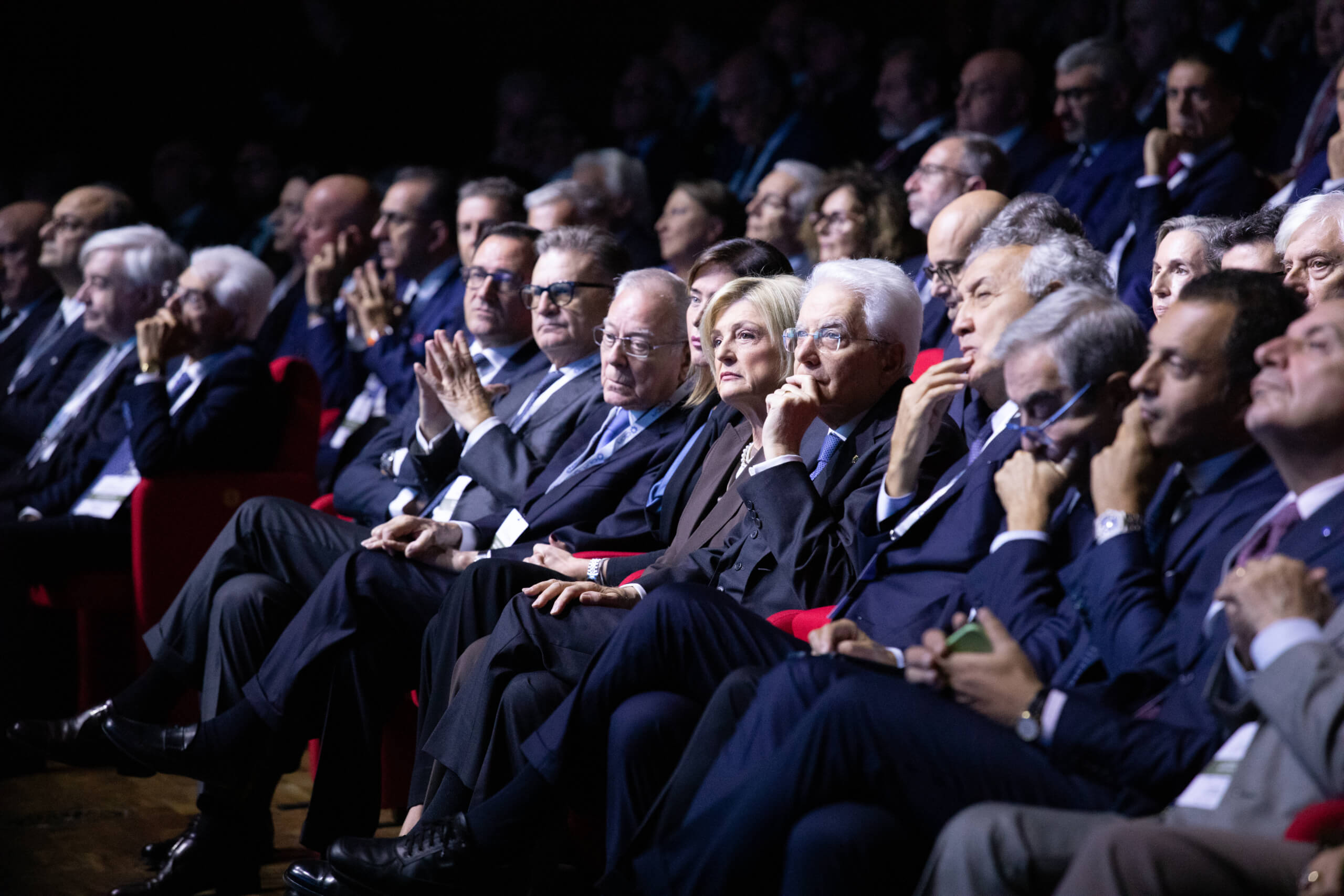
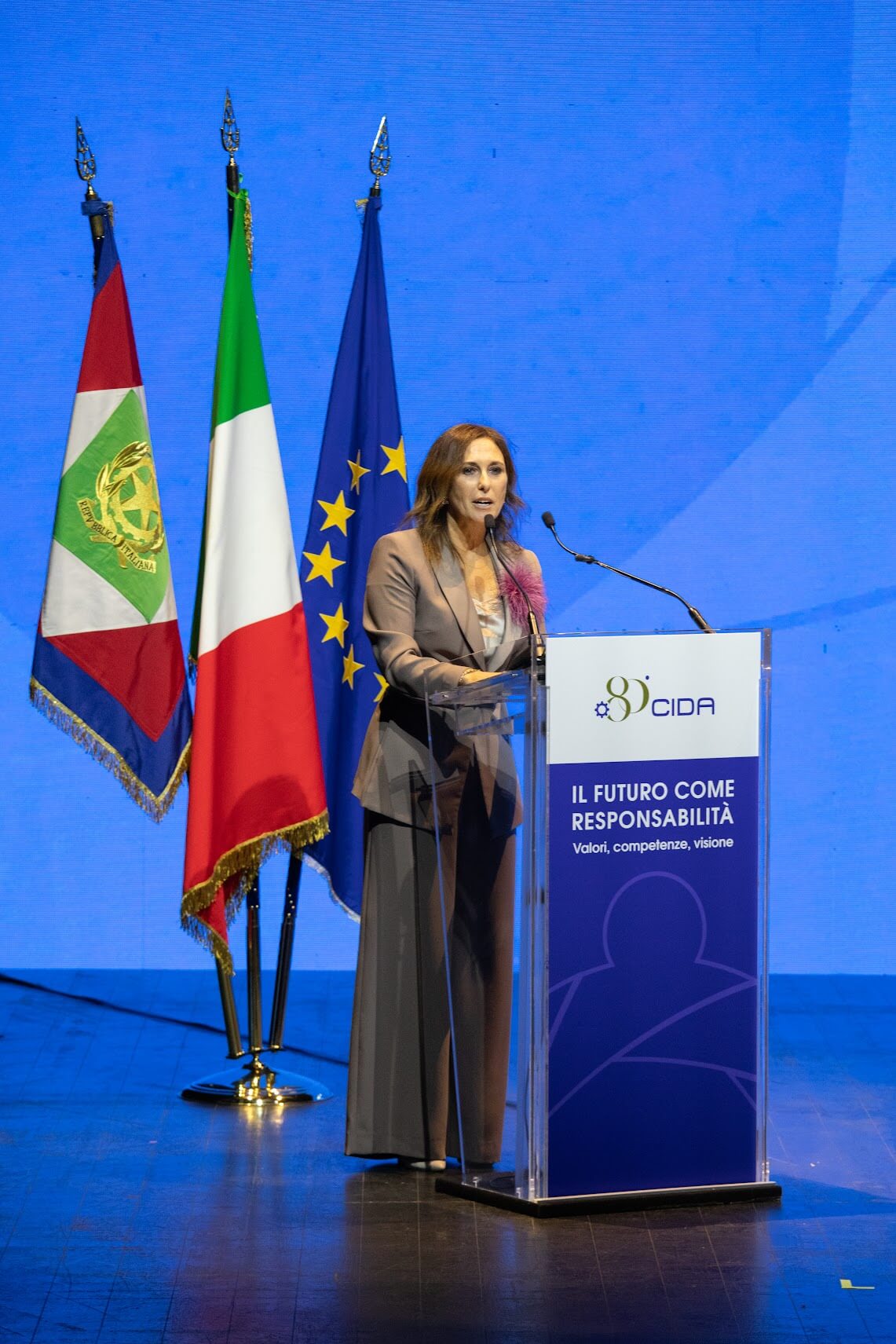
With these words, Stefano Cuzzilla, President of CIDA, opened the celebrations marking the 80th anniversary of the Italian Confederation of Managers and High-Level Professionals (CIDA) on 12 October at the Auditorium della Conciliazione in Rome, in the presence of the President of the Italian Republic.
The participation of the Head of State gave the celebration exceptional institutional significance, further reinforced by a particularly meaningful address in which President Sergio Mattarella drew a parallel between the 80-year history of the Confederation and that of the Italian Republic, acknowledging the fundamental contribution of managers and professionals to the country’s reconstruction, growth and modernisation.
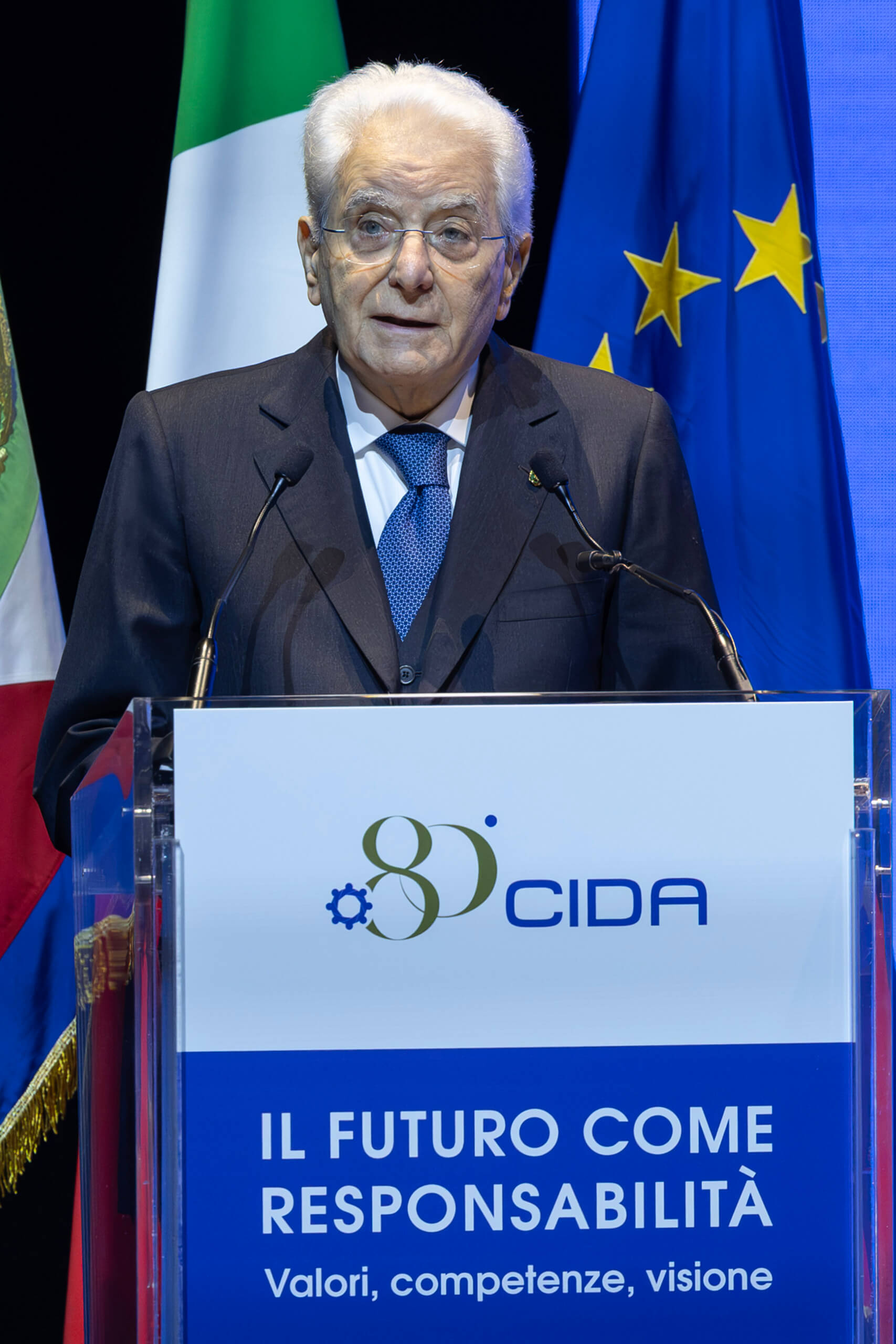
The President of the Italian Republic, Sergio Mattarella (© Francesco Ammendola – Ufficio per la Stampa e la Comunicazione della Presidenza della Repubblica)
President Mattarella emphasised the role and social responsibility of the managerial and professional community, from the pursuit of tax fairness to the major challenges of our time, including artificial intelligence and social cohesion. He also explicitly echoed the key themes of Stefano Cuzzilla’s address — expertise as cohesion, work as development, and the future as responsibility — recognising them as reasons for the Republic’s gratitude.
This recognition of extraordinary significance was captured in the Head of State’s concluding words: “Italy needs your commitment.”
The ceremony’s most symbolic moment was the presentation to the Head of State of the Charter of Managers and High-Level Professionals.
The Charter represents a commitment undertaken by the entire CIDA community. Its ten member Federations represent a wide range of professional sectors: industry and services, public administration, education and healthcare, agriculture, banking and insurance, universities and research.
They are united by a shared responsibility: to give direction to change.
The Charter is founded on five principles: freedom requires responsible governance; people come first; merit is a matter of fairness; trust must be built; the future must be shaped.
“This is not a document intended to commemorate what we have been, but a pledge to the country about what we aspire to become,” Cuzzilla stated. “Five principles, but above all five choices, united by a single conviction: leadership means stepping up, taking responsibility and being accountable for the future we help build.”
CIDA translates this commitment into action on the country’s most pressing challenges: the resilience of the middle class, opportunities for young people, the full recognition and development of women’s skills and talents, and the ability of Italy’s productive system to return to growth.
The first major challenge concerns the middle class, which represents far more than an income bracket. It is where the possibility of improving one’s circumstances through work, skills and expertise is put to the test. This is why CIDA advocates a fairer tax system that no longer places a disproportionate burden on those who work and earn an income.
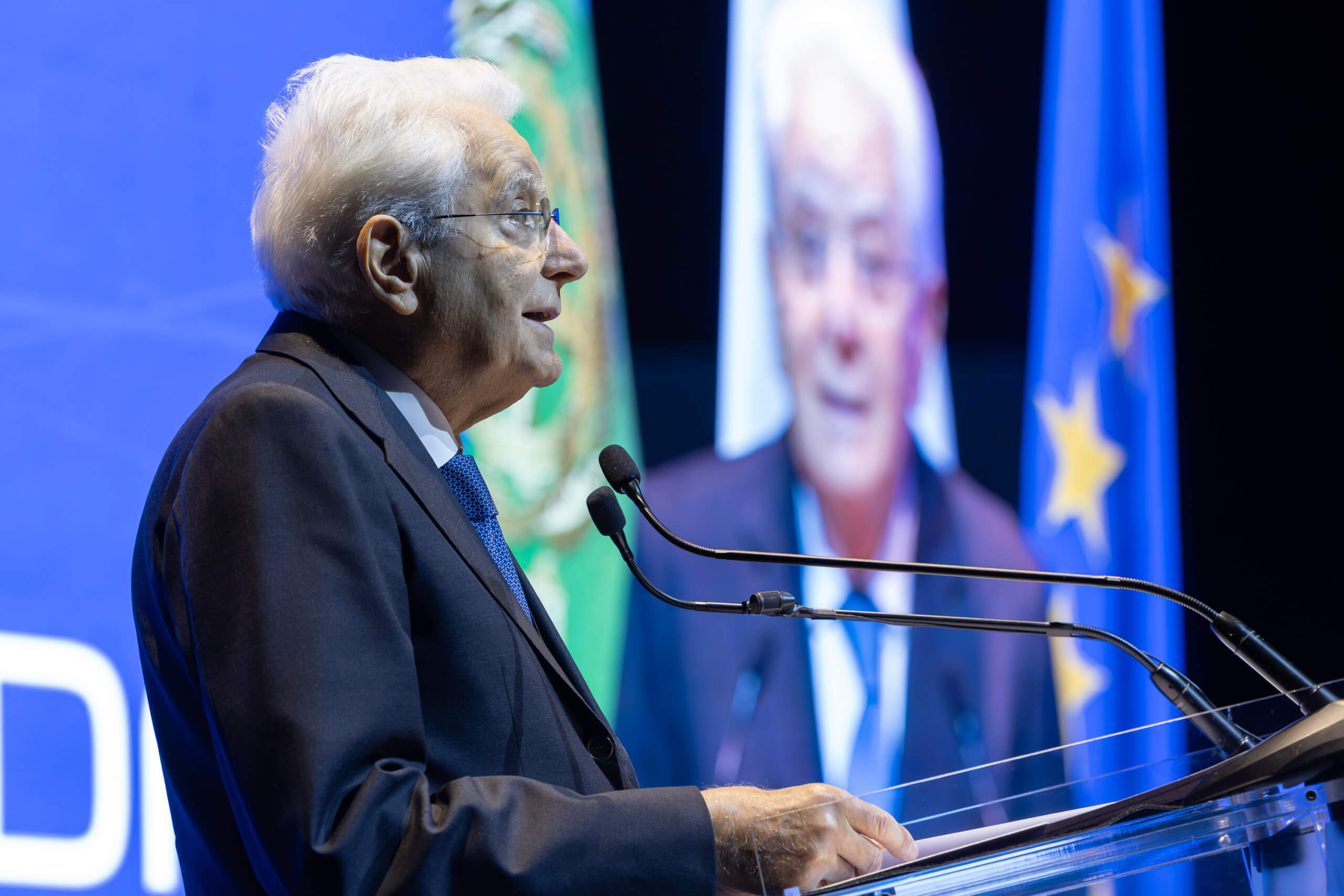
The President of the Italian Republic, Sergio Mattarella (© Francesco Ammendola – Ufficio per la Stampa e la Comunicazione della Presidenza della Repubblica)
“The decline of the middle class begins when a family stops believing that its children will enjoy a better standard of living than their parents. That is when an issue affecting a particular group becomes a national concern.”
Young people share the same demand for a better future. The figures portray a generation that has not abandoned its ambitions: eight out of ten aspire to professional growth, yet 90% believe that merit is not adequately recognised.
“Young people are not asking us to lower the bar. They are asking for a fair chance to reach it.”
The middle class and younger generations raise the same fundamental issue: trust. This is what Cuzzilla describes as trust capital, a third pillar alongside economic and human capital.
“A country can become wealthier and, at the same time, more fragile if it loses the trust that enables citizens, institutions and businesses to cooperate and invest.”
Growth also depends on the productive system’s ability to innovate and increase productivity. “Technology is undoubtedly the catalyst, but it is people who make the difference.”
“This is where the responsibility of leadership is truly measured,” Cuzzilla concluded, “in creating the conditions for change to become an opportunity rather than a source of division.”
Throughout the celebration, including through the immersive exhibition dedicated to CIDA’s 80-year history, the Confederation highlighted the history, distinctive identities, and contributions of all its member Federations, reaffirming the importance and value of their collective representation.
