
“The Gender Equality Strategy Becomes Our Compass for Action”
CEC European Managers participated in the latest meeting of the European Commission’s Advisory Committee on Equal Opportunities between Women and Men, where the implementation of the EU Gender Equality Strategy 2026–2030 took centre stage.
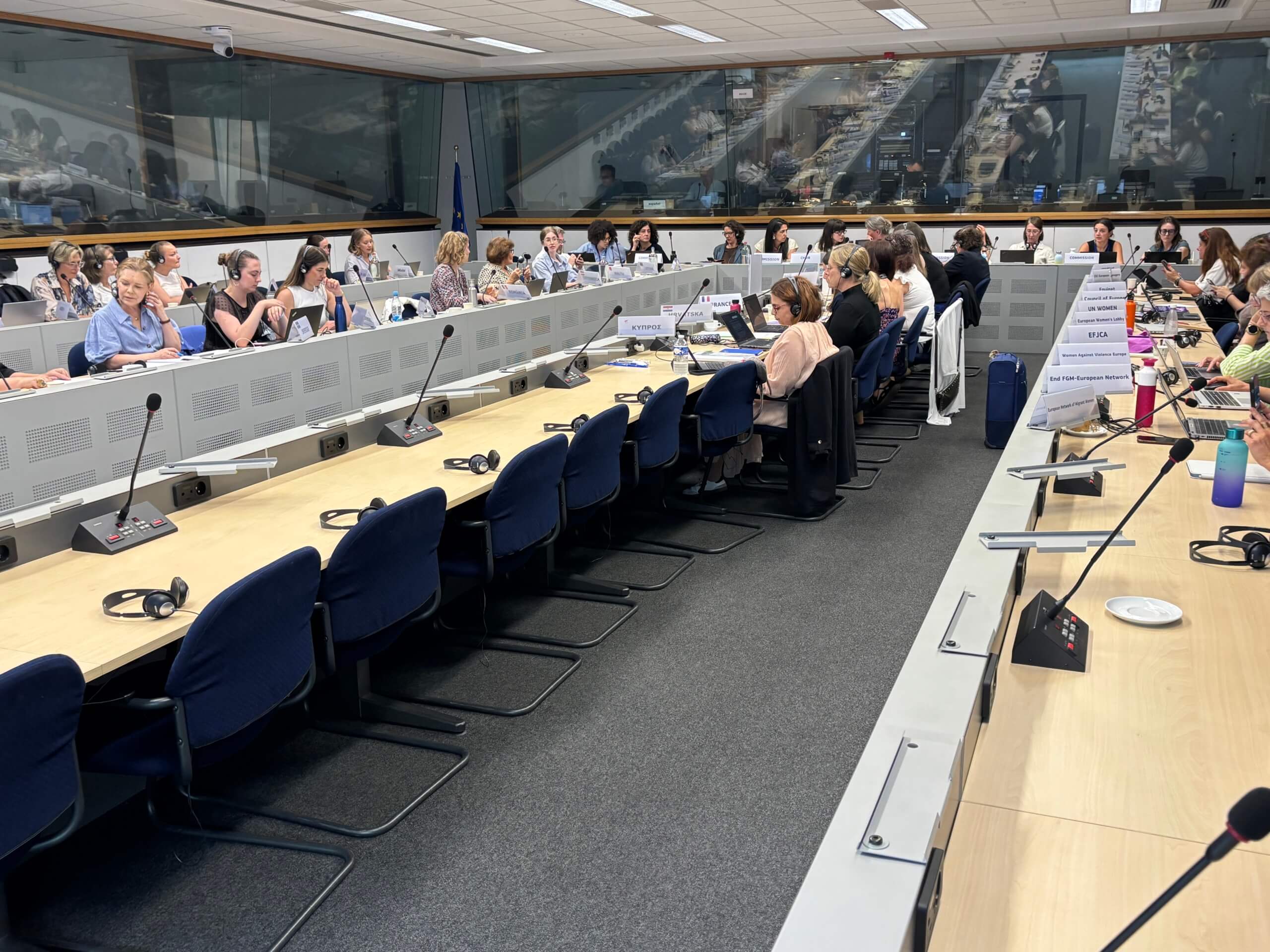
European leaders and managers were represented by Director Olga Molina, and Communication Officer Pere Vilanova.
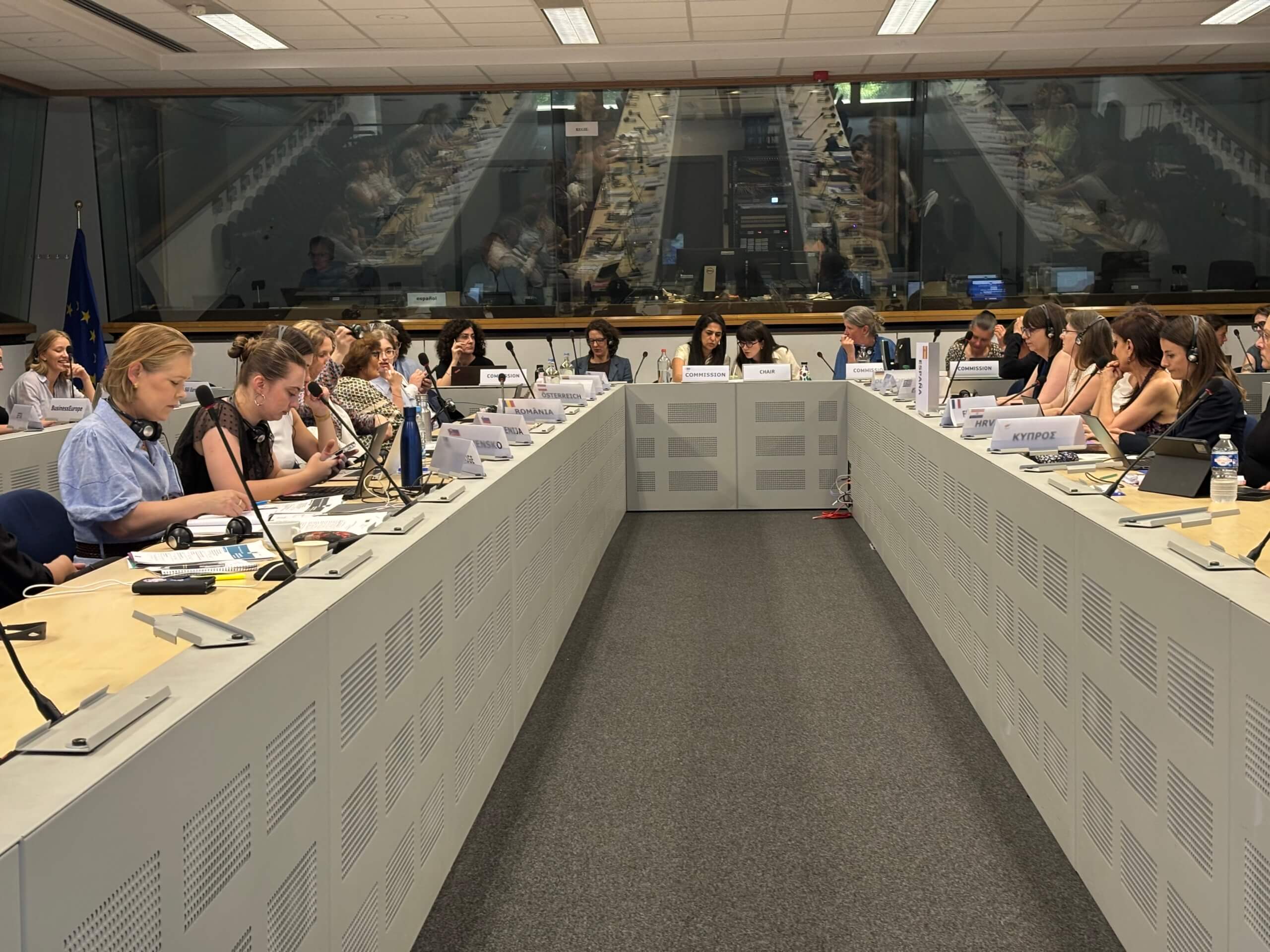
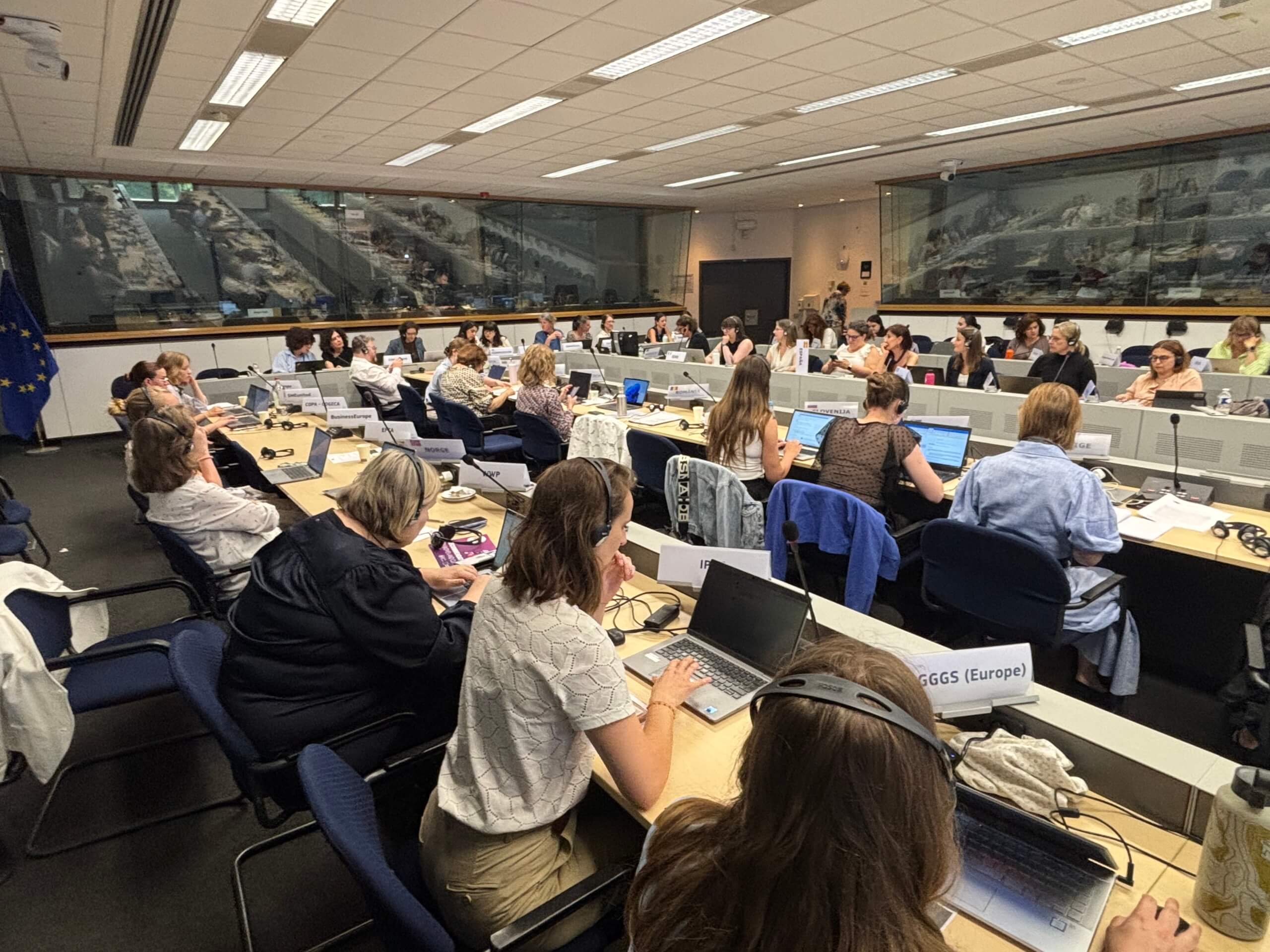
Together with representatives from Member States, social partners, equality bodies, civil society organisations and EU institutions, on 19 June 2026 in Brussels, they discussed the future direction of European gender equality policy.
A new strategy for the current mandate
Opening the discussion, Ana Carla Pereira, Director for Equality and Union Citizenship at the European Commission, stressed that the recently adopted Gender Equality Strategy should be understood alongside the Roadmap for Women’s Rights.
“The roadmap is really a canvas with principles that have no time limit,” she explained, while the strategy is designed to be “more operational and more concrete in terms of what can we do in the coming years.”
The gender equality strategy becomes a bit the European Commission’s compass for action in the coming years.
Ana Carla Pereira
Director for Equality and Union Citizenship at the European Commission
Pereira also underlined the broader political significance of the strategy, arguing that the current international context requires Europe to remain explicit about its commitment to equality.
“We need to constantly recall that the EU is committed to gender equality,” she told committee members.
The Commission presented a programme built around the eight principles of the Roadmap for Women’s Rights and a package of 30 actions to be delivered by 2030.
These cover gender-based violence, women’s health, equal pay, work-life balance, care policies, leadership representation, employment opportunities, and institutional gender mainstreaming.
Pay transparency moves into the implementation phase
One of the most detailed discussions focused on the implementation of the Pay Transparency Directive, whose transposition deadline expired on 7 June 2026.
Officials presented a new toolkit on gender-neutral job evaluation and classification, developed after analysing more than 30 existing systems and conducting over 50 interviews with employers, social partners, equality bodies and experts.
Among the social partners and civil society organisations, the European Women’s Lobby welcomed the practical tools but voiced concern over delays in national implementation of the Directive.
“We’re actually appalled that the deadline to transpose, which was on 7 June last Sunday, has been missed by the majority of Member States,” a representative said.
“We think it’s a very worrying signal.” The organisation warned that delays could also affect the implementation of other important legislation, including the Directive on combating violence against women.
For CEC European Managers, the discussion stressed the growing importance of transparent remuneration systems and objective job evaluation methods, areas where leadership and HR functions will play a central role in the coming years.
Workplace harassment remains high on the agenda
Another major topic was the Commission‘s ongoing work on workplace harassment as part of the future Quality Jobs Act.
The European Commission representatives confirmed that the second-stage consultation of European social partners is expected before the summer recess and that legislative action remains under consideration.
Officials acknowledged that existing measures are not delivering sufficient results.
“We have a definition, and it’s prohibited, but clearly it’s not enough because it’s still happening and it’s massively happening,” a Commission representative stated. “The figures are very, very shocking.”
The discussion focused on prevention, early detection, reporting mechanisms, and workplace procedures designed to stop harassment before it escalates into criminal conduct.
Several organisations welcomed the strategy while calling for greater attention to intersectionality and structural discrimination.
Gender equality and the future EU budget
Committee members also examined proposals for integrating gender equality into the next Multiannual Financial Framework (MFF).
The Commission presented draft guidance for gender tracking across EU expenditure programmes, explaining how future spending could be assessed according to its contribution to gender equality objectives.
Stakeholders broadly welcomed the approach but raised questions about consistency and implementation.
One representative noted that while the scoring methodology reflects international practice, “score number one tends to be interpreted in many different ways,” warning that more detailed guidance may be needed to avoid divergent interpretations between programmes, Member States and implementing bodies.
The discussion reflects a broader trend within EU policymaking: moving from standalone equality measures towards mainstreaming gender considerations across all policy and funding areas.
Why it matters for managers
Many of the issues discussed during the committee meeting are rapidly becoming operational realities. The implementation of pay transparency rules, new expectations around leadership diversity, stronger workplace harassment prevention measures, work-life balance obligations and gender-sensitive reporting requirements will increasingly shape organisational governance and people management practices.
By participating in the Advisory Committee, CEC European Managers continues to monitor these developments closely through its Working Group on DEI, and ensure that managers remain informed about emerging European policy priorities that will influence the future of work and leadership across Europe.

