Working on 10 principles to tackle ageism “the managerial way”
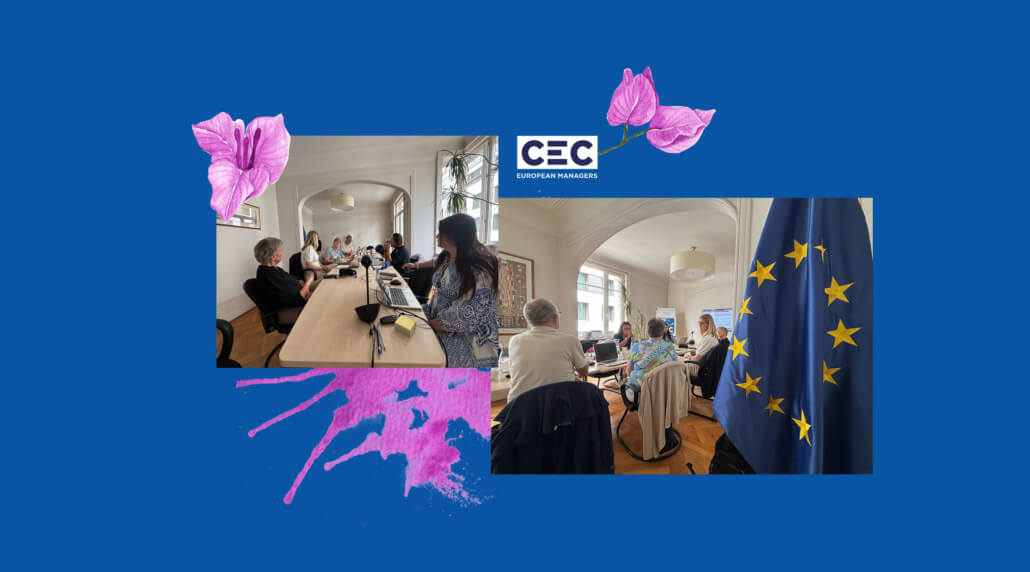
The CEC European Managers Working Group on Diversity, Equity and Inclusion (DEI) met in Brussels on 2 September 2026 to discuss the latest developments in European equality policy and exchange experiences from across Europe, and agreed to work on 10 principles to tackle ageism “the managerial way.”
The meeting brought together a broad range of issues, from pay transparency and labour-market access to ageism, disability, neurodiversity and intergenerational management.
A central message emerged throughout the discussions: European equality policies only become meaningful when they are translated into everyday workplace practices — and managers are at the heart of that process.
Members shared experiences from different national contexts, highlighting common challenges despite significant differences between countries.
Young people continue to struggle to access their first quality job, while older workers can face discrimination and reduced career opportunities.
Women remain underrepresented in senior management, and insufficient childcare and care services continue to affect career progression.
Members also discussed barriers experienced by people with disabilities and neurodivergence, as well as different expectations between generations concerning work, skills and digitalisation.
Many of these barriers do not result from explicit discriminatory policies. Instead, they can emerge through everyday decisions concerning recruitment, promotion, work organisation and skills development.
Managers’ role is particularly important, as they translate organisational values into workplace reality. Their decisions can determine who is recruited, retained, trained and promoted, and whether diverse and intergenerational teams are genuinely included.
Pay transparency: implementation remains uneven
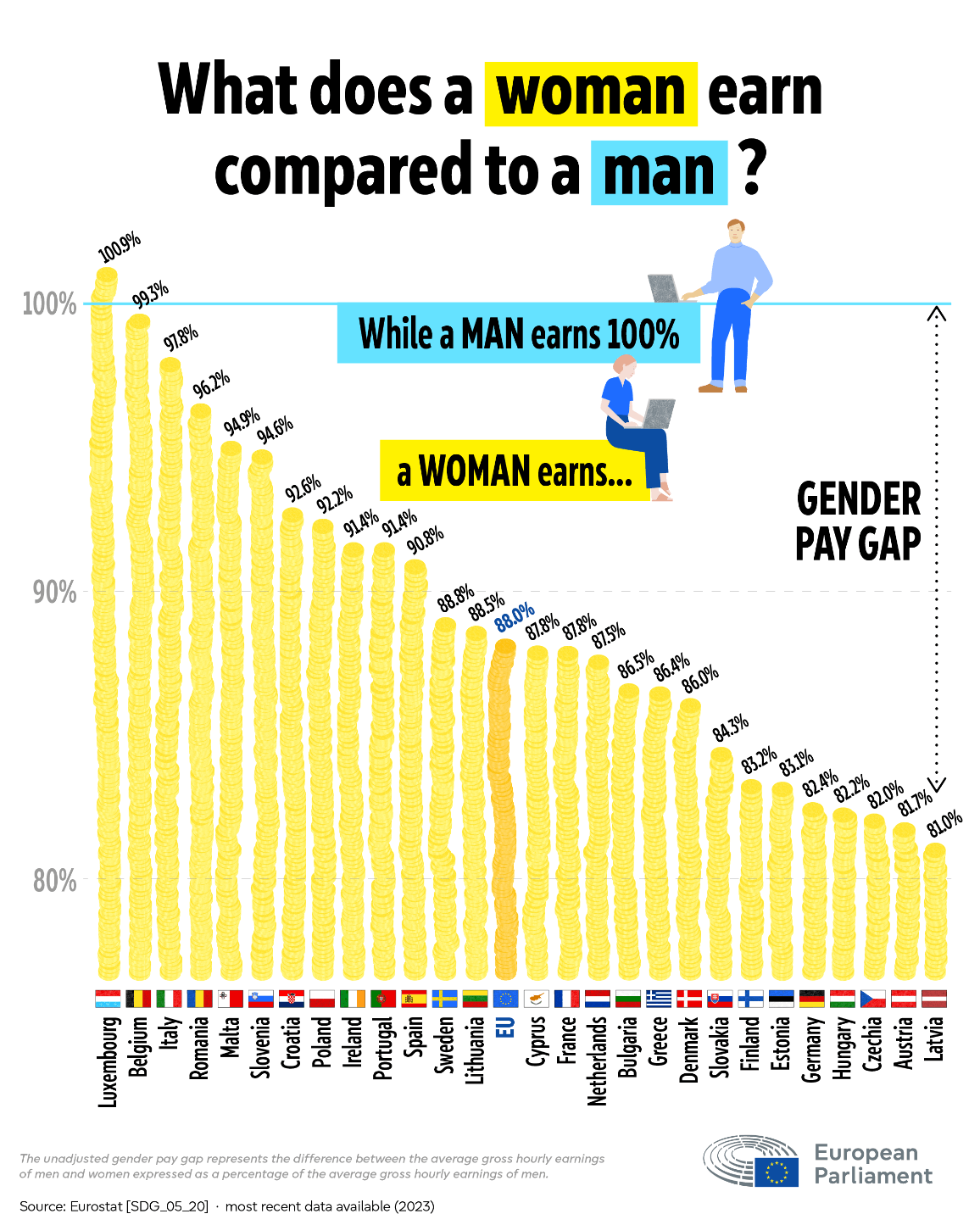
The Working Group also reviewed the implementation of the EU Pay Transparency Directive, with members reporting significant differences between countries.
In Italy, implementation remains at an early stage, with questions concerning how comparisons will account for all components of remuneration, including variable pay and bonuses.
Pay transparency alone cannot resolve the wider structural causes of gender income and pension gaps, such as part-time work, unequal care responsibilities and interrupted careers.
Norway is working to align existing national provisions with the Directive, while Sweden faces particular difficulties after suspending an implementation process that had already been prepared. Belgium‘s fragmented regulatory framework presents another complex case.
For CEC European Managers, these different national experiences underline the importance of effective and consistent implementation across Europe. Uneven transposition can create legal uncertainty and lead to unequal practical access to rights.
Members will continue monitoring developments in their countries and workplaces and exchange further experiences at a future meeting.
Labour-market activation: implementation must come first
CEC European Managers also presented the European Commission’s first-phase consultation with social partners on possible EU action to support people facing significant barriers to labour-market participation.
The consultation addresses a key European paradox: while businesses and economies face labour and skills shortages, many people remain outside the labour market because of care responsibilities, disability, health issues, skills gaps or social circumstances.
The discussion highlighted several priorities for CEC European Managers’ contribution.
Implementation must receive at least as much attention as new legislation. Members pointed to existing EU initiatives — including the European Pillar of Social Rights, the Work-Life Balance Directive and European childcare and care initiatives — that are not yet fully implemented.
The role of managers should also be explicitly recognised. Effective inclusion depends not only on legislation or employment services, but also on decisions taken inside organisations.
Members further highlighted the need to support good practices through instruments such as the European Semester and EU funding, while giving particular attention to young people’s access to their first quality job and the challenges facing older workers.
AI and inclusion: a challenge and an opportunity
Artificial Intelligence is adding a new dimension to the debate.
Members stressed that AI can create new barriers to labour-market entry, including through the potential disappearance or transformation of entry-level roles. At the same time, technology can support experienced and older workers and make certain jobs more accessible.
The discussion therefore underlined the need for human responsibility and oversight when AI is used in employment decisions.
CEC European Managers‘ AI-MANAGE project was highlighted as a practical example of how responsible AI, inclusion, competitiveness and human responsibility can be brought together in the workplace.
From fighting ageism to building intergenerational workplaces
A substantial part of the meeting focused on CEC‘s existing Call Against Ageism.
Members agreed that age discrimination remains a significant workplace issue despite being prohibited by law.
Older workers can gradually be excluded from opportunities or encouraged to leave organisations, while younger people may struggle to obtain their first meaningful professional experience.
The Working Group therefore discussed broadening the initiative towards intergenerational inclusion.
An example from Italy illustrated what this could mean in practice.
Arrangements allowing managers approaching retirement to reduce their working time while maintaining pension contributions and transferring knowledge to younger colleagues can combine retention, mentoring, knowledge transfer and gradual career transition.
The Working Group agreed to collect further national examples and proposals from CEC member organisations. A questionnaire could examine measures addressing both age discrimination and young people’s access to employment.
The objective is to develop a tangible CEC output, potentially bringing together practical examples and recommendations, with a view to presenting the results at CEC European Managers’ November General Assembly.
Making equality rights effective in practice
The Working Group also discussed the European Commission’s implementation reports on the Racial Equality Directive and Employment Equality Directive.
The discussion highlighted a recurring challenge: having legal rights is not enough if people cannot effectively exercise them.
Members also considered the risks of algorithmic discrimination in AI-supported recruitment and personnel management, reinforcing the need for human oversight.
HOW TO CONTROL YOUR UNCONSCIOUS BIAS: 20 Recommendations to managers [+]
Unconscious bias in recruitment and promotion, anonymised CVs, quotas and persistent diversity gaps in management were also discussed. Members agreed to examine the European Commission‘s reports more closely before deciding whether specific CEC European Managers action should follow.
Practical tools for inclusive management
The meeting also provided an opportunity to learn from member organisation Manageritalia and its work on DEI in Italy.
Areas of work include gender equality, managing five generations in the workplace, intercultural management, disability, and neurodiversity.
Examples presented included cooperation with asylum seekers and highly skilled migrants whose qualifications are not recognised in Italy, intercultural training based on direct experience, disability-management tools and initiatives addressing dyslexia and other forms of neurodiversity.
Particular attention was given to creating workplaces where employees feel safe disclosing disabilities or neurodivergence and where managers have the knowledge and skills to adapt working environments appropriately.
Strengthening CEC’s European engagement
The Working Group also considered how CEC can make greater strategic use of its participation in the European Commission Advisory Committee on Equal Opportunities for Women and Men.
Preventing ageism: 10 basic principles
The Working Group‘s next steps will focus on turning this approach into concrete action — including the investigation of 10 basic principles to prevent ageism and promote stronger intergenerational workplaces.
By combining European policy with practical experience from managers and organisations across Europe, CEC European Managers aims to contribute solutions that can make inclusion effective throughout working life.

