

Closing the Circle: Recommendation 20 and the Future of Inclusive Leadership
With the final recommendation of our #BeyondBias campaign, we return to where we started: to the conviction that leadership is about connection, growth and the courage to question habits.
Over the past year and a half, we have explored the subtle ways in which unconscious bias creeps into our decisions as leaders, often unnoticed, but never without consequences.
We conclude our #BeyondBias campaign with an invitation that feels simple and profound: pair younger employees with senior team members to foster mutual learning.
This closing recommendation resonates deeply with the spirit of the BEYUNBI project, which began its journey in January 2024. At that first gathering in Brussels, managers and experts alike recognised the challenge: how to build leadership that truly listens, learns and includes.
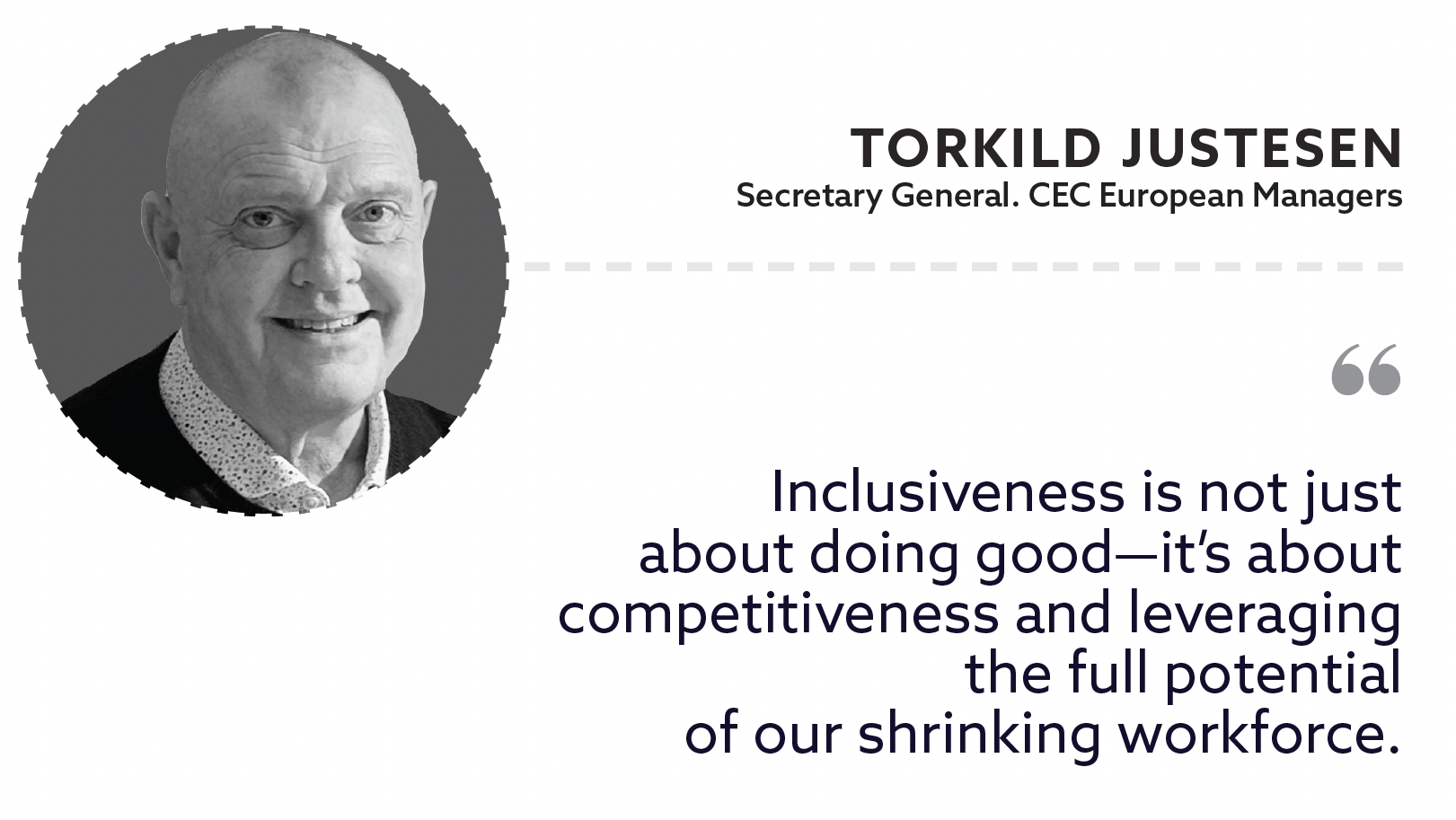
The final Beyond Bias conference in November 2024 brought those reflections full circle. As our Secretary General, Torkild Justesen, reminded us then, “Inclusiveness is not just about doing good—it’s about competitiveness and leveraging the full potential of our shrinking workforce.”
Recommendation 20 builds on that truth. When generations meet, when the experiences of senior managers encounter the creativity and digital fluency of younger colleagues, a new kind of collaboration emerges.

It is not mentorship in one direction, but dialogue in both. It is about cultivating a culture where learning never stops, regardless of age or title.
Throughout the campaign, we have underlined how bias can silence, exclude or discourage.
In one of our posters, the dismissive phrase “This isn’t your project, so it’s not your place to comment” was set against a different vision: “Let’s encourage all employees to contribute equally in meetings.”
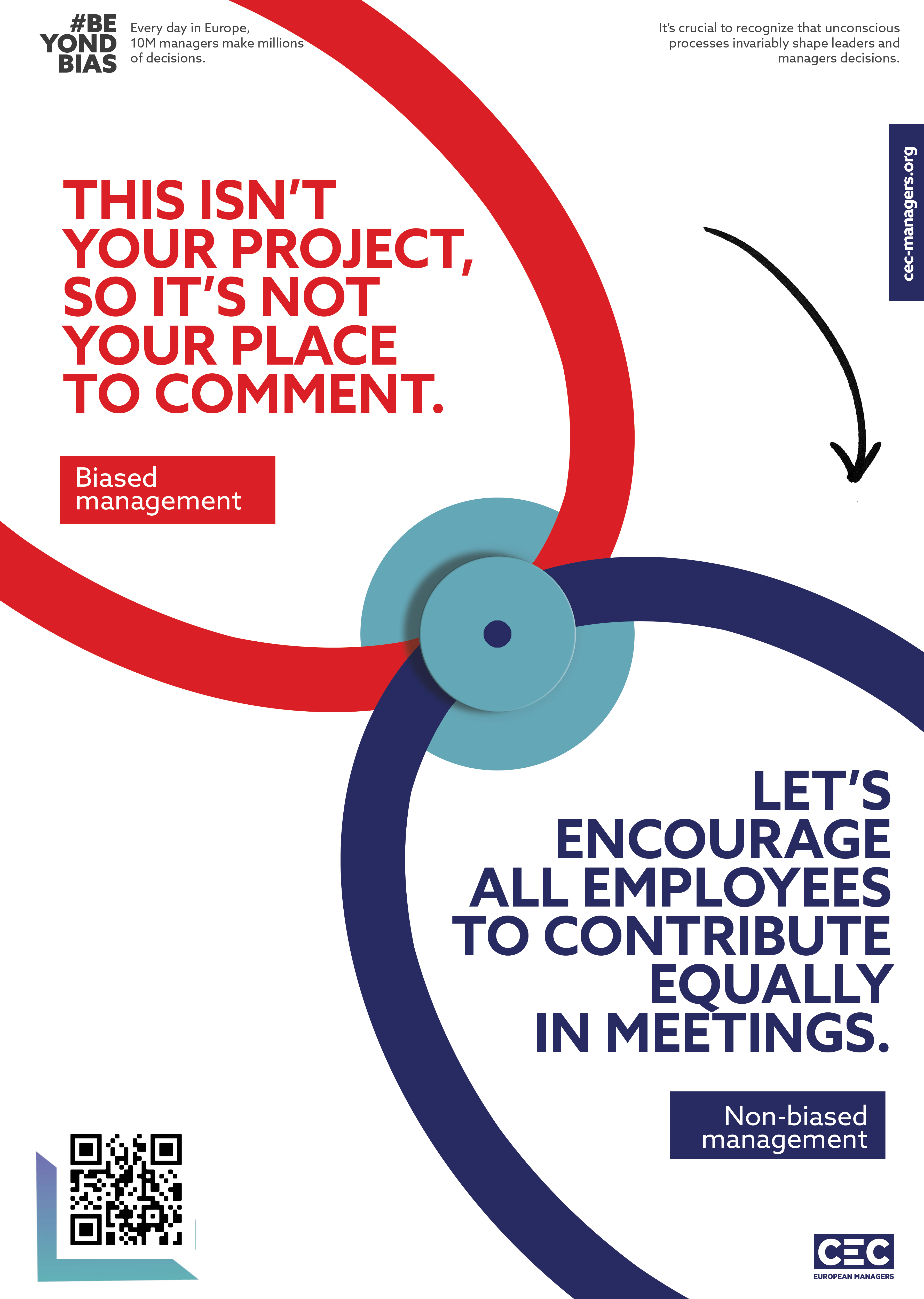
That contrast captured the heart of our message: inclusive leadership is not an abstract ideal, but a concrete practice that shapes how people feel at work, every single day.
When the Position Paper #BeyondBias was published in the beginning of 2025, it called for structural change in how managers recruit, promote and evaluate. But it also called for something less tangible, yet equally urgent: a shift in mindset.
As Olga Molina, Director of CEC European Managers, said at the final conference, “CEC European Managers has been building tools, finding evidence, knowledge, and insights that will continue to inspire inclusive leadership.” Recommendation 20 embodies this continuity. It is both a conclusion and a beginning.
Today, the BeyondBias campaign may be ending, but its story is not. Every pairing between a young employee and a senior colleague becomes a small act of resistance against bias, and a step toward leadership that sees potential where stereotypes once stood.
This campaign is a reminder that inclusion is not a destination, but a practice lived day by day, meeting by meeting, exchange by exchange.
As we close this chapter, we do so with gratitude for the journey we have travelled together—across conferences, surveys, reflections and shared commitments.
The EU project Beyunbi and the 20 recommenadations for leaders gathered in the BeyondBias campaign have showned us that inclusive leadership is not just possible; it is already taking shape wherever managers choose to act differently.
Recommendation 20 leaves us with the simplest of tasks: to keep learning from one another, across generations, across experiences, across biases.
The campaign ends here, but the work of building beyond bias is only just beginning.

