“CEC European Managers Will Become an Essential Voice in the European Debate”
“La CEC deviendra un acteur incontournable du débat européen”
Read the interview in French here [+]
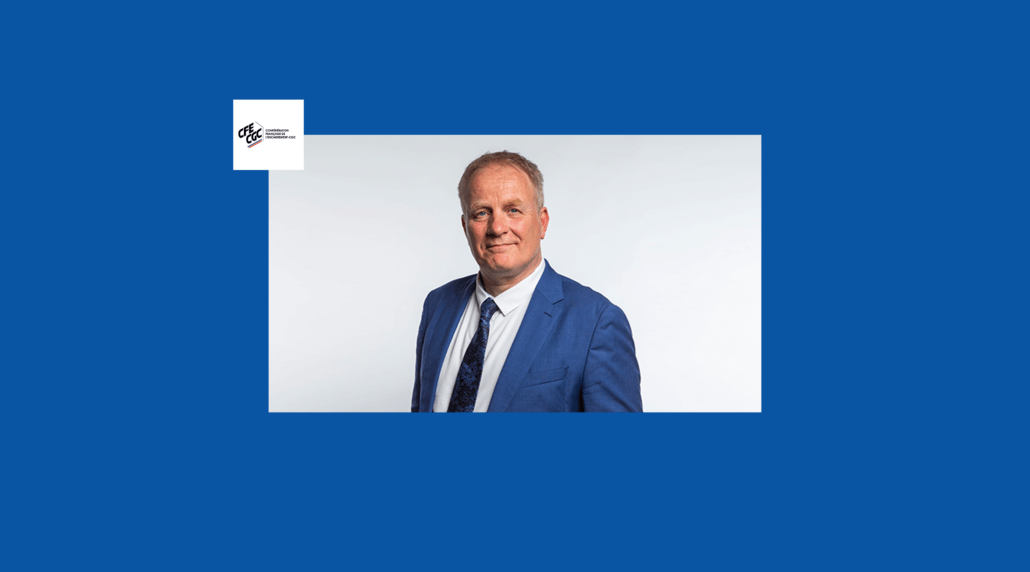
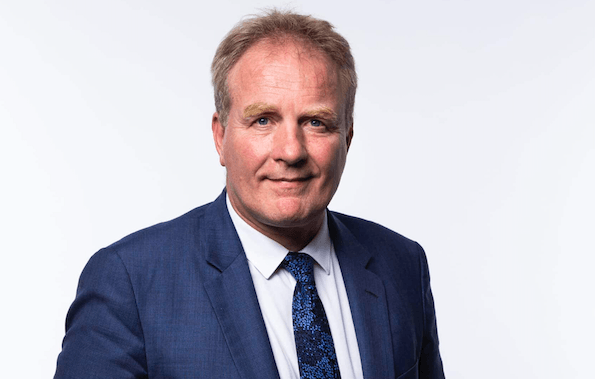
A few hours before stepping down as President of the CFE-CGC, after ten years at the head of France’s trade union for managers and professionals, François Hommeril sat down for an interview with CEC European Managers. A leading figure in French managerial trade unionism and a committed advocate of European social dialogue, he reflects on his career, his vision of leadership, the challenges facing the world of work, and his outlook for Europe’s future.
Who is François Hommeril, according to François Hommeril?
I see myself first and foremost as an engaged citizen—a citizen who chose, out of conviction, ambition, or simply determination, to become actively involved in society.
What drives me above all is an inner fire. I have a profound desire for freedom: the freedom to express myself openly and never to grant anyone else either the right or the opportunity to think on my behalf.
My personal background is that of a scientist. I studied natural sciences and geology before pursuing research in physics and mathematics, eventually earning a PhD in physics.
These disciplines, while distinct, complement one another and have profoundly broadened my understanding of the world. They taught me to recognize the interactions that give the world its coherence and enable it to evolve in harmony with its environment.
Today, within civil society, I try to play a role inspired by the way living systems evolve, grow, and adapt. It is an idea that remains very close to my heart.
There is a complex relationship between freedom and responsibility. What was the most difficult decision of your professional career?
If I had to choose just one, it would be the decision to change the direction of my career.
The most difficult moments are always those when you challenge yourself.
In my case, it was when I was working for a major industrial chemicals group and agreed to leave the site where I had been established to join another facility. I knew the new assignment would not be easy and that I would face numerous challenges.
That decision required me to leave a comfortable situation behind and embark on an adventure whose outcome I could not truly foresee. At the same time, I was convinced it would open up new opportunities, both professionally and personally.
Of course, throughout my career, I have had to make many other difficult decisions.
Whether accepting or rejecting an investment, changing strategy, or ending a partnership when trust no longer exists—as happened during my presidency of the CFE-CGC—these are part of everyday life for anyone in a position of responsibility.
But if I had to single out one defining moment, it would be that 1998 transfer. That was when my career definitively took the path of trade union commitment.
Why did you choose that path?
I believe it was, above all, an instinctive decision.
At that point, it seemed I had everything to lose by accepting the transfer. Looking back, I now believe I gained everything.
The turning point came down to very little. I remember returning to management and telling them:
“You don’t know how to question yourselves. I’m going to show you that I can. And in the end, I’ll be the one who comes out ahead.”
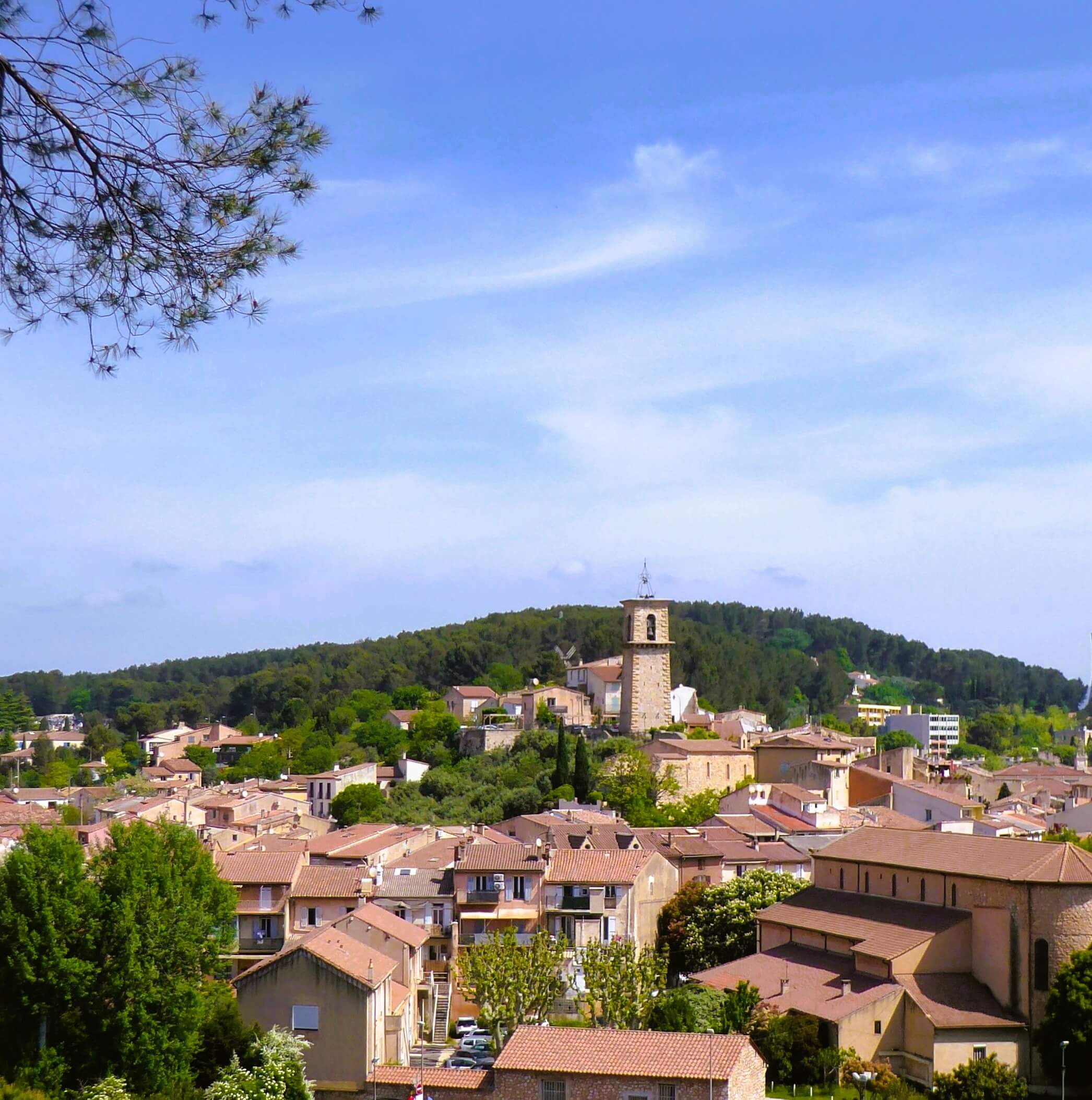
At the time, nearly thirty years ago, I was working at the Gardanne site. I was responsible for the industrial process while also serving as a trade union representative. Management did not particularly want me to stay, largely because of my union activities.
Yet I could have remained if I had wanted to.
What I wanted was to prove that I was capable of taking risks—unlike those who often believe their role is to avoid them.
For me, remaining free is essential.
Has your experience as President of the CFE-CGC changed your view of leadership and representation?
Yes, completely.
That evolution happened gradually, over time, and through the responsibilities I assumed.
To summarize what leadership means, I often use an expression that is not always easy to translate: the captain is the first one out of the trench.
To me, leadership rests on two essential pillars.
The first is authority—not authority derived from rank or position, but authority that comes from knowledge, from the ability to explain complex issues, to share understanding, and to give meaning. This authority may be innate or acquired, but it is always measured by one’s ability to enlighten others.
The second pillar is trust.
A leader’s role is to inspire the people they lead through the trust they are able to build.
Trust cannot simply be demanded. It is earned through sincerity, through saying what you genuinely think, communicating objectives with clarity, and demonstrating real lucidity.
It is this combination of authority grounded in competence and trust grounded in sincerity that, in my view, defines true leadership.
You cannot play a role. You cannot simply put on the costume of a leader and expect others to be convinced.
You have to be yourself.

You must also have an accurate understanding of your own abilities.
The people you lead will only recognize your leadership if you genuinely have something to offer them—something meaningful to share.
Leadership is not about issuing commands. Command is merely a tool. Real value lies in what you contribute to the collective.
Is there a specifically French way of exercising leadership compared with other European countries?
No, I don’t believe so. In my view, it is primarily a matter of character.
That said, I do believe there is a very French way of making organisations both inefficient and difficult to work in.
I have worked extensively in American, Canadian, and Australian companies. I have also collaborated with Spanish, Italian, and Belgian colleagues.
Management styles certainly vary from one country to another; there are undeniably distinct national management cultures.
What I observe in France is a tendency to make things more complicated than they need to be.
Can the same be said at the European level? Is there a European approach to authority or leadership that differs from what we see in North America, for example?
Having worked with German, Belgian, Italian, Spanish, and French companies, I can draw some comparisons, although in the end it always comes down to individuals.
Being from one country rather than another does not make someone a better manager. What differs are the priorities.
Take Ireland, for example. I have worked in factories where operations relied heavily on delegation and trust.
In the Anglo-Saxon world—and to a certain extent in North America—responsibility is generally delegated more genuinely, even though reporting systems remain highly developed.
Managers in Anglo-Saxon organisations enjoy real autonomy. In France, by contrast, the supposed autonomy of managers is often largely illusory.
I know some countries better than others. Germany, for instance, is a country whose trade union model I know well, and it has its own internal coherence.

What strikes me most when discussing Europe is the extent of the differences between Member States.
What I regret is that, in the process of European integration, political elites still struggle to distinguish between what serves the collective European interest and what serves national interests.
Within the trade union movement, we sometimes succeed in moving beyond these national perspectives, but we still face the same challenges.
I experienced this firsthand in several European Works Councils. When ten national delegations sit around the same table, everyone speaks first and foremost from the perspective of their own country.
When Poland is discussed, the Polish representatives take the floor. When Germany is discussed, the Germans speak, while the others tend to feel less concerned.
We are still a long way from building a genuine European consciousness.
Does the same challenge arise when trying to reconcile economic competitiveness with social justice at the European level?
When it comes to social justice, I am not convinced that we are currently able to define it with sufficient precision at the European level.
Internationally, there are established and codified reference frameworks. In Europe, we have several important instruments—particularly concerning corporate governance, such as European Works Councils—but the overall regulatory framework remains relatively limited. That is my personal assessment, and naturally it is open to debate.
As for economic competitiveness, I believe the discussion is often framed incorrectly.
Competitiveness does not primarily depend on wage levels.
It depends, first and foremost, on a country’s ability to invest in education, research, infrastructure, and all activities that create long-term value.
From that perspective, I believe Europe’s record is far from poor. The necessary instruments exist, and so do policies that support investment, although they are often underused.
For my part, I support these European instruments. I reject the idea that competitiveness can be reduced to the cost of labour alone.
Competitiveness is not created by lowering wages; it is created through both tangible and intangible investment.
Are the European institutions doing enough to preserve social cohesion? Should they be strengthened further?
Yes. I firmly believe that the European institutions play an essential role in maintaining the cohesion of the European Union.
You have also been highly critical of labour market reforms, both in France and at the European level. What needs to change?
The problem is more fundamental than that: the labour market, as it has been presented over the past several decades, does not really exist.
The great illusion of the late twentieth and early twenty-first centuries was the belief that liberalising the labour market would automatically generate greater prosperity. In my view, that was a deception.
People were encouraged to believe that, in order to be happier collectively, they first had to accept becoming less happy individually.
That simply cannot work.
The major forces of capital succeeded in convincing almost every European government—regardless of political affiliation—that a world with more pollution, more billionaires, greater wealth concentration, and more tax avoidance would somehow make citizens freer and happier.
I continue to be struck by the lack of ambition—and sometimes even the lack of lucidity—displayed by a large part of Europe’s policymakers on these issues.
Does the same apply to social dialogue?
Yes.
Social dialogue has become one of those expressions people repeat as though it were a magic formula.
The words themselves are invoked as if merely saying them were enough to solve every problem. But that is not how social dialogue works.
I had the opportunity to represent my organisation at the International Labour Conference in Geneva from 2008 to 2013, including during the global financial crisis of 2008.
At that time, every delegation claimed that the crisis would be resolved through social dialogue.
It was an easy statement to make, but one that was ultimately devoid of meaning.
Trade unions do not hold power. Power is political and financial. Trade unions do not exercise that power.
What they do know is how to negotiate. They know how to engage in dialogue. They know how to create value for companies—provided they are genuinely given room to negotiate.
The problem is that, over the past thirty years—and especially during the last fifteen or twenty—those spaces for negotiation have steadily narrowed, even as everyone spoke more and more about social dialogue.
That is not the responsibility of trade unions.
It is the consequence of the same political choices that claimed labour market flexibility was the universal solution.
I remember a speech you gave at a CEC General Assembly in which you also spoke about the idea of simplification. Today, many argue that we need to simplify rules, particularly in economic and environmental policy. What is your view?
I believe the word simplification has no value in itself.
Let me give a very simple example.
The human body contains around six hundred muscles and more than two hundred bones.
Would it function better if we removed half the muscles and half the bones?
Obviously not.
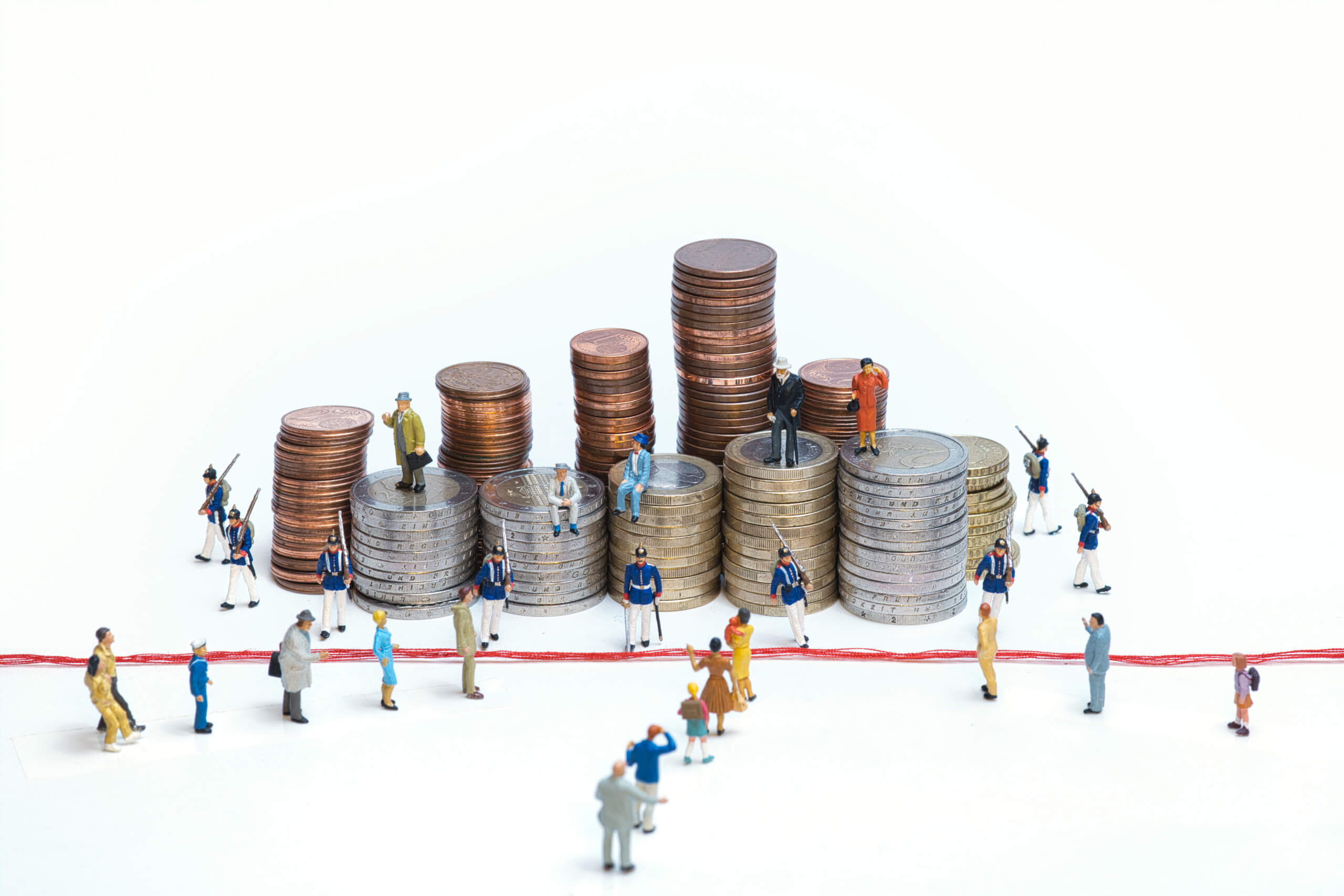
Society is, by its very nature, complex.
Making it artificially simpler will not make it more effective.
What makes a society perform better is people’s ability to understand complexity, master it, and work with it.
We should not be afraid of complexity.
Our intelligence exists precisely to deal with it.
Human evolution has been built upon the development of an increasingly complex nervous system. That complexity is what enables us to understand the world.
I am always wary of people who claim they want to simplify other people’s lives.
Very often, what they really seek is to reduce people’s freedom of choice.
Yet isn’t it sometimes necessary to make things easier to understand?
Of course.
But we need to distinguish between two very different things.
Take a mathematics teacher, for example.
If a student does not understand the Pythagorean theorem, a good teacher will take the time to explain it until the student does.
That does not make the theorem any simpler.
What it does is give the student the means to understand it. That is something entirely different.
I play the piano. For someone who cannot read sheet music, it seems incredibly complicated.
Would I be helping that person by offering them a piano with only two keys?
Of course not.
Instead, I would gradually teach them how to master a complex instrument. The same principle applies in business.
A manager’s role is to make complex situations accessible—not to eliminate complexity itself.
Naturally, it is useful to simplify unnecessary procedures. That is part of everyone’s day-to-day work.
But neoliberal simplification often consists of artificially reducing the choices available to people while convincing them that this somehow makes life easier.
That is a logic I deeply distrust.
In the workplace, is it therefore the role of managers to make complexity more accessible?
Absolutely.
A manager’s role is to make processes that are sometimes complex—but necessary—appear straightforward to the people responsible for carrying them out. It is about helping teams understand, grow, and continuously develop their skills.
That does not prevent us from simplifying procedures that are unnecessarily burdensome. In fact, that should be a constant effort in any organisation. But simplifying procedures is very different from denying or eliminating the inherent complexity of reality.
Let me give you a very concrete example.
When filling out an administrative form, you are often asked for information that serves no real purpose—your date of birth, even though it is already known, or the current date, even though the system records it automatically. In those cases, simplification makes perfect sense.
The same applies to television remote controls.
They used to be covered with dozens of confusing buttons. Today, they are far more intuitive. Yet the electronics inside modern televisions have become infinitely more sophisticated. We did not eliminate the complexity—we simply designed a better interface to make it easier to use.
That distinction is fundamental to me.
When it comes to younger generations, many people speak of a leadership crisis. Young professionals sometimes seem less willing to take on responsibility. Do you share that view?
I don’t believe the problem lies with young people.
Rather, many companies have failed to evolve at the same pace as the aspirations of new generations.
Young people do want responsibility. They want to make a meaningful contribution. But they no longer want to do so within organisations that ask them to devote all their energy to validating procedures that everyone now knows create little or no additional value.
Young people want their commitment to have meaning.
Every generation carries its own aspirations. That has always been the case. Even Aristotle observed that each era gives rise to new expectations.
We should not view evolution pessimistically.
Quite the opposite.

Every generation tells us not only about itself; it tells us about the society we have built—and about the society we now need to transform.
When people speak of a leadership crisis, I believe what is really being questioned is the way companies themselves operate.
And that is an excellent thing.
Over the past twenty years, many companies have focused primarily on maximizing returns for shareholders.
Under those circumstances, it is perfectly understandable that young people are reluctant to devote their intelligence, creativity, and energy solely to that objective.
Can this evolution be linked to the rise of populism and political fragmentation in Europe?
In my view, the rise of populism is above all a consequence of the weakening quality of the political elite.
When culture and intellectual depth disappear from political decision-making, populism advances almost automatically.
It is a logical consequence.
At one of CEC European Managers’ General Assemblies, you also pointed out that several surveys show the French now place greater trust in trade unions than in political parties. Yet we often hear that citizens are becoming less engaged in trade unionism. How do you explain this apparent paradox?
I would begin by qualifying that observation.
In France, contrary to what is often said, trade union membership is actually increasing, even if it remains lower than in many other European countries.
At the CFE-CGC, for example, our membership continues to grow.
In fact, we now have more members than most French political parties.
The real difference compared with other European countries is that, in France, joining a trade union provides virtually no direct personal benefit.
In several countries, you must be a union member to benefit from the agreements negotiated by that union. That is not the case in France.
Despite this, I believe that since the movement against pension reform in 2023, trade unions have regained genuine credibility in the eyes of the public.
We demonstrated that we were capable of elevating the public debate, putting forward constructive proposals, and providing a counterweight to populist rhetoric.
Do you believe the same is true for CEC European Managers?
Absolutely.
I am convinced that CEC European Managers has an essential role to play in the European debate.
We have not yet fully realised everything it can contribute to discussions about Europe’s political, economic, and social future.
Over the past year, we have begun that conversation in Brussels, and it must continue.
I am deeply convinced of one thing:
Europe will not be built without managers—and it will not be built without the organization that represents them.
I am optimistic.
CEC European Managers has real momentum today. It has left the garage and is beginning to take its place on the motorway.
Tomorrow, it will become an essential voice in the European debate.
When you step down as President, what legacy would you like to leave behind?
Above all, I hope to leave behind a spirit of freedom and independence.
Never allow someone else to think on your behalf.
Everyone should trust their own judgement, stand by their convictions, and exercise genuine critical thinking.
That is probably the most important message I would like to leave.
Would you like to add a final word?
I will be delighted to see my colleagues again in Oslo for what will probably be my final trip before the Congress.
And if I can continue contributing to the work of CEC European Managers afterward, it will be with great pleasure.
Thank you very much for this interview.

