
CEC European Managers Delegation Visits Ledarna Headquarters in Stockholm
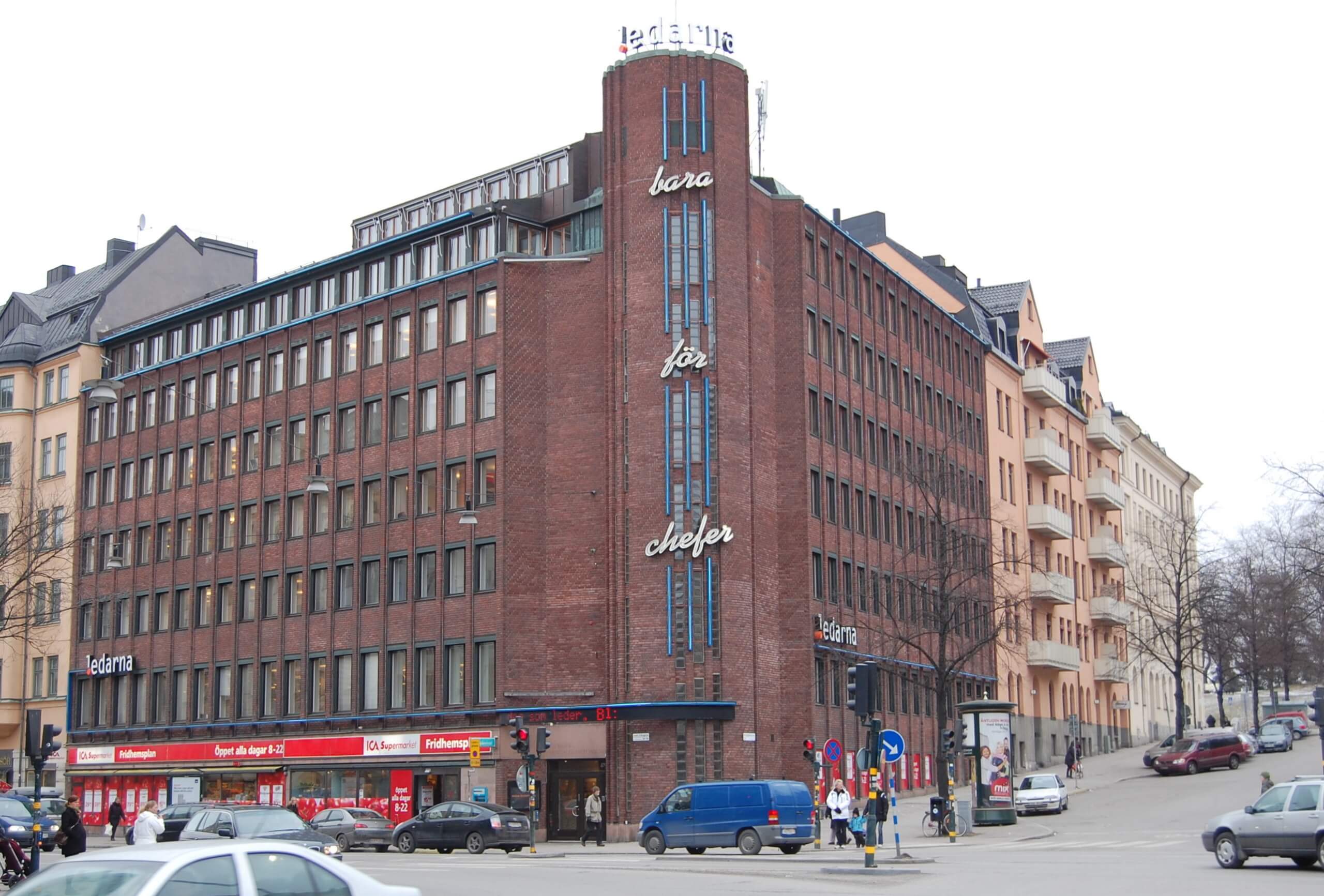
On 20 November 2025, CEC European Managers’ Director Olga Molina and Communication Officer Pere Vilanova visited the headquarters of Ledarna, the Swedish organisation representing leaders and managers across sectors in the country.
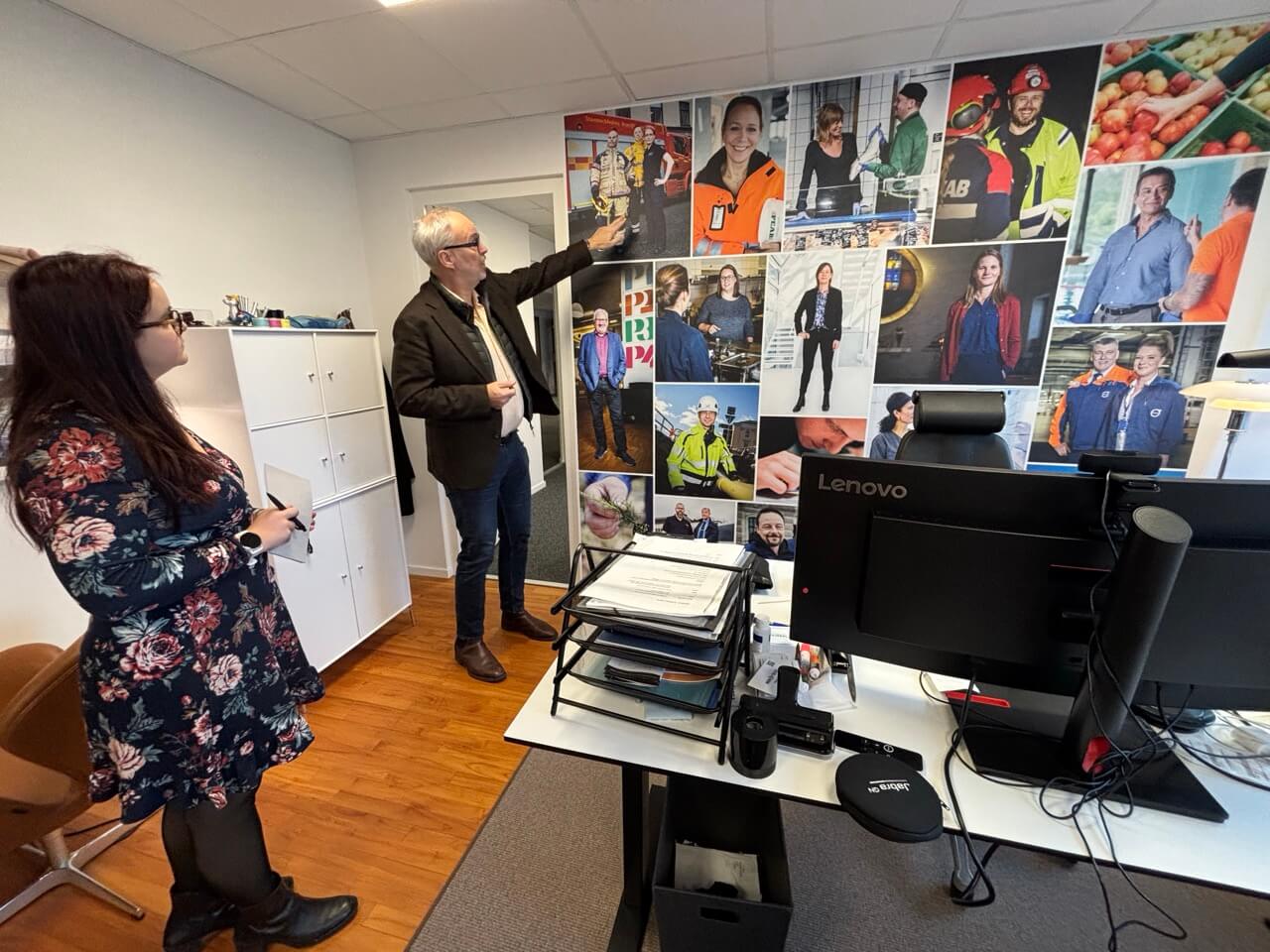
Olga Molina (Director at CEC European Managers) and Andreas Miller (President at Ledarna)
Ledarna is CEC European Managers’ member organisation in Sweden and it is one of the key players in the country’s social dialogue. The colleagues from Ledarna explained the evolving labour-market model in Sweden, its roots and foundations, as well as the results it has been delivering.
The visit took place in Stockholm and offered a valuable opportunity to deepen cooperation with one of the most influential managerial organisations in Europe.
Ledarna welcomed the delegation for a series of discussions with senior representatives, legal experts and policy specialists.

The programme allowed CEC European Managers’ team to gain first-hand insights into how the Swedish model of industrial relations continues to deliver stability, competitiveness and high-quality working conditions for managers and employees alike.
Understanding the Swedish Model of Social Dialogue
Ledarna’s General Counsel, Daniel Falk, offered an in-depth overview of the history and functioning of the Swedish labour-market model.

Daniel Falk (Ledarna’s General Counsel)
More than a century of trust-based cooperation between employers and trade unions has shaped a system where collective bargaining, long-term predictability and balanced compromises support both economic resilience and strong social protection.
The delegation also discussed current challenges facing the Nordic model, including inflationary pressures, the role of occupational pensions, and the importance of safeguarding social partners’ autonomy from excessive legislative interference.

Helena Wallin (Ledarna member and CEC European Managers’ Treasurer)
These exchanges highlighted a shared commitment to ensuring that managers continue to play a key role in shaping modern, future-oriented labour markets.
Engagement with Swedish Experts
CEC European Managers’ team met with experts from Ledarna’s policy and negotiation teams, covering topics such as labour-market reforms and coordinated bargaining processes, transition and upskilling mechanisms, working-time and working-conditions framework and social partner cooperation during times of crisis.
The delegation also engaged in an open discussion on the realities of social dialogue across Europe, comparing national systems and identifying areas where capacity building and cross-border cooperation can strengthen the voice of managers at EU level.
Later in the day, CEC European Managers and Ledarna were welcomed by the Confederation of Swedish Enterprise (Svenskt Näringsliv) to exchange views on the Swedish labour market model, its resilience, and its implications for European social dialogue.
A Social Dialogue Landscape Rooted in Trust
Ledarna’s members and the Confederation of Swedish Enterprise explained how, for the Swedish social dialogue model to deliver, trust is everything.

David Johnsson (Director International Employment Affairs at the Confederation of Swedish Enterprise) and Gabriella Sebardt (Director Social Affairs at the Confederation of Swedish Enterprise) shared valuable lessons for Europe’s evolving industrial relations landscape at a moment when transitions, demographic change, and competitiveness continue to reshape the world of work were showcased.
The Confederation of Swedish Enterprise explained that it represents 60,000 companies, organised through 49 member organisations, most of which are small and medium-sized enterprises. Six in ten employ fewer than ten people. A distinctive feature of the organisation is its full financial independence, as it accepts no public funding—a cornerstone of Sweden’s autonomous social partnership tradition.

This autonomy is embedded in decades of practice. Since the Saltsjöbaden Agreement of 1938, social partners have taken responsibility for negotiating wages, resolving disputes, and organising labour-market governance. The Confederation stressed that this principle remains non-negotiable today.
We can only negotiate on issues our members stand behind. Independence is the basis of trust.
David Johnsson
Director International Employment Affairs at the Confederation of Swedish Enterprise
Current Priorities: Transition, Skills, and Working Time
Swedish employers echo many concerns shared across Europe. Key themes highlighted during the meeting include:
- Transition and skills development
- Pension sustainability
- Working time organisation
These issues align closely with CEC European Managers’ priorities, particularly regarding managers’ roles in steering transitions responsibly and ensuring that the evolving workplace continues to support quality employment and organisational competitiveness.
A Model Built on Trust
One striking Swedish principle resonated strongly with CEC’s approach to social dialogue:
“In the Swedish model, protection is not given to the job, but to the people.”
With 90% coverage of collective agreements, including employees who are not trade union members, the Swedish system favours stability and predictability. It also ensures that agreements are meaningful tools for shaping work organisation, innovation, and fair conditions.

While unionisation rates remain high by European standards, Swedish partners expressed concern about the decline in blue-collar membership, political interference, and lowering local representation. These developments pose challenges to a system traditionally shielded from political turbulence.
Navigating Change: The Revival of the Swedish Model
The Confederation reflected on earlier moments of disruption, notably the 1970s legislative wave that temporarily weakened social partner autonomy. The revival came in the 1990s, when global competitive pressure and a national financial crisis forced Sweden to rethink wage formation.
The 1997 Industry Agreement became a cornerstone of modern Swedish labour relations. Wage negotiations began to follow two core premises:
- Companies must remain competitive, especially internationally.
- Jobs must remain high-quality and sustainable over time.
This reformed approach has contributed to Sweden’s well-known stability:
- Industrial disputes result in only 21,000 days lost per year, compared to an EU average of 90,000.
- Sweden counts more than 100 social partner organisations, 55 employer organisations, 60 trade unions and over 680 collective agreements structuring the labour market.
For CEC European Managers, this reflects a social dialogue culture able to adapt to economic realities while safeguarding workforce interests—an essential balance for modern management.
European Dimensions: A Clear Voice in Brussels
The Confederation of Swedish Enterprise maintains an active presence in Brussels and described EU affairs as a high priority in Stockholm.
Their position on the EU Minimum Wage Directive was clear: Sweden’s system already works well, and binding wage-setting legislation risks undermining autonomous social dialogue.
This stance aligns with long-standing Nordic traditions but also raises broader European questions about how different models can coexist within a framework of strengthened EU social standards.
CEC European Managers welcomes ambitious EU-level initiatives, while consistently advocating for social dialogue solutions that respect national traditions and reinforce rather than constrain the role of managers as key actors in transitions.
The Confederation underlined that Sweden “plays the long game”: social partners are focused on durable solutions rather than short political cycles.
Recent reforms within BusinessEurope are expected to support more effective representation of European employers in the years ahead.
Sweden’s strong public support for EU membership, combined with its identity as an export-driven economy, continues to shape its forward-looking approach to industrial relations and competitiveness.
Lessons for Europe
The value of trust-based, autonomous social dialogue models that empower social partners to provide long-term solutions should be treasured in Europe.
For CEC European Managers, the Swedish experience highlights the importance of independent and responsible social partners, the centrality of managers in navigating transitions, the need for skills-focused and people-centred policies, and the benefits of predictable labour market governance.
While the Swedish system cannot be transposed wholesale to other countries, it offers a compelling example of how autonomy, trust, and accountability can foster both competitiveness and social stability.