SOTEU: Europe’s Social Model, Canada and the Voice of Managers
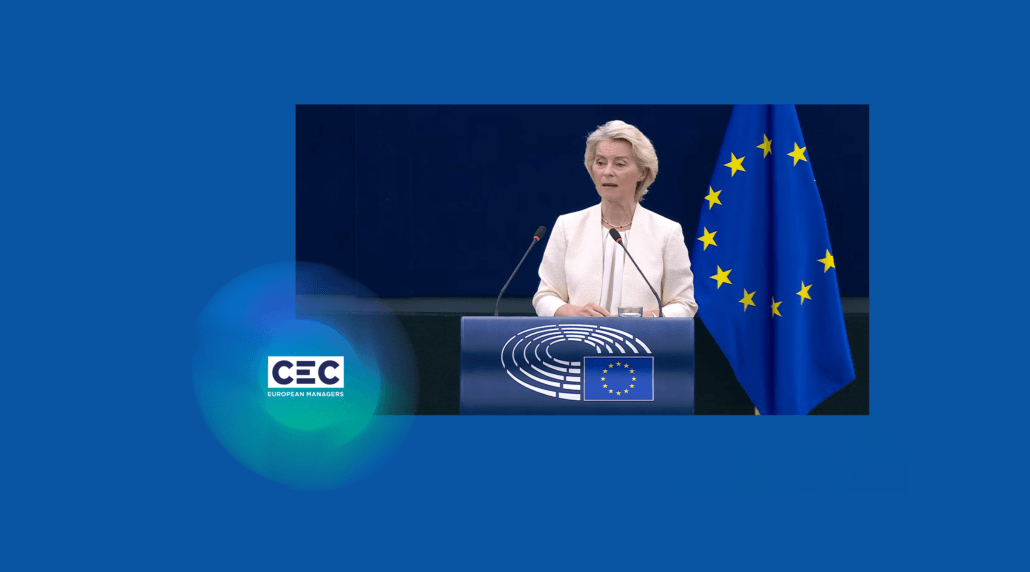
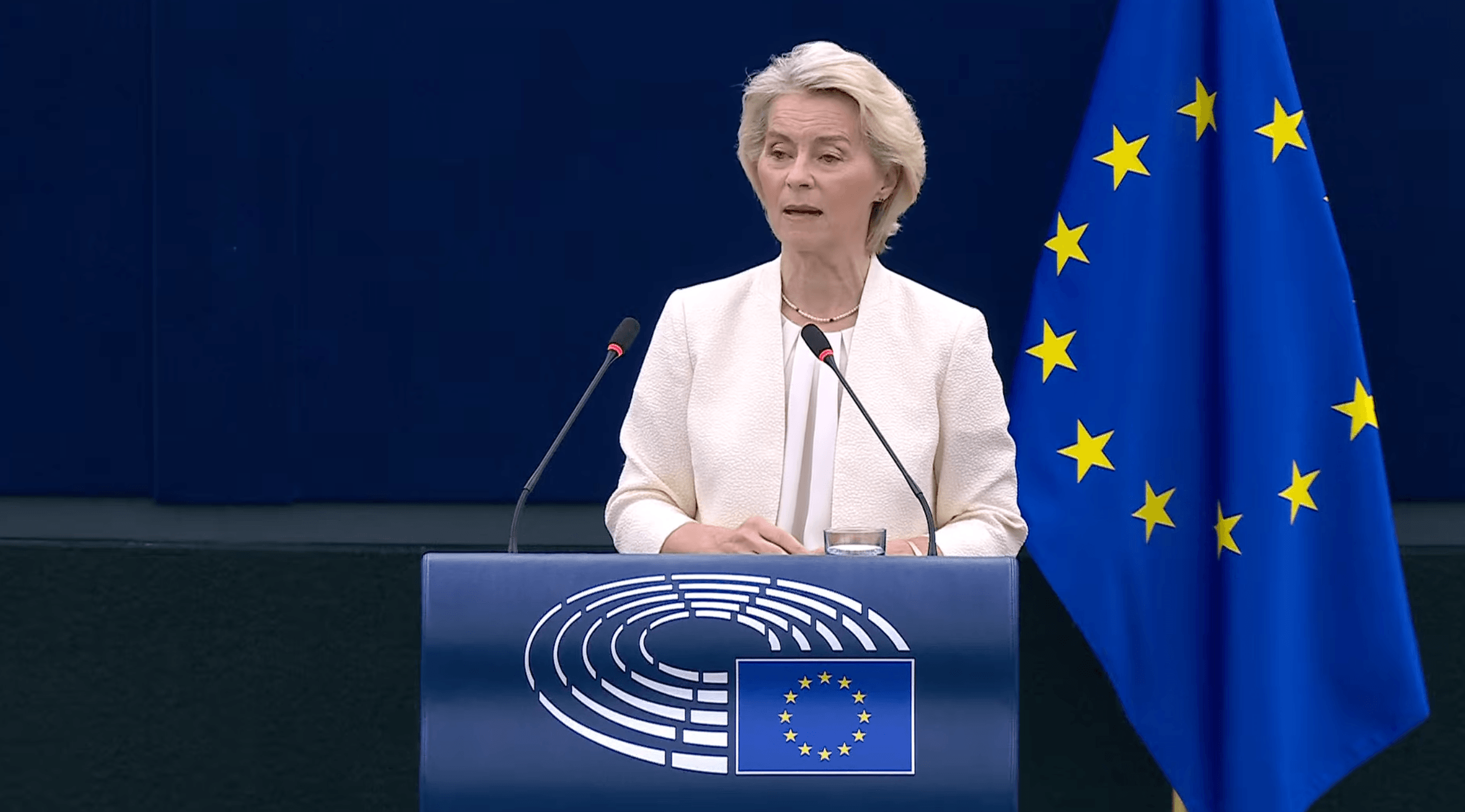
On 16 September, European Commission President Ursula von der Leyen delivered the 2026 State of the Union address before the European Parliament in Strasbourg.
In a speech dominated (read the full speech here [+]) by Europe’s security, competitiveness, technological capacity and place in the world, the President also set out several initiatives that will shape the European social agenda over the coming year.
For us at CEC European Managers, three announcements stand out: a new European Care Deal, renewed political attention to the European Pillar of Social Rights ahead of its tenth anniversary, and confirmation that the Quality Jobs Act will be delivered before the end of 2026.
Together, they touch directly on the realities that managers are dealing with in workplaces: demographic change, labour shortages, Artificial Intelligence, skills, working conditions and the need to keep people engaged through major economic and technological transformations.
They also come at a moment when Europe is looking beyond its borders for closer partnerships.
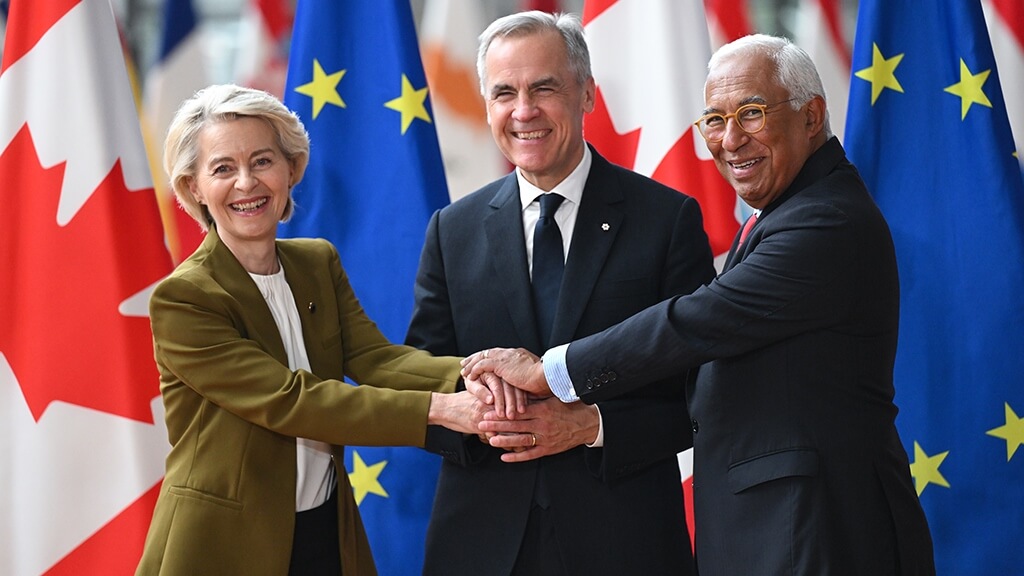
The presence of Canadian Prime Minister Mark Carney in Strasbourg and von der Leyen’s proposals for a much deeper EU-Canada relationship offer an opportunity to look at something Europe sometimes takes for granted: its model of social dialogue and the place that managers themselves have within it.
A European Care Deal for a changing workforce
The announcement of a European Care Deal was one of the new elements of this year’s State of the Union.
The details are still to be developed, but von der Leyen linked the initiative directly to Europe’s demographic transformation.
This is also a workplace issue.
Europe is ageing. Organisations are facing skills and labour shortages while a growing number of workers combine their professional responsibilities with caring for children, elderly parents or other dependent family members.
These pressures are already present in the daily work of managers.
Managers organise teams when colleagues need greater flexibility. They deal with workload and staffing when people are absent. They are responsible for retaining experienced workers and managing increasingly age-diverse teams. Many managers are themselves balancing demanding professional responsibilities with care obligations.
For CEC European Managers, demographic change therefore cannot be addressed separately from employment policy and the organisation of work.
Well-functioning care systems can help people remain in employment, improve labour-market participation and make it easier for organisations to retain skills.
At workplace level, managers need sufficient flexibility and appropriate tools to respond to changing individual circumstances while ensuring that teams continue to function.
The European Care Deal can become an important part of this wider discussion. Its development should take into account what demographic change actually means inside workplaces and the role managers play in responding to it.
Ten years of the European Pillar of Social Rights
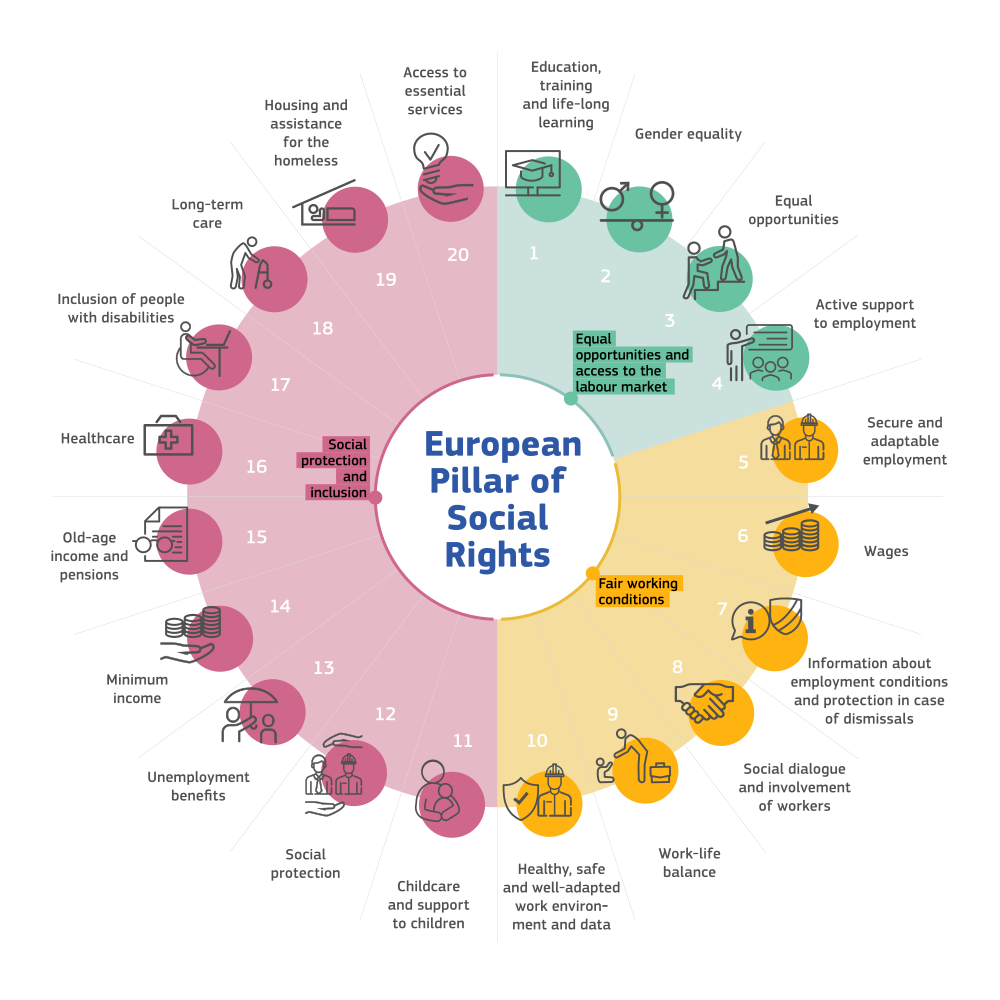
2027 will mark ten years since the proclamation of the European Pillar of Social Rights.
Von der Leyen used the State of the Union to reaffirm the Commission’s commitment to the Pillar and announced that its anniversary will be marked at European level.
When we proclaimed this Pillar of Social Rights 10 years ago, the world was different. Our society has changed. In many ways for the better, in others not.
Ursula von der Leyen
President of the European Commission
For CEC European Managers, the anniversary should also provide an opportunity to look at how Social Europe is implemented in practice.
The twenty principles of the Pillar cover areas ranging from skills and equal opportunities to working conditions, social protection, work-life balance and social dialogue. Their impact ultimately depends on what happens in Member States, sectors, companies and workplaces.
Leaders and managers have a particular position in this process.
They are workers, with their own professional interests, rights and working conditions. At the same time, they are often responsible for organising work, implementing company strategies, managing change and ensuring that new rules and policies function in practice.
CEC has consistently argued that this position needs proper representation in European social dialogue, as well as in those national realities where managers don’t have a clear, recognized voice.
Spain is one such case: a CEC member organisation, the Confederación de Cuadros Profesionales CCP, has struggled to make the voice of leaders and managers heard at a national level.
As one of the recognised EU cross-industry social partners, CEC brings the voice of managers into consultations and discussions with the European institutions.
Social dialogue is one of the mechanisms Europe has developed to manage these changes. It allows those directly concerned by developments in the world of work to contribute before decisions are translated into rules and, eventually, workplace practice.
The tenth anniversary of the Pillar should therefore also be an occasion to strengthen the connection between European social ambitions and the people expected to implement them.

The Quality Jobs Act moves closer
The Quality Jobs Act makes this connection particularly concrete.
Von der Leyen confirmed that the European Commission intends to deliver the initiative before the end of the year. She presented it in the context of Artificial Intelligence, skills and the increasingly uneven effects of technological change on European workers.
CEC European Managers is already directly involved.
The Commission is currently consulting the European social partners for the second time under Article 154 TFEU . This second phase covers algorithmic management and AI at work, occupational safety and health, workers’ rights in subcontracting chains, the digital and green transitions, enforcement and the role of social partners. The consultation closes on 28 September.
These issues are particularly relevant to managers because they are both affected by changing working conditions and responsible for managing many of the changes under discussion.
b is a clear example.
AI systems are entering recruitment, work organisation, performance assessment, decision-making and the allocation of tasks. Managers may use these systems, be evaluated through them, or be responsible for explaining their results to employees.
Questions about transparency, human oversight, responsibility and skills therefore cannot be treated only as technical or regulatory matters. They affect leadership and management directly.
This is also the reasoning behind AI MANAGE, the European social partner project led by CEC European Managers. Together with managers’ organisations, employers and researchers, the project is examining how AI and algorithmic management can be used responsibly in real workplace conditions and will develop cross-sectoral guidance, practical tools and training.
The same managerial perspective is relevant to other parts of the Quality Jobs Act.
Psychosocial risks, occupational safety, access to training and the management of digital and green transitions all depend partly on how work is organised and how change is communicated and implemented.
CEC European Managers has repeatedly stressed that Europe needs stronger competitiveness, investment and innovation. It has equally stressed that competitiveness must develop together with quality employment, social dialogue and sustainable working conditions.
Managers are responsible for bringing these objectives together every day.
Europe and Canada: different traditions of representing managers
Canada had an unusual prominence in the 2026 State of the Union.
Canadian Prime Minister Mark Carney attended the speech in Strasbourg, while von der Leyen called for a significantly deeper EU-Canada partnership and raised the prospect of Canada becoming the first country associated with the Union through a new form of membership.
As Europe and Canada explore closer cooperation on trade, industry, technology, AI, energy and security, there is another area where an exchange could be valuable: social dialogue and the collective representation of managers.
A 2024 Supreme Court of Canada judgment illustrates some of the differences.
The case concerned the Association des cadres de la Société des casinos du Québec, representing first-level managers in four casinos. The association sought certification under Quebec’s Labour Code.
Quebec’s Labour Code expressly excludes managers from the definition of employees covered by its general labour-relations regime, including access to the ordinary union certification procedure.
On 19 April 2024, the Supreme Court of Canada ruled that this exclusion was constitutional.
The judgment did not establish that managers have no right to organise.
The Supreme Court recognised that freedom of association protects managers’ ability to form an organisation sufficiently independent from their employer, make collective representations and have those representations considered in good faith. The Court concluded, however, that the Canadian Charter did not give the managers in this case a right to participate in the specific statutory certification system established by Quebec’s Labour Code.
This distinction is important.
CEC European Managers itself reflects a different institutional history.
At EU level, managers have an autonomous voice in European social dialogue. Through CEC European Managers (and its sister social partner Eurocadres), their organisations participate alongside other recognised cross-industry social partners in consultation processes concerning European employment and social policy.
The comparison should not be reduced to one system allowing managers to organise and another preventing it. Labour-relations frameworks differ significantly between countries and, in Canada, between jurisdictions.
What it does show is that the place of managers within collective labour relations is not automatic.
The European model has developed a specific space where managers can be represented as workers while recognising the particular responsibilities they hold within organisations.

